
REVIEW · ART DECO & INTERIORS WALKS
Explore the Historic Old Post Office in Chicago
Old walls, new purpose, and real Chicago craft. The Old Post Office building is a landmark you can walk through, then compare with what it became after a big renovation—offices plus a public-feeling rooftop park.
What I like most is how the restoration keeps the building’s original personality while making it work for modern tenants. I also love that you get up to the roofline, where the rooftop meadow spreads out above the city instead of feeling like a sealed-off corporate space. One thing to consider: no photography is allowed, and the tour happens inside an active commercial building, so the exact route can change.
If you’re the type who enjoys architecture as a story—how old function gets reworked into new purpose—this tour hits the sweet spot. I went in expecting a pretty space. I came out understanding why the details matter, and how adaptive reuse can preserve craftsmanship without freezing a building in time.
In This Review
- Key things you’ll notice on this tour
- Old Post Office Adaptive Reuse: Why This Building Got a Second Life
- Meeting at 433 W Van Buren: How the 1.5-Hour Visit Works
- Main Lobby: The Restoration Detail You Have to See In Person
- Zig-Zag Wall and Postcard Wall: When Design Serves a Purpose
- Vent Covers and Small Details: The Building’s Quiet Engineering
- Rooftop Meadow on the 3.5-Acre Park: Views With a Purpose
- Adaptive Reuse, Explained the Right Way: Old Buildings Still Have a Job
- Price and Value for $15: What Makes This Tour Feel Worth It
- Who Should Book This Tour (and Who Might Want a Different Option)
- Should You Book the Old Post Office Tour?
- FAQ
- How long is the Old Post Office tour?
- What does it cost?
- Where is the meeting point?
- Do I need a paper ticket?
- Is photography allowed inside?
- Are pets allowed?
- Is the tour led by a docent?
- Is there free cancellation?
Key things you’ll notice on this tour
- Main Lobby restoration that feels built for human scale instead of a generic office entrance
- Zig-zag wall and postcard wall as clues to how the building was designed and used
- Rooftop meadow on a 3.5-acre park roof that turns “top floor” into a real experience
- Certified Chicago Architecture Center docent explanations with maps and old photos in hand
- An active workplace setting where itinerary timing can shift with management needs
Old Post Office Adaptive Reuse: Why This Building Got a Second Life

The Old Post Office in Chicago isn’t just a pretty shell. It is a big, early 20th-century structure that once did serious work—then sat vacant long enough for people to worry the best parts would be lost.
Completed in 1934 and spanning about 2.8 million square feet, the building had that classic Chicago mix of bold form and detailed surfaces. The key story here is the renovation and adaptive reuse that brought it back: rather than demolish it, a vision-driven redevelopment team and an award-winning architectural team reworked it into Class A office space and a modern multi-use environment.
Adaptive reuse, in plain terms, means you keep the bones and the character, then redesign the inside so it can meet today’s needs. That is the theme your docent keeps returning to as you move from floor to floor and then up toward the rooftop park.
This matters for two reasons. First, you get to see real architectural features in person, not only in photos. Second, you get the practical lesson that preservation can still be functional and modern.
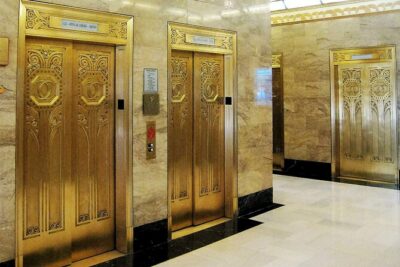
More marble lobbies and brass elevator doors
Meeting at 433 W Van Buren: How the 1.5-Hour Visit Works
The tour starts at 433 W Van Buren St and loops back to the same meeting point at the end. It runs about 1 hour 30 minutes, and it begins at 11:00 am.
You’ll want to arrive a little early to get settled with your group. The group size stays small, with a maximum of 21 people, which helps the docent pace the walk and keep explanations clear.
Tickets are mobile, so you’ll use your phone for admission. The tour is led by a certified Chicago Architecture Center docent, which makes a difference if you like your architecture talk to connect design choices to real history.
One practical consideration: the building is an active commercial space. That means the route can be adjusted by building management, even on a day you planned carefully. It is still a structured tour, just not the kind where you should assume every step is locked in.
Main Lobby: The Restoration Detail You Have to See In Person
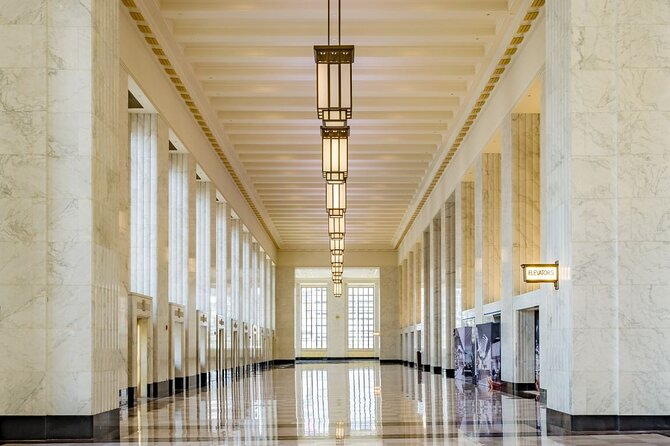
If you only remember one moment from this tour, make it the Main Lobby. This is where the building’s personality comes through most clearly—high-impact features, strong geometry, and that feeling that the original architects expected people to look up and notice the craftsmanship.
I like that the restoration does not just preserve surfaces. It makes the space readable. Even if you are not an architecture nerd, you can tell the building was built to organize movement and attention, and that the renovation team respected the original design intent.
In the lobby, your docent typically helps you connect the visible details to what the building used to do. That is also where you get a sense of how adaptive reuse works: the goal is not to mimic the past, but to let the past inform a new function.
A few highlights you may hear about in the room include historic building details the docent points out while you’re standing there, like decorative and functional elements you would miss if you were just speed-walking.
From the fire of 1871 forward, more history
- Chicago in a Day: Food, History & Architecture Walking Tour
★ 5.0 · 1,153 reviews - Chicago: Field Museum of Natural History Ticket or VIP Tour
★ 4.7 · 717 reviews - Field Museum of Natural History Admission Tickets
★ 4.5 · 489 reviews
Zig-Zag Wall and Postcard Wall: When Design Serves a Purpose
After the lobby, the tour shifts into the building’s interior storytelling. The Zig-zag wall and postcard wall are central stops, and they work well because they’re design choices you can literally see rather than only imagine.
What makes these stops valuable is how the docent explains what those features were for, then shows how their presence continues to shape the visitor experience. In other words, you’re not just learning dates. You’re learning why a structure was built that way.
I also appreciate that these walls are treated as more than decorative backdrops. Your guide helps you read them like evidence. That is why maps and old photographs can matter during the explanation—if you understand what you’re looking at, you feel smarter before you even reach the rooftop.
One caution: since photography is not allowed, you’ll rely on your memory and the docent’s descriptions. If you want to capture details for later, consider taking notes during the stops instead of trying to shoot pictures.
Vent Covers and Small Details: The Building’s Quiet Engineering
Chicago buildings often reward slow looking, and this one does too. One of the most interesting things your docent may highlight involves building systems and functional features that look like ornament until you learn what they do.
For example, you might get pointed toward the kinds of details around the building that helped it operate back when it was part of the mail system—like vent-related elements that are both useful and visually distinctive.
This is where a good architecture docent makes the tour feel worth it. The information turns random visual features into meaningful design choices. And once you start seeing the logic, you’ll spot more details as you walk.
Rooftop Meadow on the 3.5-Acre Park: Views With a Purpose
The rooftop stop is usually the emotional peak of the visit. The renovation converted the roof into a 3.5-acre urban rooftop park, and the tour includes access to the rooftop meadow.
On a clear day, the roof feels like a pressure release after walking through indoor corridors. You get breathing room, open sky, and a chance to connect the building’s scale to the city around it.
What I like here is the mix of ideas: you’re standing on a preserved structure while also seeing a modern public-minded layer on top. The rooftop meadow is not just a perk; it’s part of the adaptive reuse plan.
If the day is nice, this portion becomes more than a photo-op anyway. It becomes a way to understand the renovation’s ambitions: make the building useful for modern life while keeping the historic structure intact.
Adaptive Reuse, Explained the Right Way: Old Buildings Still Have a Job
This tour is not only a walk-through. It’s a lesson in adaptive reuse, presented in a way that feels practical instead of abstract.
You’ll hear the core idea: old places can become new spaces when developers and architects collaborate with enough care to preserve key features while upgrading the building for modern needs. In this case, that includes fitting a major historic shell for light-filled workspaces and converting parts of the structure—like the roof—into new public space.
The building’s long vacancy is part of why this story resonates. When a large landmark sits unused, people worry the architectural details will be lost or ignored. Here, the renovation reframed the building’s identity, so Chicago gets to keep something iconic while still moving forward.
If you’re planning your Chicago trip around architecture, this is a good match. It gives context you can carry to other buildings, because you learn what to look for: what was preserved, what was changed, and how the design choices support the new purpose.
Price and Value for $15: What Makes This Tour Feel Worth It
At $15 per person, this tour is priced like a smart add-on rather than a big-budget headline experience. For that cost, you get about 1 hour 30 minutes of guided access inside a significant building, plus explanations from a certified Chicago Architecture Center docent.
I also think the small maximum group size matters for value. With up to 21 people, you’re more likely to get the sense you’re part of a real tour conversation rather than a line-walk with a headset.
A quick heads-up: this tour is typically booked about 30 days in advance on average. If you’re traveling during a busy stretch, you’ll want to plan ahead rather than counting on a last-minute spot.
What’s not included is also part of the value equation. There’s no food or drink, no coat check, and no luggage or stroller storage. If you bring a coat or bulky items, you’ll need to handle them yourself during the walk.
And because no photography is allowed, your payoff is your understanding and the chance to see the spaces directly, not a camera roll you’ll show off later.
Who Should Book This Tour (and Who Might Want a Different Option)
This is a great fit if you care about architecture, restoration, and design that has a clear narrative. It’s also a strong choice if you enjoy guides who bring history into the room using maps and old photos.
It can also work well if you’re in Chicago for a short stay. The 1.5-hour length is manageable, and the meeting location at Van Buren makes it easy to connect with other downtown plans before or after.
Where you might hesitate is if you rely heavily on photos for your travel memory. The no photography rule means you need a different mindset: plan to take notes and pay attention.
Also, because it’s an active commercial space and stops can shift, it may not feel ideal if you have strict timing like a hard appointment right after the tour. Build a small buffer so the visit can run smoothly.
Finally, pets are not allowed, and there’s no stated storage for strollers or luggage. If you’re traveling with those needs, consider planning how you’ll manage them while you walk.
Should You Book the Old Post Office Tour?
Book it if you want a high-value architecture experience that blends restored interiors with a rooftop public-space payoff. The Main Lobby, the Zig-zag wall, and the postcard wall turn design into story, and the rooftop meadow on a 3.5-acre park gives you a satisfying outdoor finish.
Skip it or swap it for something else if photography is non-negotiable for you, or if you need on-site storage and convenience for bulky items. Also, if you’re extremely schedule-tight, remember the building may alter the route at management’s discretion.
If you’re the type who loves seeing how cities keep historic structures useful, this one is a strong bet.
FAQ
How long is the Old Post Office tour?
The tour lasts about 1 hour 30 minutes.
What does it cost?
Admission is $15.00 per person.
Where is the meeting point?
You meet at 433 W Van Buren St, Chicago, IL 60607.
Do I need a paper ticket?
No. The tour uses a mobile ticket.
Is photography allowed inside?
No. Photography is not allowed.
Are pets allowed?
No. Pets are not allowed.
Is the tour led by a docent?
Yes. It’s guided by a certified Chicago Architecture Center docent.
Is there free cancellation?
Yes. You can cancel for a full refund up to 24 hours before the experience starts.
The Wider Chicago Shortlist
- Chicago Architecture River Cruise★ 5.0 · 15,756 reviews
- Chicago River 90-Minute Architecture Tour★ 4.5 · 9,629 reviews
- Chicago River: 1.5-Hour Guided Architecture Cruise★ 4.8 · 8,046 reviews
- Chicago: Gangsters and Ghosts Walking Tour★ 5.0 · 7,155 reviews
- Chicago Architecture Center River Cruise aboard First Lady★ 5.0 · 5,536 reviews
Since the Fire: Chicago History
- Chicago in a Day: Food, History & Architecture Walking Tour★ 5.0 · 1,153 reviews
- Chicago: Field Museum of Natural History Ticket or VIP Tour★ 4.7 · 717 reviews
- Field Museum of Natural History Admission Tickets★ 4.5 · 489 reviews
- Chicago Walking Tour: Historic Treasures of Chicago★ 5.0 · 362 reviews
- Historical and Architectural Chicago Fireboat River & Lake Cruise★ 5.0 · 246 reviews
Behind the Revolving Doors
- Original Chicago Architecture Interiors Tour: Dazzling Interiors★ 5.0 · 1,489 reviews
- Chicago’s Secret Interiors Architectural Walking Tour★ 5.0 · 635 reviews
- Chicago: Secret Interiors Architecture Walking Tour★ 4.9 · 498 reviews
- Chicago: Treasures of the Golden Age Walking Tour★ 4.8 · 206 reviews
- Chicago Walking Tour: Art Deco Skyscrapers Loop★ 5.0 · 138 reviews
The Ink Is Still Wet on These Chicago Reviews




Art Deco & Interiors Walks, compared.
 ★ 5.0Original Chicago Architecture Interiors Tour: Dazzling InteriorsFrom $351,489 reviews
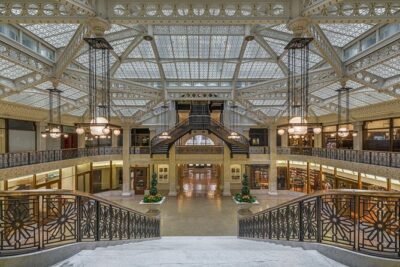 ★ 5.0Chicago’s Secret Interiors Architectural Walking TourFrom $35635 reviews
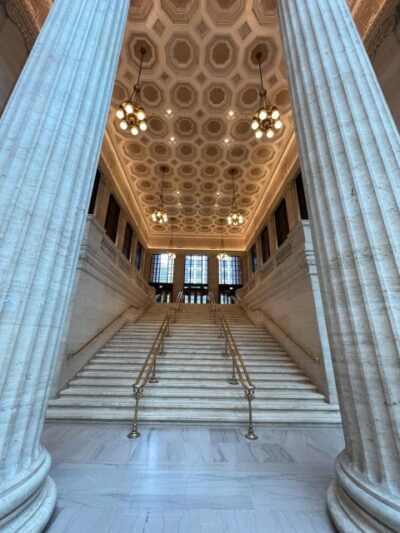 ★ 4.9Secret Interiors Architecture Walking TourFrom $35498 reviews
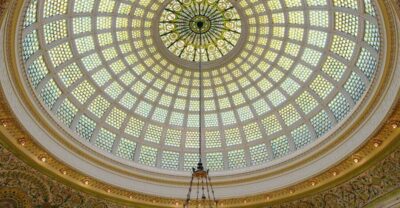 ★ 4.8Treasures of the Golden Age Walking TourFrom $35206 reviews
 ★ 5.0Chicago Walking Tour: Art Deco Skyscrapers LoopFrom $35138 reviews
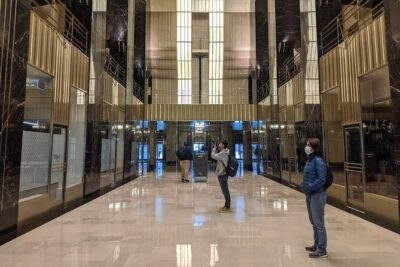 ★ 5.0Chicago Architecture Walking Tour: Incredible Art Deco InteriorsFrom $3585 reviews
 ★ 5.0Chicago Walking Tour: Art Deco Skyscrapers RiverfrontFrom $3553 reviews
 ★ 4.5Chicago Walking Tour: Tiffany TreasuresFrom $3544 reviews
Browse the lists this tour appears in