
REVIEW · ART DECO & INTERIORS WALKS
Chicago Walking Tour: Tiffany Treasures
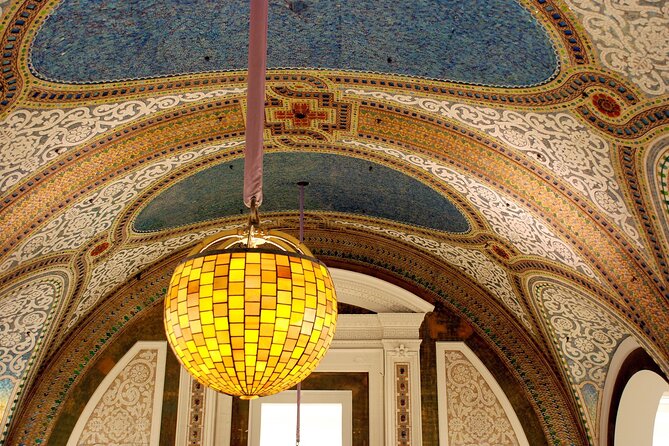
Tiffany glass turns Chicago streets into a gallery. This small-group walking tour follows a Chicago Architecture Center guide to four landmark buildings with Louis Comfort Tiffany stained glass and related late-19th-century glasswork. You focus on art you’d otherwise walk right past, with stops timed for what you can actually see up close.
I love how tightly the route stays glass-focused instead of turning into generic skyline chatter. You’ll also get clear stories about what makes these interiors special—mosaics, vaults, domes, and light fixtures—and why restoration matters to how the colors read today. One possible drawback: the tour moves at a city pace, and the exact meeting spot inside the Chicago Cultural Center can take a moment to find.
In This Review
- Key things I’d anchor on before you book
- Why Tiffany stained glass works so well in Chicago
- Price and value: is $35 a smart use of time?
- The tour rhythm: what the 2:00 pm start really means
- Stop 1: Chicago Cultural Center North Lobby and the art-glass eye test
- Stop 2: Marquette Building exterior viewing with post-fire Chicago context
- Stop 3: Macy’s on State Street and how glass fits commercial Chicago
- Stop 4: Chicago Architecture Center galleries when you want more time indoors
- The best part: small-group focus makes the glass actually readable
- Walking comfort: what you should plan for
- What you’ll learn (and why it changes how you look at buildings)
- Tips to make the tour easier from the start
- Who should book Tiffany Treasures?
- Should you book Tiffany Treasures?
- FAQ
- How much is the Chicago Walking Tour: Tiffany Treasures?
- How long is the tour?
- What’s the group size?
- Where do we meet, and what time does it start?
- Where does the tour end?
- What’s included in the ticket price?
- Is food or drinks included?
- Are pets allowed?
- What’s the cancellation policy?
Key things I’d anchor on before you book

- Max 10 travelers keeps the tour personal, so you can ask questions and actually see what your guide points out.
- Certified Chicago Architecture Center narration connects Tiffany-style glass to Chicago’s architecture and rebuilding era.
- Four stops in about 90 minutes gives you a lot of art glass without turning it into an all-day slog.
- Restoration context helps you understand what you’re looking at and why it may look different than older photos.
- CAC gallery admission included means the experience can continue at your speed if you want more time indoors.
Why Tiffany stained glass works so well in Chicago
Tiffany glass isn’t just pretty. It’s a whole way of shaping light—using color, texture, and pattern so windows and interior panels feel like they are glowing from within. That’s why Chicago is such a good backdrop: the city is packed with late-19th-century buildings where glass was treated like a serious design element, not an afterthought.
On this tour, you’re not chasing famous names for a checklist. You’re training your eyes. When your guide points out mosaics, vaults, domes, and light fixtures, you start seeing how architecture and glass are meant to work together—especially in places where the glass is easy to overlook when you’re just passing by.
More marble lobbies and brass elevator doors
Price and value: is $35 a smart use of time?
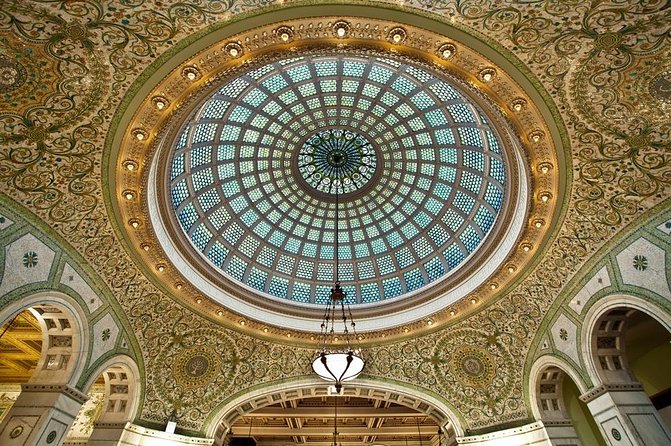
At $35 per person for about 1.5 hours, the best way to judge value is what you get that you can’t easily recreate on your own. This is small-group (capped at 10), guided by a certified Chicago Architecture Center specialist, and focused on four landmarks tied to Tiffany and his contemporaries.
The other value lever is that your ticket includes admission to the galleries at the Chicago Architecture Center at the end. That turns the tour into more than a street walk. You’re buying expert interpretation plus a built-in add-on for indoor viewing when you want it.
The tour rhythm: what the 2:00 pm start really means
You meet at 2:00 pm at 77 E Randolph St, inside the North Lobby of the Chicago Cultural Center. Expect a mix of quick views and short interior viewing moments rather than a long sit-down lecture. The tour ends outside the Marquette Building at 140 S Dearborn St.
This schedule works well because many of these buildings only impress once you’re standing in the right spot and looking up. A tight timeline also helps on a rainy or cold day; you still get the art without spending forever moving between far-apart locations.
A practical note: if you’ve ever wandered through a big lobby trying to find the exact meeting nook, you’ll appreciate taking 2 minutes before the start time to confirm you’re in the North Lobby. One common complaint is that the meeting point isn’t always obvious at first glance, so arrive a few minutes early and look for your guide indoors.
Chicago at sidewalk speed, more routes
- Chicago: Gangsters and Ghosts Walking Tour
★ 5.0 · 7,155 reviews - Chicago Favorites Ultimate Food and Walking Tour
★ 5.0 · 1,962 reviews - Chicago: Gangsters and Ghosts Guided Walking Tour
★ 4.7 · 1,697 reviews
Stop 1: Chicago Cultural Center North Lobby and the art-glass eye test
Your tour begins inside the North Lobby of the Chicago Cultural Center. This is a great opening move because you get oriented fast: the guide can show you how to read the glasswork—what to notice first, where the light effect comes from, and why these pieces were designed for real viewing angles, not just for distant admiration.
Even though the stop is short, the point is to set your visual habits. You’ll hear how Tiffany Glass and Decorating Company designs (and works by Louis Comfort Tiffany and contemporaries) influenced what Chicagoans could see in late-19th-century public spaces. Then the later stops make more sense, because you’re already looking for the patterns your guide wants you to catch.
Stop 2: Marquette Building exterior viewing with post-fire Chicago context
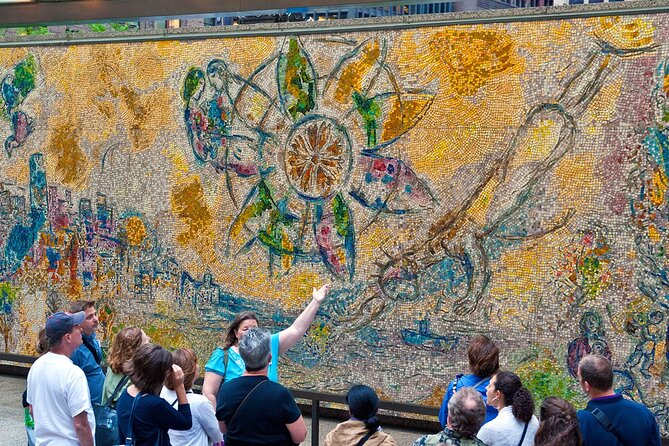
Next you view the Marquette Building from the outside. This is one of those stops that’s brief on the clock but still useful, because the guide can tie the glass story to the larger architectural identity of Chicago. You’re seeing how ornament and design ambition showed up as the city rebuilt and refined its image.
The Marquette Building also works as a visual anchor for the tour’s theme. Even when you’re not inside at that moment, you’re learning what the glass elements mean in the building’s overall design language. If you’re the kind of person who loves seeing how details connect to the big picture, this exterior segment helps you connect those dots instead of treating the tour as isolated art photos.
Stop 3: Macy’s on State Street and how glass fits commercial Chicago
The tour then heads to Macy’s on State Street for an exterior view. At first, it can feel surprising that Tiffany-style art glass belongs in a major department store setting. That’s exactly why it works: you get proof that glass art wasn’t limited to museums or grand civic buildings.
Your guide’s job here is to help you notice what you might normally ignore—how the building’s design and lighting emphasis can make stained glass-related features feel more intentional and less incidental. You’ll also hear about the history and ongoing restoration efforts that keep these works presentable for public viewing, even as the surrounding neighborhood changes.
One benefit of the way this tour is paced: you don’t spend forever staring at the same façade. You get enough time to register the visual story, then you move on.
Stop 4: Chicago Architecture Center galleries when you want more time indoors
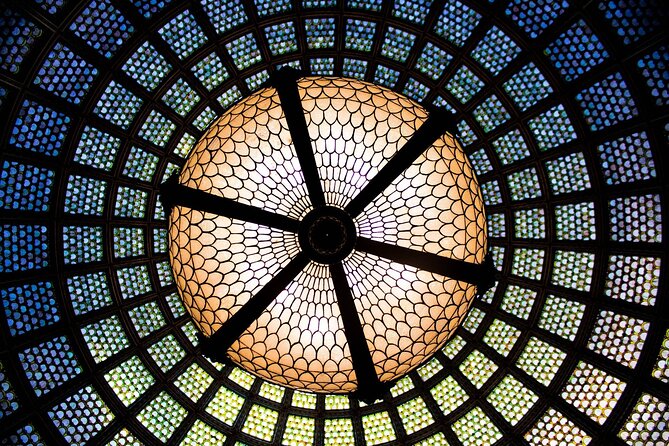
At the end, your ticket includes admission to the Chicago Architecture Center galleries. This part isn’t meant to be a heavy extra tour on top of the walking route. Instead, it’s a pressure-free bonus you can use when you want to stay in the air-conditioned world a little longer.
This is where you can slow down and absorb what you learned outside. If your eyes are buzzing from the street-level architecture details, the gallery time helps you organize what you saw: you understand where the glass fits in the bigger narrative of Chicago building design.
From a practical standpoint, it’s also smart for pacing. The walking tour keeps the outdoor time limited, and the gallery admission gives you options for finishing strong without rushing.
The best part: small-group focus makes the glass actually readable
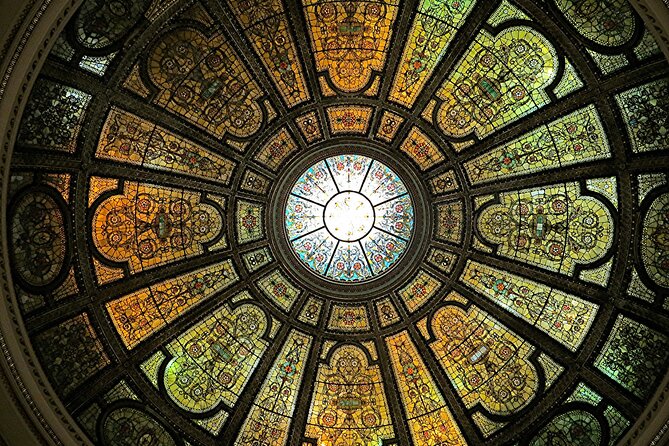
A big reason this tour gets such strong ratings is the group size. With a maximum of 10 travelers, your guide can move the group to the right angles and still keep everyone together. That matters for stained glass, because the details often pop only when you’re at the right height and distance.
You’ll also find that the guide style matters. People describe guides as friendly, patient, and genuinely excited about Tiffany’s designs. Some of the names that come up in praise include Claudia and Joan. If you’re assigned one of those guides (or someone with a similar approach), you can expect clear explanations and a tour tone that doesn’t feel rushed.
Walking comfort: what you should plan for
This is a walking tour, so you should go in with sensible expectations. It’s designed to be manageable—many stops are short—but you do move between buildings and you need to keep pace through city streets. If your mobility is limited or you need frequent slow-down moments, you may find the pace challenging.
Some feedback also points to how important it is for everyone to assemble before the guide starts talking. That means your best strategy is simple: don’t wander off the exact meeting and regroup spots. Stay close when you hear the group is about to move, especially near busy crossings.
On the plus side, there are mentions of elevator access, which can be a lifesaver in tall-building lobbies and public spaces. Even then, you should still dress for walking and standing.
What you’ll learn (and why it changes how you look at buildings)
The tour isn’t just about seeing stained glass. It’s about understanding the design choices behind it. You’ll hear about the history of the glass art form, plus recent restoration efforts—the kind of work that keeps these pieces safe and visible as public attractions.
That restoration context is more than trivia. It changes what you pay attention to. Instead of only admiring color, you start noticing texture, pattern, and how light interacts with the glass and the surrounding interior architecture. Afterward, you’re more likely to spot glasswork in other Chicago buildings on your own, because you know what signals to look for.
Tips to make the tour easier from the start
Here are a few practical moves I’d make before showing up:
- Arrive early and check you’re inside the North Lobby of the Chicago Cultural Center at 77 E Randolph St.
- Wear comfortable shoes even though the tour is short. You’re on your feet for views and brief transitions.
- Bring your curiosity. The best tour moments happen when you ask where to look next.
- Plan for light reading time after at the Chicago Architecture Center galleries since your ticket includes that admission.
Also, this is a tour focused on public buildings and art glass. Food isn’t included, and there’s no coat check, so think about what you’ll want afterward rather than carrying extra items during the walk.
Who should book Tiffany Treasures?
Book it if:
- You love architecture details and want an expert guide to help you notice them.
- You care about Tiffany-style stained glass and want it explained in the buildings where it still functions as intended.
- You want a small-group walk instead of a big bus-tour vibe.
Consider another option if:
- You’re traveling with young children. This tour isn’t recommended for them.
- You have difficulty keeping pace on foot through city streets.
Should you book Tiffany Treasures?
Yes—if you’re the type of traveler who likes to look up and notice the design that most people miss, this is a strong use of time. The small-group size, the certified narration, and the fact that you also get Chicago Architecture Center gallery admission make the $35 price feel earned rather than symbolic.
If you’re cautious about meeting-point confusion or walking pace, solve that with planning: arrive early at the North Lobby and make sure you can comfortably keep up for about 90 minutes. Do that, and you’ll leave with a sharper eye for how stained glass can shape a whole building’s mood.
FAQ
How much is the Chicago Walking Tour: Tiffany Treasures?
It costs $35.00 per person.
How long is the tour?
The tour runs about 1 hour 30 minutes.
What’s the group size?
The tour has a maximum of 10 travelers.
Where do we meet, and what time does it start?
You meet at 77 E Randolph St, Chicago, IL 60602, inside the North Lobby of the Chicago Cultural Center. The start time is 2:00 pm.
Where does the tour end?
The tour ends outside the Marquette Building at 140 S Dearborn St, Chicago, IL 60603.
What’s included in the ticket price?
You get narration by a professional, certified guide, a walking tour of Chicago’s Tiffany art glass landmarks, and admission to the galleries at the Chicago Architecture Center.
Is food or drinks included?
No. Food and drinks are not included.
Are pets allowed?
Pets are not allowed, but service animals are allowed.
What’s the cancellation policy?
Free cancellation is available. You can cancel up to 24 hours in advance of the experience for a full refund.
Chicago on Foot, Block After Block
- Chicago: Gangsters and Ghosts Walking Tour★ 5.0 · 7,155 reviews
- Chicago Favorites Ultimate Food and Walking Tour★ 5.0 · 1,962 reviews
- Chicago: Gangsters and Ghosts Guided Walking Tour★ 4.7 · 1,697 reviews
- Chicago in a Day: Food, History & Architecture Walking Tour★ 5.0 · 1,153 reviews
- Chicago’s Secret Interiors Architectural Walking Tour★ 5.0 · 635 reviews
The Wider Chicago Shortlist
- Chicago Architecture River Cruise★ 5.0 · 15,756 reviews
- Chicago River 90-Minute Architecture Tour★ 4.5 · 9,629 reviews
- Chicago River: 1.5-Hour Guided Architecture Cruise★ 4.8 · 8,046 reviews
- Chicago: Gangsters and Ghosts Walking Tour★ 5.0 · 7,155 reviews
- Chicago Architecture Center River Cruise aboard First Lady★ 5.0 · 5,536 reviews
Behind the Revolving Doors
- Original Chicago Architecture Interiors Tour: Dazzling Interiors★ 5.0 · 1,489 reviews
- Chicago’s Secret Interiors Architectural Walking Tour★ 5.0 · 635 reviews
- Chicago: Secret Interiors Architecture Walking Tour★ 4.9 · 498 reviews
- Chicago: Treasures of the Golden Age Walking Tour★ 4.8 · 206 reviews
- Chicago Walking Tour: Art Deco Skyscrapers Loop★ 5.0 · 138 reviews
The Ink Is Still Wet on These Chicago Reviews




Art Deco & Interiors Walks, compared.
 ★ 5.0Original Chicago Architecture Interiors Tour: Dazzling InteriorsFrom $351,489 reviews
 ★ 5.0Chicago’s Secret Interiors Architectural Walking TourFrom $35635 reviews
 ★ 4.9Secret Interiors Architecture Walking TourFrom $35498 reviews
 ★ 4.8Treasures of the Golden Age Walking TourFrom $35206 reviews
 ★ 5.0Chicago Walking Tour: Art Deco Skyscrapers LoopFrom $35138 reviews
 ★ 5.0Chicago Architecture Walking Tour: Incredible Art Deco InteriorsFrom $3585 reviews
 ★ 5.0Chicago Walking Tour: Art Deco Skyscrapers RiverfrontFrom $3553 reviews
 ★ 4.9Chicago’s Original Dazzling Architectural Interiors TourFrom $3539 reviews
Browse the lists this tour appears in