
REVIEW · ARCHITECTURE WALKING TOURS
Chicago Walking Tour: Art Deco Skyscrapers Riverfront
Art Deco looks great from the street. The fun here is getting closer and seeing how the details work inside, too—plus you get expert narration on a small-group walk aimed at the Chicago Riverfront skyline. I love the hands-on focus on interiors (when open), and I love how the route strings together major Art Deco statements without feeling rushed. One thing to plan for: access to building interiors can change due to weekend/holiday schedules or unexpected closures.
This tour is built for people who like architecture facts that actually connect to the buildings. Instead of just pointing up at ornament, you learn what to notice—materials, geometry, and the story behind the style.
You’ll also be outside a good chunk of the time. Chicago weather happens, so wear layers and expect a real walking pace.
In This Review
- Key things I’d prioritize on this tour
- First Stop: Chicago Architecture Center and the Art Deco frame you’ll use
- The route makes sense: from the river to The Mart
- Stop-by-stop: what to watch at each Art Deco building
- Stop 1: Chicago River (Art Deco along the water)
- Stop 2: Crumbl Cream (exterior as a quick design cue)
- Stop 3: Carbide and Carbon Building (the style’s personality shows up fast)
- Stop 4: 66 E Wacker Place (former Chicago Motor Club Building)
- Stop 5: 182 W Lake St (Trustees System Service Building)
- Stop 6: Merchandise Mart (finish at a Chicago icon)
- The best part: guides who teach you how to see
- Price and value: $35 for access plus context
- When the plan changes: interiors that may not be accessible
- What to wear and expect in winter-to-spring Chicago weather
- Who this tour is best for (and who might not love it)
- Should you book the Art Deco Skyscrapers Riverfront tour?
- FAQ
- How long is the Chicago Art Deco Riverfront walking tour?
- What does the tour cost, and what’s included?
- Do you visit building interiors or just the outside?
- Where do I meet the tour, and where does it end?
- How big is the group?
- Are pets allowed?
- Is free cancellation available?
Key things I’d prioritize on this tour
- Small group (max 15): easier questions and better pace for lobby viewing
- Interiors when open: you’re paying for more than a street-level photo stop
- A strong Art Deco storyline: the guide points out what makes Art Deco distinct
- Worthwhile included access: galleries at the Chicago Architecture Center are part of the ticket
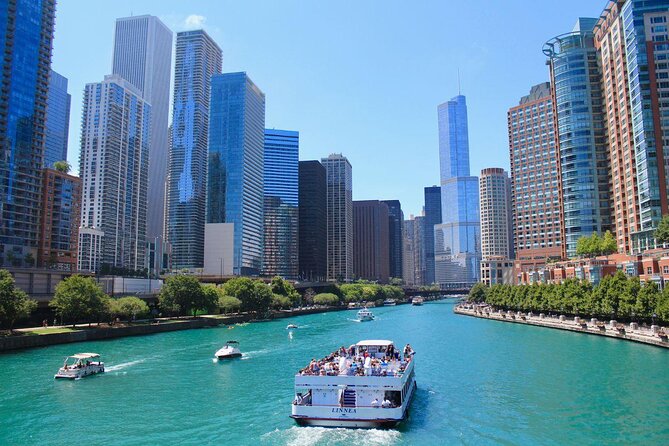
- Riverfront skyline views on foot: you get to see the city’s geometry at human speed
- Convenient endpoint: you finish near Merchandise Mart, easy to keep exploring afterward
First Stop: Chicago Architecture Center and the Art Deco frame you’ll use
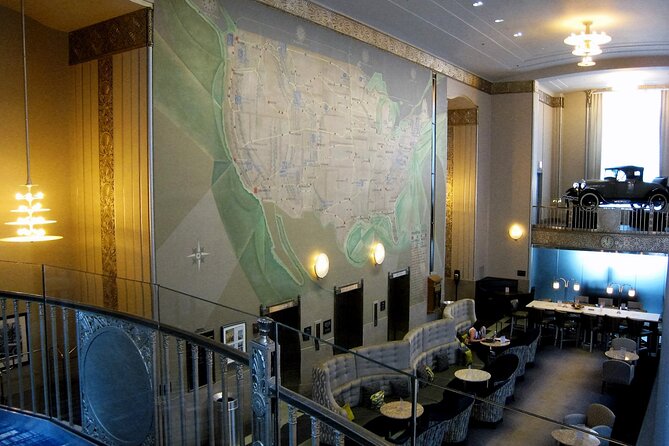
Most architecture tours start with a view. This one starts with context. Your meet point is the Chicago Architecture Center, at 111 E Wacker Dr. The ticket includes admission to the Galleries of the Chicago Architecture Center, which is a smart move because it gives you something to hold onto while you’re later scanning lobbies and facades.
From there, you’re walking into the stretch of downtown where Chicago’s skyline becomes a timeline. The riverfront is where you notice the city’s “how we got here” energy—trade, business, and the desire to make buildings feel like symbols, not just shelters.
And because this is a small-group experience, you don’t get lost in the shuffle. The tour is built to keep you moving, but not so fast that you miss details.
Neck craned in the Loop, more building walks
The route makes sense: from the river to The Mart
The walk runs about 1 hour 30 minutes (approx.), and you’ll end at THE MART (222 W Merchandise Mart Plaza). That endpoint is practical: it’s a landmark in its own right, and it’s easy to transition to other parts of downtown afterward without backtracking.
Also, don’t treat the time estimate as a strict stopwatch. Even with the plan being tight, you’ll naturally slow down when you enter lobbies or when a guide is answering questions. One useful reality check from past participants: the walk can feel closer to 1.5 miles depending on the day and how long you linger at each stop.
What matters most for you is pacing. The tour spreads the sights out so you get skyline moments on the way, then you get closer at specific buildings where Art Deco design shows up in the materials and layout.
Stop-by-stop: what to watch at each Art Deco building
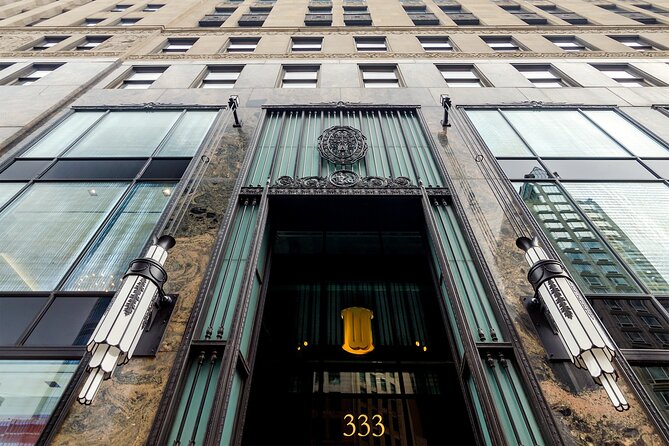
This is a route focused on five major Art Deco skyscrapers/buildings along the riverfront area, with several stops designed for exterior views and several designed for lobby/interior access. Keep one expectation in mind: while the plan includes interiors, access can change without notice due to schedules or closures.
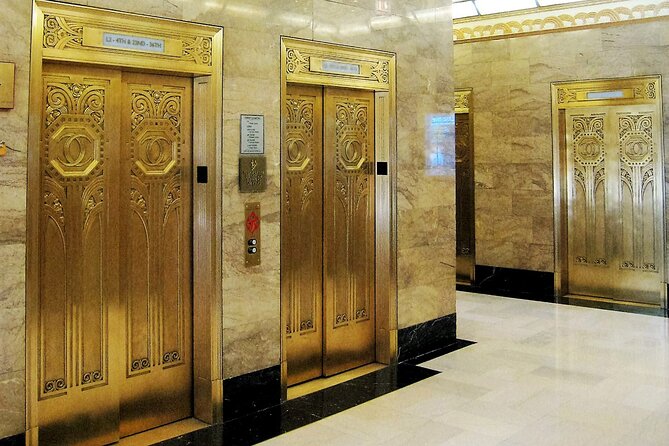
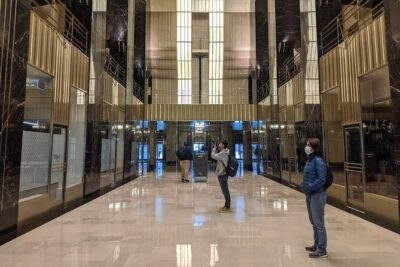
More marble lobbies and brass elevator doors
- Original Chicago Architecture Interiors Tour: Dazzling Interiors
★ 5.0 · 1,489 reviews - Chicago: Treasures of the Golden Age Walking Tour
★ 4.8 · 206 reviews - Chicago Architecture Walking Tour: Incredible Art Deco Interiors
★ 5.0 · 85 reviews
Stop 1: Chicago River (Art Deco along the water)
The tour kicks off by the Chicago River, where the guide sets the tone. This is where you learn how the style shows up along the waterfront—how buildings face the river, how sightlines work, and why the riverfront became a stage for major downtown construction.
This stop also helps you later on because you start thinking in patterns: setbacks, vertical emphasis, and the way decorative elements often mirror the building’s structure.
Stop 2: Crumbl Cream (exterior as a quick design cue)
At Crumbl Cream, you’re not going for the big museum moment. You’re using the building as a shortcut to see how Art Deco-era design cues can still influence how a streetscape feels.
This quick exterior stop works as a reset—just enough time to regroup and refocus before you hit the heavier hitters.
Stop 3: Carbide and Carbon Building (the style’s personality shows up fast)
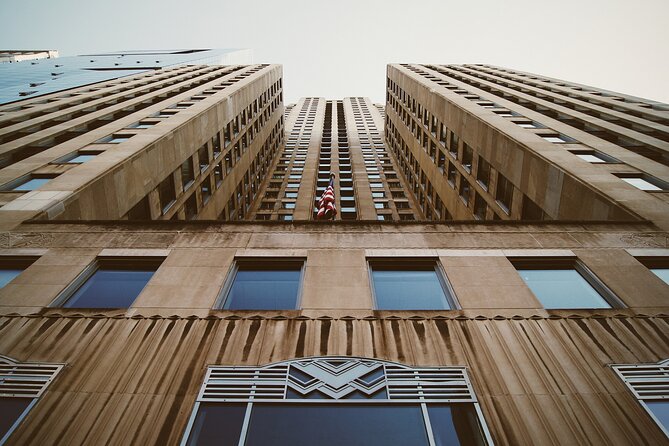
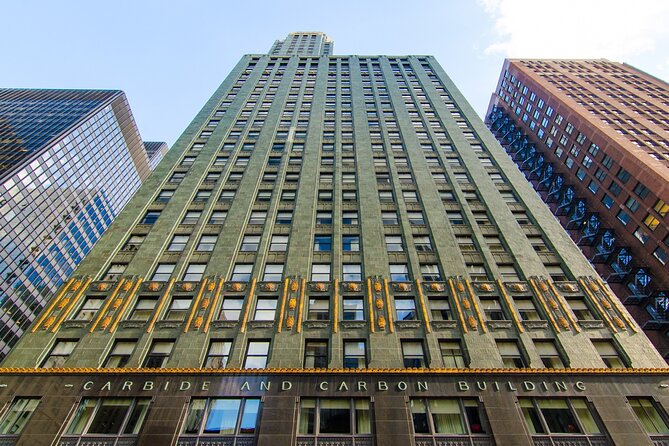
Next up is the Carbide and Carbon Building. This is the kind of building that rewards you for slowing down, because Art Deco details often look almost obvious once someone points out what to look for.
Expect the guide to talk about the characteristics that define Art Deco, and how it differs from other late-19th and early-20th styles. Past participants specifically highlighted that guides explain the differences between Art Deco and Art Nouveau, which is exactly the kind of comparison that makes future sightseeing easier.
Even when you only view the exterior, you’ll likely come away with a checklist for what to spot on other buildings.
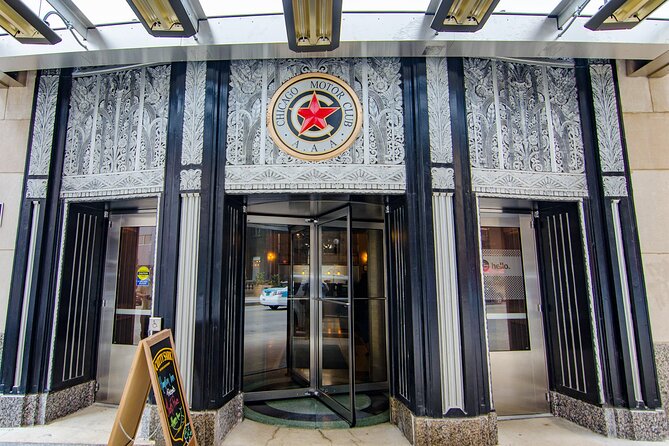
Stop 4: 66 E Wacker Place (former Chicago Motor Club Building)
At 66 E Wacker Place, you visit the former Chicago Motor Club Building. This stop is where the tour shifts from “recognize Art Deco” to “understand why it was designed this way.”
A building like this is worth seeing because it links architecture to the city’s life—transport, business, and the push for modern, confident design in the early 1900s.
If interiors are available that day, you’ll get more than just a facade moment. If not, you still get the architectural interpretation from the guide.
Stop 5: 182 W Lake St (Trustees System Service Building)
The Trustees System Service Building at 182 W Lake St is another key stop in the run. The guide’s job here is to connect the Art Deco features to the building’s role in downtown—how style served function and how ornament signals importance.
This stop tends to be valuable even for people who think they already know Chicago architecture. Once you start training your eye on vertical lines, repeating motifs, and facade rhythm, the city’s design becomes easier to read.
Stop 6: Merchandise Mart (finish at a Chicago icon)
You end at the Merchandise Mart, at 222 Merchandise Plaza, right near THE MART. This is a fitting closing note because it’s a huge downtown landmark that’s easy to orient around after the tour.
Even if you’ve been focused on details all along, finishing here gives you a bigger picture moment. You can look back at the skyline with a clearer sense of what you just learned.
The best part: guides who teach you how to see
The tour’s core value is the narration—provided by a professional and certified guide. The names from past tours you might encounter include Ron Roman, Russ S, Mitch, John I., Chris, Cynthia, Jill C, Rebecca, Bill, and Marcia. That variety matters because it means the experience is guided by people who know the buildings and can explain them clearly.
Here’s what I’d call the most consistently praised teaching style: the guides don’t just list dates. They point out Art Deco traits and talk through how the style connects to other arts and design ideas from the same era.
A great example of why that matters: one common highlight from past participants is that lobbies and interior spaces give you a chance to notice recurring themes and design patterns you’d miss from street level. That’s the practical payoff. After a tour like this, you stop seeing buildings as backgrounds and start seeing them as designed objects.
Also, guides have handled different audience needs well. Several reviews noted that guides help foreign tourists understand the material, and that Q and A is welcomed—so bring questions. This is exactly the moment where your curiosity pays off.
Price and value: $35 for access plus context
At $35 per person, this isn’t a “cheap and forget it” city walk. It’s priced like a guided architecture experience. And the value depends on one thing: you need to care about what the guide explains.
Here’s what you’re getting in plain terms:
- Narration by a certified guide
- Included admission to the Chicago Architecture Center galleries
- A planned set of Art Deco-focused stops, including opportunities to enter interiors/lobbies when they’re open
Many architecture tours give you exterior views and call it a day. This one is different because the design work happens at the lobby level—where materials, geometry, and decorative motifs often feel more intentional and readable.
If you’re the kind of traveler who likes a skyline photo, this is still enjoyable. But the real return is for people who want to learn how to see and interpret what they’re looking at.
When the plan changes: interiors that may not be accessible
A key detail you should respect: access to building interiors featured on this tour may be subject to change without notice due to weekend/holiday schedules or unforeseen closures.
That doesn’t mean the tour becomes useless. In practice, it means you might get more exterior viewing on a particular day. The guides still focus on explaining what you’re seeing, but your ability to experience lobby spaces depends on what’s open.
My advice: when you book, keep expectations flexible. If you’re hoping for every lobby, plan to be happy if you get fewer interior moments rather than disappointed. The architecture explanations still land.
What to wear and expect in winter-to-spring Chicago weather
Chicago can be cold and windy along the river, and this tour is outdoors between stops. Past participants specifically mentioned getting through very cold days with good pacing and warm breaks when possible—guides checked in and used nearby building access as a way to help people stay comfortable.
What you should do:
- Wear layers so you can adjust as you move
- Bring comfortable walking shoes (you’ll likely cover around 1.5 miles)
- Have a plan for wind off the river—hoods help, hats help, gloves help
Even if the tour is only 90 minutes on paper, your brain will be active. You’ll notice more when you’re not distracted by cold feet.
Who this tour is best for (and who might not love it)
This tour fits best if you:
- Like architecture details, especially Art Deco
- Want a guided path through major downtown landmarks instead of wandering
- Enjoy history, but prefer it tied directly to buildings and design choices
- Care about interior lobbies and not just exterior photos
You might be less satisfied if you’re looking for a slow, museum-style experience with long time inside each building. The tour is structured to keep you moving and using lobbies as “data points,” not turning each stop into a separate long visit.
That said, most people who love Chicago architecture tend to like the mix here: riverfront skyline views plus the chance to see the design up close.
Should you book the Art Deco Skyscrapers Riverfront tour?
I’d book it if you want the best kind of Chicago architecture shortcut: a focused route, a real guide who can explain what you’re seeing, and chances to view lobbies/interiors when they’re accessible.
I’d also say yes if you’re traveling with someone who enjoys stories and design. This tour is short enough to fit into a busy day, but it teaches you enough about Art Deco that your later self-guided walks get easier.
Book it with the one realistic caveat: interior access can change. If you go knowing that, you’ll still come away with a sharper eye for the city’s Art Deco personality—and a lot more to notice the next time you’re staring up at Chicago’s skyline.
FAQ
How long is the Chicago Art Deco Riverfront walking tour?
It runs about 1 hour 30 minutes (approx.).
What does the tour cost, and what’s included?
The price is $35.00 per person. It includes admission to the Galleries of the Chicago Architecture Center and narration by a professional and certified guide.
Do you visit building interiors or just the outside?
The tour includes access to interiors/galleries, but access to building interiors featured on the tour may be subject to change without notice due to weekend and holiday schedules or unforeseen closures.
Where do I meet the tour, and where does it end?
You meet at Chicago Architecture Center, 111 E Wacker Dr, Chicago, IL 60601. The tour ends at THE MART, 222 W Merchandise Mart Plaza, Chicago, IL 60654.
How big is the group?
The maximum group size is 15 travelers.
Are pets allowed?
No. Pets are not allowed. Service animals are allowed.
Is free cancellation available?
Yes. You can cancel up to 24 hours in advance for a full refund.
The Wider Chicago Shortlist
- Chicago Architecture River Cruise★ 5.0 · 15,756 reviews
- Chicago River 90-Minute Architecture Tour★ 4.5 · 9,629 reviews
- Chicago River: 1.5-Hour Guided Architecture Cruise★ 4.8 · 8,046 reviews
- Chicago: Gangsters and Ghosts Walking Tour★ 5.0 · 7,155 reviews
- Chicago Architecture Center River Cruise aboard First Lady★ 5.0 · 5,536 reviews
Behind the Revolving Doors
- Original Chicago Architecture Interiors Tour: Dazzling Interiors★ 5.0 · 1,489 reviews
- Chicago’s Secret Interiors Architectural Walking Tour★ 5.0 · 635 reviews
- Chicago: Secret Interiors Architecture Walking Tour★ 4.9 · 498 reviews
- Chicago: Treasures of the Golden Age Walking Tour★ 4.8 · 206 reviews
- Chicago Walking Tour: Art Deco Skyscrapers Loop★ 5.0 · 138 reviews
Chicago, Read from the Sidewalk
- Chicago in a Day: Food, History & Architecture Walking Tour★ 5.0 · 1,153 reviews
- Chicago’s Secret Interiors Architectural Walking Tour★ 5.0 · 635 reviews
- Chicago: Secret Interiors Architecture Walking Tour★ 4.9 · 498 reviews
- Chicago Architecture Tour: Underground Pedway and the Loop★ 5.0 · 388 reviews
- Chicago Walking Tour: Art Deco Skyscrapers Loop★ 5.0 · 138 reviews
The Ink Is Still Wet on These Chicago Reviews




Architecture Walking Tours, compared.
 ★ 5.0Chicago in a Day: Food, History & Architecture Walking TourFrom $1001,153 reviews
 ★ 5.0Chicago’s Secret Interiors Architectural Walking TourFrom $35635 reviews
 ★ 4.9Secret Interiors Architecture Walking TourFrom $35498 reviews
 ★ 5.0Chicago Architecture Tour: Underground Pedway and the LoopFrom $35388 reviews
 ★ 5.0Chicago Walking Tour: Art Deco Skyscrapers LoopFrom $35138 reviews
 ★ 4.0Frank Lloyd Wright Robie House Admission130 reviews
 ★ 5.0Chicago Architecture Walking Tour: Incredible Art Deco InteriorsFrom $3585 reviews
 ★ 5.0Chicago Walking Tour: Historic SkyscrapersFrom $3567 reviews
Browse the lists this tour appears in