
REVIEW · ART DECO & INTERIORS WALKS
Chicago: Treasures of the Golden Age Walking Tour
Chicago’s architecture has a weekly class.
This Golden Age walking tour turns Michigan Avenue and State Street into an easy story about how Chicago became a real cultural powerhouse. I love seeing the Chicago Cultural Center in context, and I love how the tour connects bold buildings to the people and ideas behind them. One possible drawback: you’re on your feet for a solid chunk of time, so plan for real walking.
The best part is the guide. Trained by the Chicago Architecture Center (CAC), guides like Doug, Ron, Dan, and Jackeline bring the buildings to life with clear, human stories, not just dates and names. You’ll also get a chance to peek inside some places, which makes the exteriors feel less like postcards and more like lived-in history.
My main caution is simple: no luggage or stroller storage, and no coat check. If you’re carrying stuff or traveling light in cold or rainy weather, you’ll want a plan before you head to the check-in desk.
In This Review
- Key takeaways before you start
- Where the tour starts: Chicago Architecture Center on East Wacker
- What you’ll see on Michigan Avenue and State Street in two hours
- Chicago Cultural Center and the Tiffany dome: why it feels so specific
- Marshall Field’s (now Macy’s) on State: the department store as a landmark
- Palmer House: a restored 1920s hotel with built-in drama
- The architect names you’ll start spotting on the street
- How Chicago’s 1893 turning point shapes the whole story
- CAC education impact: why your ticket helps beyond the sidewalks
- Pace, shoes, and practical tips for a smooth 2-hour walk
- Is $35 good value for a CAC-trained Golden Age tour?
- Should you book this Chicago Golden Age walking tour?
- FAQ
- How long is the Chicago: Treasures of the Golden Age Walking Tour?
- Where do I check in for the tour?
- What’s included in the ticket price?
- What should I bring with me?
- Is the tour wheelchair accessible?
- Are pets allowed on the tour?
- Is there luggage storage or a coat check?
- What happens if it rains?
- Can I cancel and get a full refund?
Key takeaways before you start
- CAC-trained guides who can explain revival styles and landmark details without losing the thread
- Tiffany dome at the Chicago Cultural Center, a standout you’ll understand more once you’ve walked there
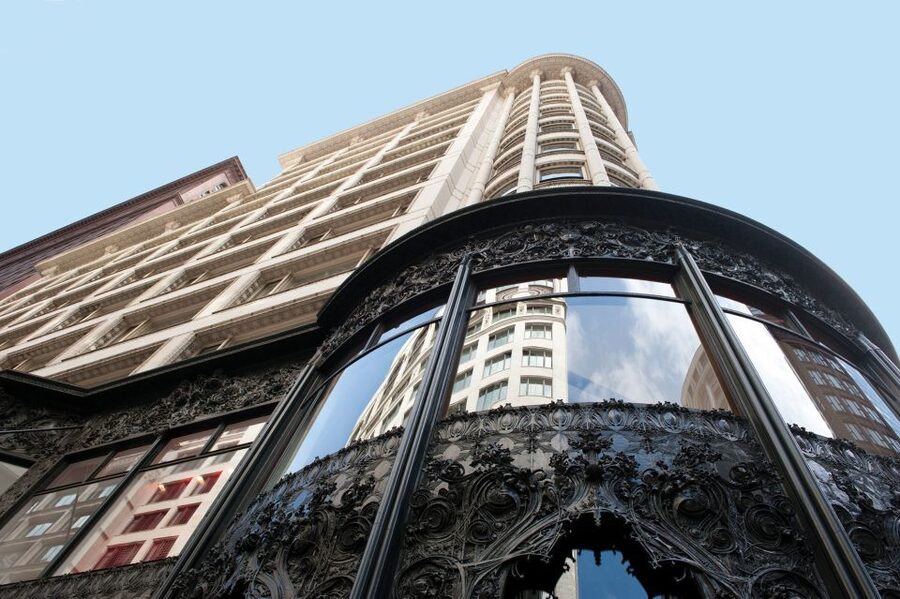
- Beaux Arts, neo-Georgian, and neo-Gothic details you can spot in real time
- Famous architects in plain language, including Daniel Burnham and Louis Sullivan
- A few interior glimpses, which make the 2-hour format feel worth it
- Your ticket supports local architecture education, including programs like Girls Build!
Where the tour starts: Chicago Architecture Center on East Wacker
You meet at the Chicago Architecture Center, 111 East Wacker Drive. Check in is inside the building, so you can shake off weather anxiety early, use the facilities if you need, and get oriented before stepping onto the sidewalks.
One small detail that matters: the tour includes admission to CAC exhibits. That means you’re not just walking past a bunch of famous facades and hoping for the best. You can use the exhibits to get your eye ready for what you’ll see next, especially if you’re the type who notices how styles change from one block to the next.
This is also where the “value” starts to make sense. For $35, you’re paying for (1) a trained guide and (2) access to CAC’s learning space, not only the walk itself. In a city where self-guided architecture routes can feel like homework, the guided version helps you move fast and still understand what you’re looking at.
Quick practical note: you’ll want ID (passport or ID card) with you. Also, tours depart rain or shine, and there’s no weather-based refund, so decide ahead of time if you’re truly up for that.
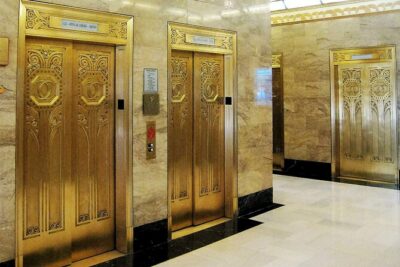
More marble lobbies and brass elevator doors

What you’ll see on Michigan Avenue and State Street in two hours
This is a Loop walking tour focused on historic architectural landmarks from roughly the 1890s to the 1930s. The big theme is Chicago’s “Golden Age” ambition: the city wanted to look like a modern capital, not a hopeful newcomer.
As you walk, you’ll connect several categories that often feel separate on a map:
- museums and civic spaces
- department stores
- major hotel interiors and lobbies
- concert halls and other public venues
- skyscraper-era design signals
The tour also teaches you how to read revival styles. You’ll hear terms like Beaux Arts, neo-Georgian, and neo-Gothic and, more importantly, you’ll learn what those styles look like on the street. That means you leave with a “spot it fast” skill: you start noticing symmetry, window patterns, stonework choices, and decorative motives rather than just saying, That building looks impressive.
Two hours is a quick sprint, so the tour is designed to hit the most “teachable” parts of the Loop. If you’ve been to Chicago before and thought you already knew the classics, this format can still feel fresh because you’re getting the why behind what you already recognize.
Chicago Cultural Center and the Tiffany dome: why it feels so specific
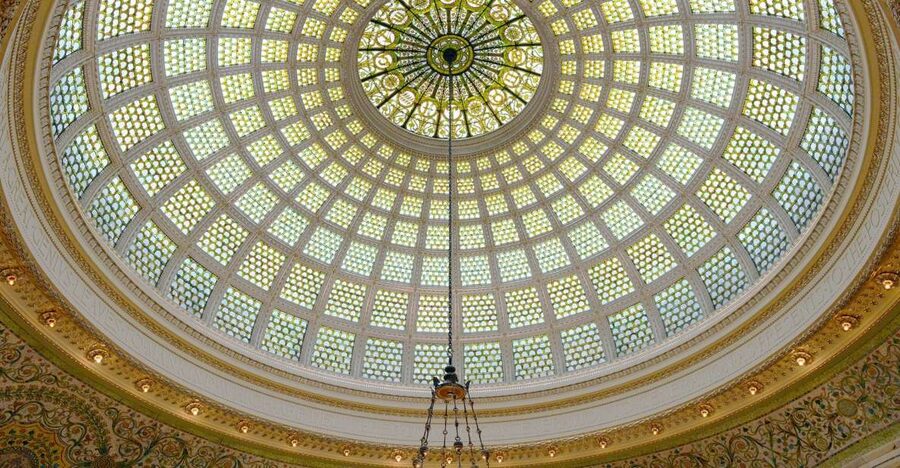
The Chicago Cultural Center is one of the best stops on this walk because it’s not just a pretty building. It’s a civic statement. You’ll hear how Chicago used architecture to declare cultural confidence after the city’s defining moment around the World’s Columbian Exposition of 1893.
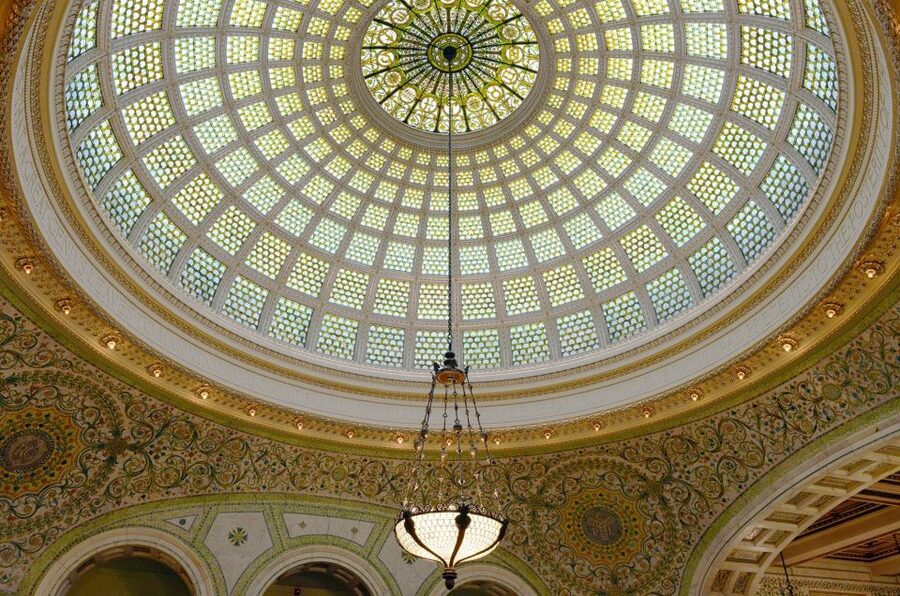
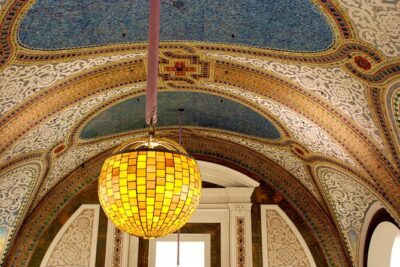
The signature moment is the world’s largest Tiffany dome. Even if you’re not an architecture nerd, you’ll get what makes it special: the dome pulls your attention upward and makes “art” feel built into public life. That’s the point. In a city trying to become a cultural metropolis, public buildings had to do more than function. They had to persuade.
What I like about this stop is how it sets up the rest of the walk. After you see the Cultural Center, nearby buildings stop feeling like random famous landmarks. They start feeling like chapters in the same ambition story: Chicago growing up in public, block by block.
One thing to consider: the Cultural Center can be a lot to take in quickly. If you’re the type who loves lingering, you might want a little extra time outside the tour window. Still, in a 2-hour format, this stop is a high-impact way to build understanding fast.
Chicago at sidewalk speed, more routes
- Chicago: Gangsters and Ghosts Walking Tour
★ 5.0 · 7,155 reviews - Chicago Favorites Ultimate Food and Walking Tour
★ 5.0 · 1,962 reviews - Chicago: Gangsters and Ghosts Guided Walking Tour
★ 4.7 · 1,697 reviews
Marshall Field’s (now Macy’s) on State: the department store as a landmark
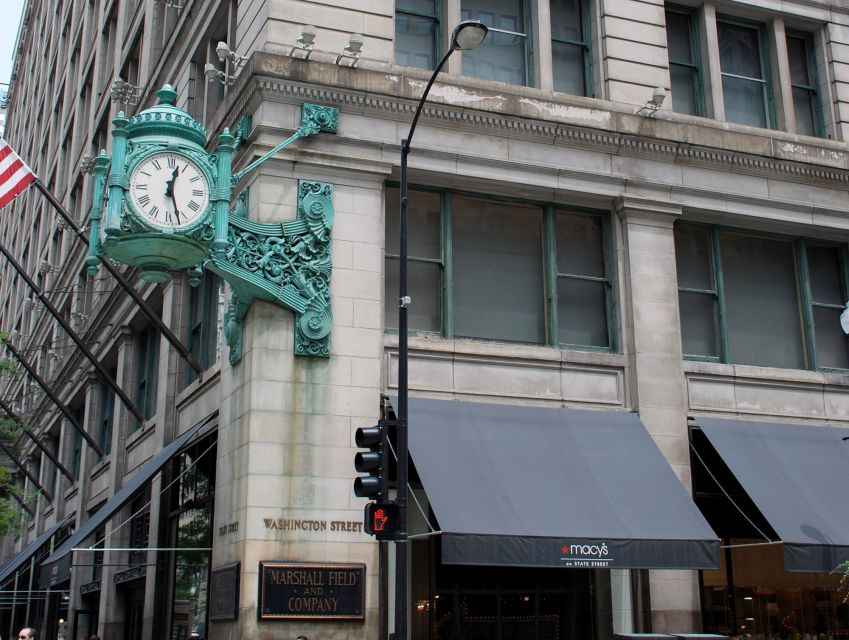
Next up is Marshall Field’s, now Macy’s, on State Street. Department stores aren’t just places to shop here. In the Golden Age, they were prestige buildings that blended commerce with spectacle.
This stop matters because it teaches you how Chicago’s big-name architecture worked for everyday life. The building’s exterior and interior details help you see how design choices signaled trust, prosperity, and modern taste. In other words: it wasn’t only a store; it was an identity.
I also like that the tour doesn’t treat architecture like a museum piece. You can stand on the sidewalk and notice the way the facade tries to command attention, then connect it to why people flocked there. When your guide ties these design features back to the people and cultural goals behind them, the store becomes more meaningful than a shopping stop.
Drawback to plan for: because it’s still a working retail landmark, you may not get the same slow, open-ended interior wandering you’d get at an art museum. The tour is designed for glimpses, not a full “take your time” visit. If you want deeper access, you’ll likely want to return separately later.
Palmer House: a restored 1920s hotel with built-in drama
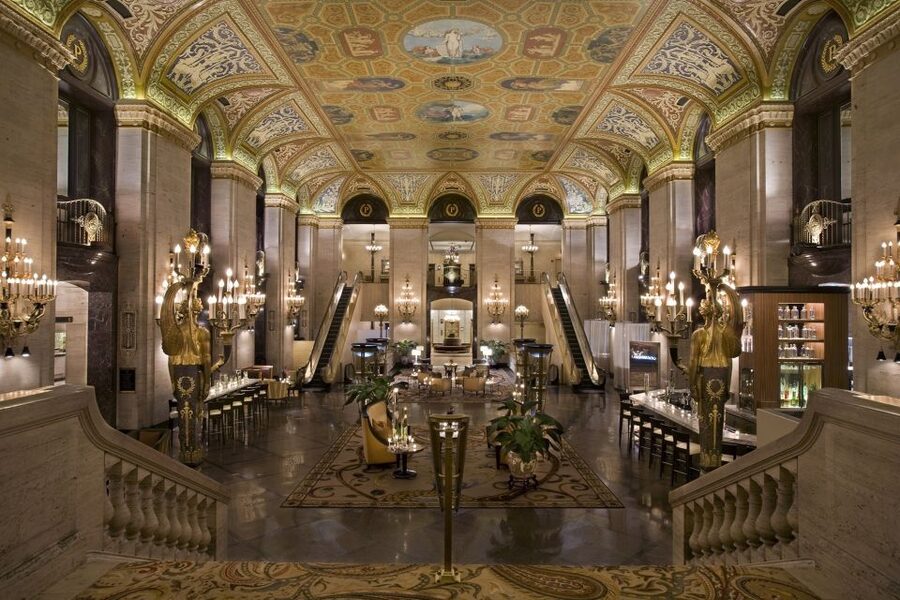
The Palmer House is another highlight because it’s explicitly tied to the feeling of the 1920s: a period when hotels were built to be social stages, not just overnight stops.
What makes this stop click is the restoration angle. You’re not seeing architecture as something frozen in time; you’re seeing how a major city chooses what to preserve and how. That’s part of what makes Chicago architecture tours worth doing: the city’s history is still in use.
You’ll hear stories that help you understand why hotels like Palmer House were designed to impress. The tour’s approach helps you notice the details that make grand lobbies work: scale, light, materials, and the way ornament guides your eye.
Like the other key stops, this one is about balance. The walk hits multiple buildings so you get variety, but it’s not so rushed that you’re staring at facades with no explanation. If you’re short on time in Chicago and want the Golden Age feeling without spending a whole day, Palmer House is one of the best “value” stops.
The architect names you’ll start spotting on the street
One of the big reasons this tour is so fun is how it gives you a usable mental map of the architects behind the look of the city. You’ll hear about designers like Daniel Burnham and Louis Sullivan, plus Holabird and Roche.
You don’t need to memorize anything. Instead, you learn what to listen for and what to look for. For example, Burnham is often tied to Chicago’s grand plans and big-picture civic thinking. Sullivan helps explain the shift toward more identity-driven skyscraper design. Holabird and Roche connect the city’s building boom to an architectural language that kept evolving.
This is where the revival styles matter. When the tour explains Beaux Arts, neo-Georgian, and neo-Gothic, it’s not wordplay. It’s a way to understand why Chicago was mixing “old world” language with modern ambition. You get the sense of a city borrowing credibility while also pushing forward.
After you learn this once, you start noticing patterns on the street. You’ll probably recognize similar decorative choices in other buildings you pass later, even if they’re not part of the tour. That’s a real payoff from a short walk.
How Chicago’s 1893 turning point shapes the whole story
Chicago’s rise is explained as a determination to become a major cultural center after the World’s Columbian Exposition in 1893. This context keeps the tour from becoming a random list of pretty buildings.
Once you understand the post-1893 mindset, the architecture becomes readable as persuasion. Civic culture needed visible proof. Department stores needed prestige. Hotels needed to feel like society. Concert and public venues needed to look like they belonged to a grown-up city.
That’s why the tour spends time connecting “cultural metropolis” ambition to what you actually see around you. When your guide ties each stop back to that broader arc, the Golden Age period stops feeling like abstract history. It feels like a real campaign, played out in stone, steel, and ornament.
I also appreciate the human angle. The guide focuses on the men and women who inspired these buildings and the institutions behind them. It’s not only architects; it’s the broader ecosystem that made the architecture possible.
CAC education impact: why your ticket helps beyond the sidewalks
This is a tour where the learning has a local footprint. Tickets purchased for Chicago Architecture Center experiences directly support education initiatives like Girls Build!, Teen Fellows, and the Newhouse Architecture + Design Competition.
It also supports programs that keep access open for more people, such as Open House Chicago. That matters because architecture education is not only for future architects. It’s for anyone who wants to read a city with their eyes open.
In plain terms: paying for this tour doesn’t just buy your entertainment for two hours. It funds ongoing local programming. If you like the idea of being a responsible tourist without turning your trip into a moral debate, this is a good match.
Pace, shoes, and practical tips for a smooth 2-hour walk
Plan for a 2-hour walking tour that starts at 111 East Wacker Drive and then heads along major central streets. The big practical advice is to wear comfortable shoes. Multiple guide notes point to how much you cover on foot, and the pace is set to keep you moving between stops.
It’s also worth knowing the “accessible” fine print. The tour is listed as wheelchair accessible, but it’s also noted as not suitable for people with mobility impairments. Translation: if you use a wheelchair, it may work. If you have limitations that make steady walking difficult, you’ll want to think carefully.
A few more logistics that can make or break your day:
- No secure storage for luggage or strollers
- No coat check
- Pets aren’t allowed, but service animals are welcome
Given those rules, travel light if you can. If you’re arriving from a hotel with bags, it’s smart to arrange storage elsewhere before you meet at CAC.
Finally, if you care about hearing every word: some guides use a microphone system. Even if yours does not, you’ll get help from the guide adjusting their positioning so you can hear while still looking up at facades.
Is $35 good value for a CAC-trained Golden Age tour?
Yes, mostly because you’re paying for three things at once: a certified guide, a 2-hour format that focuses your time, and admission to CAC exhibits.
At $35, it’s not a “splurge architecture day.” It’s a focused way to get context for Chicago’s most iconic early-20th-century look. If you’re the kind of traveler who likes to understand what you’re seeing—especially revival styles and why certain buildings exist—this offers strong value for a short visit.
If, on the other hand, you want to spend hours inside multiple venues or you’re hoping for a slow, museum-style experience, this may feel a little fast. But as an architecture primer for the Loop, it’s hard to beat.
Should you book this Chicago Golden Age walking tour?
Book it if you want the quickest path from landmark photos to real understanding. I’d especially recommend it if you:
- have only a short time in Chicago and want the Loop’s key “story buildings”
- like guided tours that explain design choices, not just facts
- want your architecture visit to include a few interior glimpses
- appreciate tours tied to a nonprofit like the Chicago Architecture Center
Skip or reconsider if you can’t do a steady walk, need on-site storage for bags or strollers, or you’re traveling with pets.
If those conditions work for you, this is the kind of tour that changes how you look at Chicago even after you leave the Loop.
FAQ
How long is the Chicago: Treasures of the Golden Age Walking Tour?
The tour lasts 2 hours.
Where do I check in for the tour?
Check in is inside the Chicago Architecture Center at 111 East Wacker Drive, Chicago, IL 60601.
What’s included in the ticket price?
Included are admission to Chicago Architecture Center exhibits, the 2-hour walking tour, and a Chicago Architecture Center certified guide.
What should I bring with me?
Bring a passport or ID card.
Is the tour wheelchair accessible?
It is listed as wheelchair accessible, but it is also noted as not suitable for people with mobility impairments.
Are pets allowed on the tour?
Pets are not allowed, but service animals are welcome.
Is there luggage storage or a coat check?
No. The tour does not provide secure storage for luggage or strollers, and there is no coat check.
What happens if it rains?
Tours depart rain or shine, and there are no refunds due to weather.
Can I cancel and get a full refund?
Yes. You can cancel up to 24 hours in advance for a full refund.
Chicago on Foot, Block After Block
- Chicago: Gangsters and Ghosts Walking Tour★ 5.0 · 7,155 reviews
- Chicago Favorites Ultimate Food and Walking Tour★ 5.0 · 1,962 reviews
- Chicago: Gangsters and Ghosts Guided Walking Tour★ 4.7 · 1,697 reviews
- Chicago in a Day: Food, History & Architecture Walking Tour★ 5.0 · 1,153 reviews
- Chicago’s Secret Interiors Architectural Walking Tour★ 5.0 · 635 reviews
The Wider Chicago Shortlist
- Chicago Architecture River Cruise★ 5.0 · 15,756 reviews
- Chicago River 90-Minute Architecture Tour★ 4.5 · 9,629 reviews
- Chicago River: 1.5-Hour Guided Architecture Cruise★ 4.8 · 8,046 reviews
- Chicago: Gangsters and Ghosts Walking Tour★ 5.0 · 7,155 reviews
- Chicago Architecture Center River Cruise aboard First Lady★ 5.0 · 5,536 reviews
Behind the Revolving Doors
- Original Chicago Architecture Interiors Tour: Dazzling Interiors★ 5.0 · 1,489 reviews
- Chicago’s Secret Interiors Architectural Walking Tour★ 5.0 · 635 reviews
- Chicago: Secret Interiors Architecture Walking Tour★ 4.9 · 498 reviews
- Chicago Walking Tour: Art Deco Skyscrapers Loop★ 5.0 · 138 reviews
- Chicago Architecture Walking Tour: Incredible Art Deco Interiors★ 5.0 · 85 reviews
The Ink Is Still Wet on These Chicago Reviews




Art Deco & Interiors Walks, compared.
 ★ 5.0Original Chicago Architecture Interiors Tour: Dazzling InteriorsFrom $351,489 reviews
 ★ 5.0Chicago’s Secret Interiors Architectural Walking TourFrom $35635 reviews
 ★ 4.9Secret Interiors Architecture Walking TourFrom $35498 reviews
 ★ 5.0Chicago Walking Tour: Art Deco Skyscrapers LoopFrom $35138 reviews
 ★ 5.0Chicago Architecture Walking Tour: Incredible Art Deco InteriorsFrom $3585 reviews
 ★ 5.0Chicago Walking Tour: Art Deco Skyscrapers RiverfrontFrom $3553 reviews
 ★ 4.5Chicago Walking Tour: Tiffany TreasuresFrom $3544 reviews
 ★ 4.9Chicago’s Original Dazzling Architectural Interiors TourFrom $3539 reviews
Browse the lists this tour appears in