
REVIEW · ARCHITECTURE WALKING TOURS
Chicago’s Secret Interiors Architectural Walking Tour
One sentence. Small group. Big wow.
I really like how this Chicago architectural walking tour mixes street-level skyline stories with rare interior moments you’d otherwise miss. I also love the small-group feel, where guides like Ethan or Grant keep things moving and explain why each building’s design choices matter. One thing to plan for: the Rookery is closed on Sundays, so your exact route changes that day.
You’ll spend about two hours hopping between iconic Chicago addresses and lesser-noticed craft details—think light courts, mosaic floors, terra cotta facades, and that famous grand-entry energy. It’s also practical value for the money: the stops are marked admission free, so you’re mainly paying for a guide who can connect the dots.
The overall vibe is part architecture class, part city walk—plus a quick break mid-tour when needed. If you enjoy getting your bearings fast and seeing how Chicago’s big ideas show up in real stone-and-bronze details, this one hits the sweet spot.
In This Review
- Key points worth knowing before you go
- How the “secret interiors” format works in real life
- Chicago Loop + Financial Canyon: where the skyline turns into a design lesson
- Union Station’s Great Hall: the “arrive in style” moment
- The Rookery’s light court and Wright lobby—plus why Sundays matter
- Field Building and Marquette: Art Deco style meets the Chicago window
- Palmer House: Gilded Age glamour with frescoes and peacock doors
- Chicago Cultural Center or the Monadnock Building: two styles, one city
- Marshall Field and Company: Tiffany glass and a real tea-room feeling
- Where the $35 value really comes from
- Pacing, weather, and what to wear on a Loop interior tour
- Who should book this (and who might want to skip it)
- Should you book Chicago’s Secret Interiors Architectural Walking Tour?
- FAQ
- How long is Chicago’s Secret Interiors Architectural Walking Tour?
- How much does the tour cost?
- Do I need a print ticket, or is there a mobile option?
- Where does the tour start and end?
- What’s the maximum group size?
- Is the Rookery Building always part of the route?
- Which stops will I visit?
- Is there an expert guide included?
- Is the tour dependent on weather?
- Can I cancel for a full refund?
Key points worth knowing before you go
- Small group (max 15) means you’re not lost in the crowd, and you can actually hear the guide.
- Interior access is the whole point: you’re aiming for lobbies and public rooms, not just facades.
- Frank Lloyd Wright’s touch at the Rookery is a highlight, but that stop is skipped on Sundays.
- Route spans the Loop to River-adjacent landmarks, so you see a lot without a long commute.
- Frequent short indoor stops make weather less of a deal-breaker when you dress for it.
- Multiple guide styles show up—many guests mention energetic, organized guides by name, including Ethan and Grant.
How the “secret interiors” format works in real life
This is not a slow meander. It’s a focused walk where you get a quick orientation outside, then you step inside for a handful of design details you can’t pick up from the sidewalk.
Expect a 2-hour experience with short building stops (around 10 minutes each), plus time between locations. In colder weather, I like that the tour leans indoors often enough that you don’t feel like you’re freezing through the whole thing.
Because the group is capped at 15 people, it feels manageable even when you’re moving in and out of lobbies that aren’t huge. That small size also helps the guide keep the story tight—from “what you’re looking at” to “why it was a challenge to build.”
Neck craned in the Loop, more building walks
Chicago Loop + Financial Canyon: where the skyline turns into a design lesson
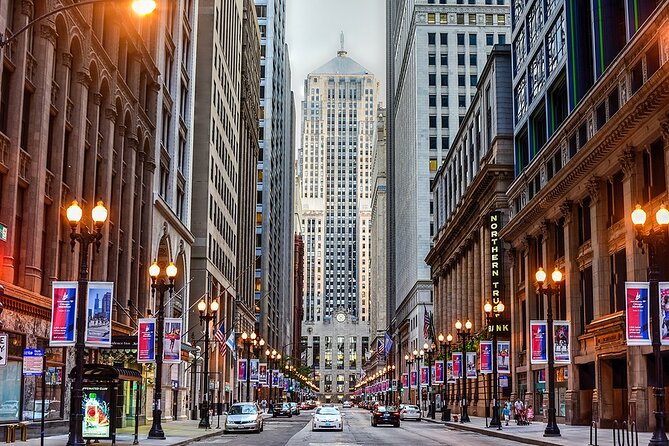
Your tour starts in the heart of Chicago’s business district near Chicago Union Station and heads into the Loop, where the city’s most dramatic vertical ambitions show up.
At the first stop, you get the big-picture context: Chicago’s downtown became a magnet for financiers, builders, and spectacle—so the architecture had to do more than look good. You’ll hear how the Board of Trade’s Art Deco splendor and the rise of modern giants like Willis Tower reflect changing tastes, changing needs, and changing engineering expectations.
Then the route shifts to a tighter concentration around what’s often described as the Financial Canyon—a corridor-like feel created by towering buildings pressing close together. This is the part I love because it changes your way of seeing. Instead of thinking “nice skyline,” you start noticing how facades, setbacks, and materials were chosen to manage density, light, and street presence.
Practical note: this is also where you’ll likely do the most quick photo stops. Bring your camera/phone-ready gear, but keep a bit of patience—these are working areas and you’ll be moving.
Union Station’s Great Hall: the “arrive in style” moment
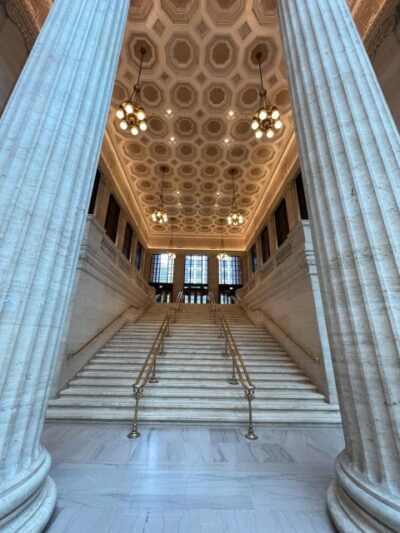
Next comes Union Station, a long-standing Chicago showpiece designed by Daniel Burnham and completed in 1925.
If you only associate Union Station with transit, this stop can surprise you. The Beaux-Arts facade sets an elegant tone from the outside, but the payoff is inside: the Great Hall with its impressive skylight creates that airy, ceremonial feeling you usually only get in museums.
I like that the guide frames it as more than a pretty interior. Union Station is a civic statement: an ambitious gateway meant to handle crowds while projecting confidence. After you’ve seen it this way, Chicago stops being just tall buildings—it becomes a place that built grand public rooms into daily life.
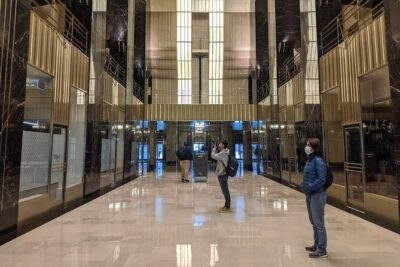
More marble lobbies and brass elevator doors
- Original Chicago Architecture Interiors Tour: Dazzling Interiors
★ 5.0 · 1,489 reviews - Chicago: Treasures of the Golden Age Walking Tour
★ 4.8 · 206 reviews - Chicago Architecture Walking Tour: Incredible Art Deco Interiors
★ 5.0 · 85 reviews
The Rookery’s light court and Wright lobby—plus why Sundays matter
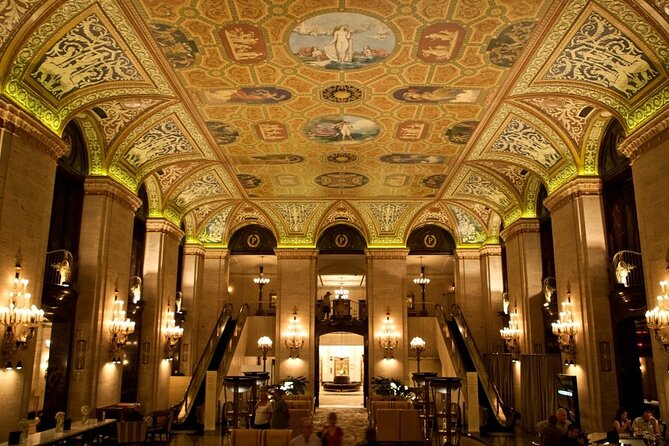
One of the standout stops on this kind of tour is the Rookery Building, built in 1888 from the partnership of Burnham and Root. What makes it special is the way you can see multiple layers of Chicago design thinking in one place.
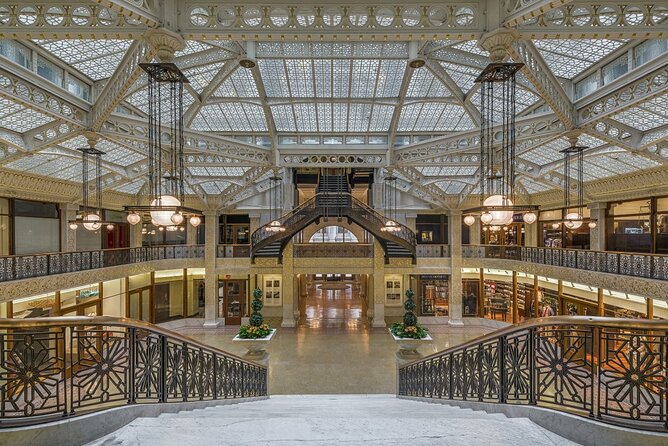
Inside, you’ll notice the blend of Romanesque and Moorish influences, and you’ll likely hear about the light court—a key feature for bringing daylight into a dense urban floor plan. You’ll also get pointed attention to craftsmanship details like ironwork and the iconic oriel staircase.
Then there’s the Frank Lloyd Wright factor. The tour focuses on how Wright later reimagined the lobby, which gives you a real before-and-after way to understand how architectural styles evolved in Chicago.
Important planning note: the Rookery is closed on Sundays, and that stop won’t be included on that day. If you’re going specifically on a Sunday and the Rookery is your top target, that’s the one schedule conflict worth double-checking.
Field Building and Marquette: Art Deco style meets the Chicago window
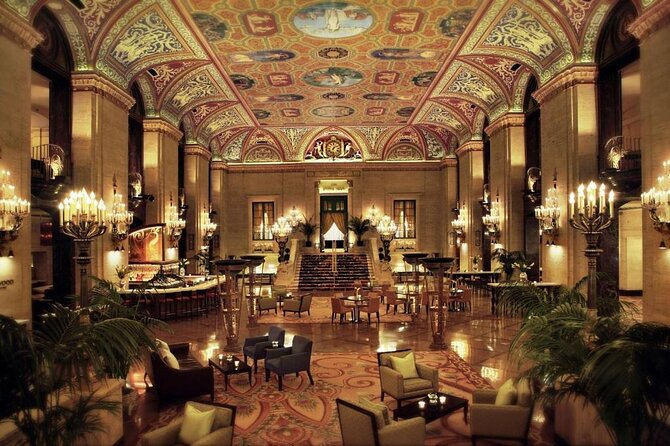
After the Rookery, the tour keeps its momentum with two stops that highlight different eras of Chicago design.
First up is the Field Building, known for its Art Deco character. Even in a short indoor segment, Art Deco works well on a walking tour because it’s visually “loud” in a controlled way—geometric organization, clean lines, and the kind of decorative ambition you don’t expect to see in everyday office corridors.
Then you move to the Marquette Building, celebrated for its pioneering use of the Chicago window and for its terra cotta facade. This stop is ideal if you like learning the trade-offs behind the look. Large windows and thoughtful facade design weren’t just aesthetics—they were tied to the practical problem of lighting and comfort in a high-density city.
Inside, the tour points you toward the lobby’s ornate mosaics, which connect architectural design to storytelling—specifically the history of Jacques Marquette and exploration in Illinois. It’s the kind of detail that’s easy to miss if you’re walking past on your way to lunch.
Palmer House: Gilded Age glamour with frescoes and peacock doors
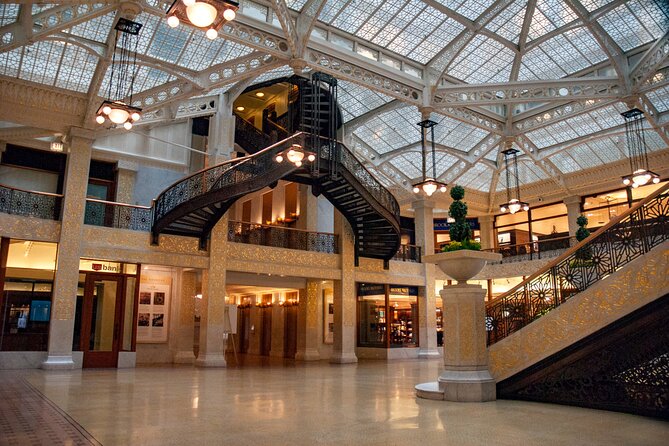
The next stop is Palmer House a Hilton Hotel, and the mood shifts—this is where Chicago’s Gilded Age luxury comes through.
The building you see has a story tied to the Great Chicago Fire; it was rebuilt after 1871. That matters because it’s not just a pretty lobby. It’s also a symbol of how Chicago rebuilt with swagger—using architecture to signal strength and status.
You’ll be guided toward the highlights: the frescoed ceiling, mosaic floors, and the famous bronze peacock doors. Those peacock doors are the sort of detail that makes you stop mid-sentence and just look, because they’re both decorative and unmistakably deliberate.
If you’re the kind of person who likes architecture as social history, Palmer House is a good counterweight to all the commercial skyscraper energy. This is prestige made physical, in a room you can actually stand in.
Chicago Cultural Center or the Monadnock Building: two styles, one city
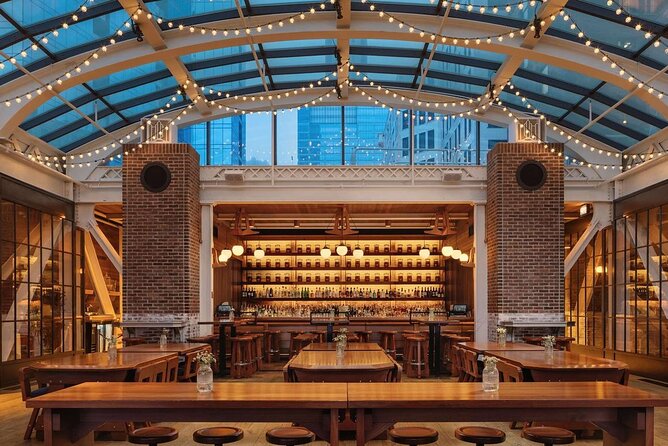
Stop eight is a flexible choice: you’ll either visit the Chicago Cultural Center or the Monadnock Building.
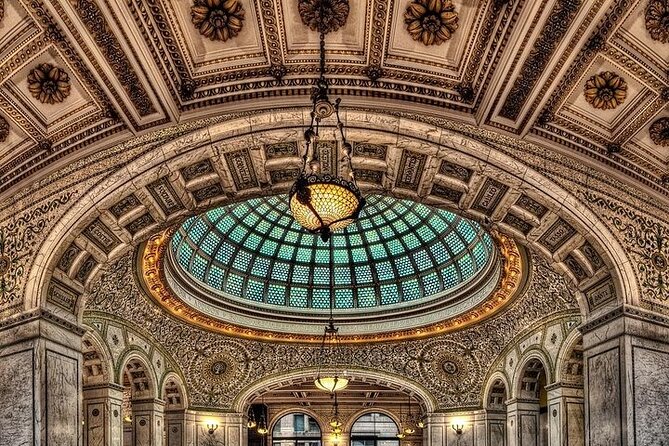
The Chicago Cultural Center is presented as a mix of architectural beauty and cultural heritage. If you like your architecture with a civic mission, this can feel like a “Chicago’s brain” kind of stop—public rooms that signal the city’s commitment to art and community.
If your route includes the Monadnock Building, you’ll get a different read on Chicago. It’s known for the commercial style popular in the late 19th century, which means you’ll likely notice the more utilitarian logic behind its massing and facade presence compared with the more ornate civic mood elsewhere.
Either way, I like this stop because it reminds you that Chicago’s story isn’t one style. It’s multiple eras talking to each other.
Marshall Field and Company: Tiffany glass and a real tea-room feeling
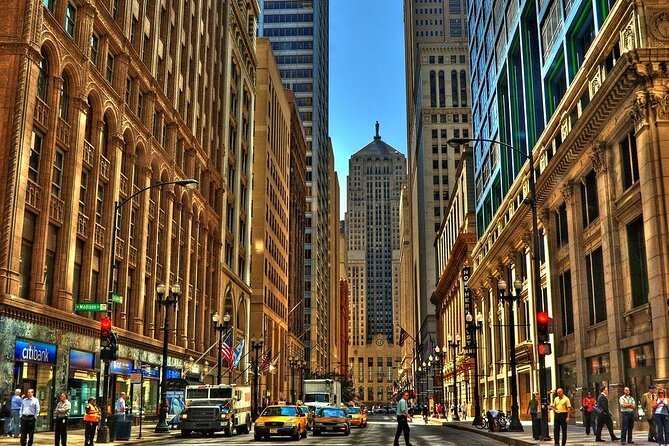
The tour ends at the Marshall Field and Company Building (now housing Macy’s), and it’s a strong finish.
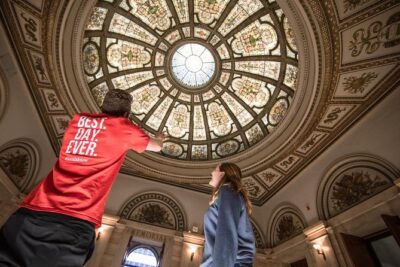
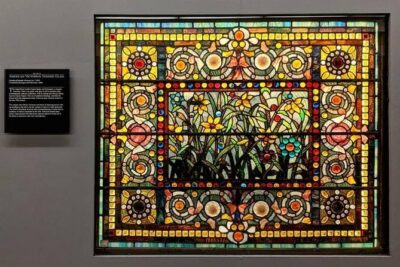
This stop focuses on two signature interior moments: the Tiffany glass mosaic dome and the walnut-paneled Tea Room. Even if you’ve heard of Tiffany before, seeing mosaic work in the context of a real department store building changes how it lands. It’s not decorative wallpaper. It’s design meant to sell an experience.
The tea room detail is especially satisfying because it’s the kind of space that hints at how grand shopping became in the early 20th century—less quick transaction, more social ritual. You’ll also connect this to the building’s ongoing role as a commercial hub, so the architecture doesn’t just sit there as history. It still functions in public life.
Where the $35 value really comes from
At $35 for about two hours, this tour isn’t competing with “big” attractions. It competes with the cost and hassle of going inside buildings on your own.
Here’s why I think it’s good value:
- You get an expert guide doing the translation work: what you’re seeing, what it solved, and what it meant.
- Most of the major interior stops are listed as admission ticket free, so you’re not layering on separate ticket costs.
- You get a tight route that covers famous names (Union Station, Willis Tower area, Palmer House, Marshall Field) without requiring you to plan each entrance.
For me, the value equation comes down to time saved and confusion avoided. Chicago is full of architectural detail, but you often need someone to point at the right parts. This tour aims to do that.
Pacing, weather, and what to wear on a Loop interior tour
Even though a lot of the experience is inside, it still is a walking tour in the Chicago Loop. Wear shoes that can handle pavement and quick stair-and-lobby transitions.
You should also plan for weather because the experience is dependent on it. The tour is described as requiring good weather, and in bad conditions you’ll be offered a different date or a full refund.
In practice, I like that many guests note the time spent indoors helps make cold or rainy conditions feel more manageable. Still, bring layers and a light umbrella if forecasts look questionable.
Who should book this (and who might want to skip it)
This tour is perfect if you:
- enjoy architecture but also want a story, not just facts
- want access to interiors like lobbies, halls, and ornate public rooms
- plan a short Chicago stay and want maximum design variety in about two hours
- want a complement to other Chicago architecture activities, especially river-focused ones (this walk doesn’t duplicate the river-boat storyline)
You might skip it if you’re expecting a long, uninterrupted sit-down museum-style tour. This is more “fast architecture hits” than “one building for a deep academic hour.”
Should you book Chicago’s Secret Interiors Architectural Walking Tour?
Yes—if your idea of a great Chicago day includes standing in real rooms and noticing details you’d miss on your own. The small group size, the focus on interior craftsmanship, and the blend of eras—from Burnham-era grandeur to Art Deco and Chicago School—make the $35 feel fair.
Just check your day of week for the one big schedule snag: no Rookery on Sundays. If you can work around that, you’re set up for a really satisfying walk through Chicago’s most impressive architectural personalities—without needing a whole day to do it.
FAQ
How long is Chicago’s Secret Interiors Architectural Walking Tour?
The tour lasts about 2 hours.
How much does the tour cost?
The price is $35.
Do I need a print ticket, or is there a mobile option?
A mobile ticket is included.
Where does the tour start and end?
It starts at Chicago Union Station, 225 S Canal St, Chicago, IL 60606, and ends at the Marshall Field and Company Building, 111 N State St, Chicago, IL 60602.
What’s the maximum group size?
The tour has a maximum of 15 travelers.
Is the Rookery Building always part of the route?
No. The Rookery is closed on Sundays, so it will not be included on Sundays.
Which stops will I visit?
You’ll see the Loop area landmarks, Union Station, the Rookery (when open), the Field Building, the Marquette Building, Palmer House, plus either the Chicago Cultural Center or the Monadnock Building, and then the Marshall Field and Company Building.
Is there an expert guide included?
Yes. An expert tour guide is included.
Is the tour dependent on weather?
Yes. The experience requires good weather, and if it’s canceled due to poor weather you’ll be offered a different date or a full refund.
Can I cancel for a full refund?
Yes. Free cancellation is available up to 24 hours in advance for a full refund. If you cancel less than 24 hours before the start time, the amount paid is not refunded.
The Wider Chicago Shortlist
- Chicago Architecture River Cruise★ 5.0 · 15,756 reviews
- Chicago River 90-Minute Architecture Tour★ 4.5 · 9,629 reviews
- Chicago River: 1.5-Hour Guided Architecture Cruise★ 4.8 · 8,046 reviews
- Chicago: Gangsters and Ghosts Walking Tour★ 5.0 · 7,155 reviews
- Chicago Architecture Center River Cruise aboard First Lady★ 5.0 · 5,536 reviews
Behind the Revolving Doors
- Original Chicago Architecture Interiors Tour: Dazzling Interiors★ 5.0 · 1,489 reviews
- Chicago: Secret Interiors Architecture Walking Tour★ 4.9 · 498 reviews
- Chicago: Treasures of the Golden Age Walking Tour★ 4.8 · 206 reviews
- Chicago Walking Tour: Art Deco Skyscrapers Loop★ 5.0 · 138 reviews
- Chicago Architecture Walking Tour: Incredible Art Deco Interiors★ 5.0 · 85 reviews
Chicago, Read from the Sidewalk
- Chicago in a Day: Food, History & Architecture Walking Tour★ 5.0 · 1,153 reviews
- Chicago: Secret Interiors Architecture Walking Tour★ 4.9 · 498 reviews
- Chicago Architecture Tour: Underground Pedway and the Loop★ 5.0 · 388 reviews
- Chicago Walking Tour: Art Deco Skyscrapers Loop★ 5.0 · 138 reviews
- Frank Lloyd Wright Robie House Admission★ 4.0 · 130 reviews
The Ink Is Still Wet on These Chicago Reviews




Architecture Walking Tours, compared.
 ★ 5.0Chicago in a Day: Food, History & Architecture Walking TourFrom $1001,153 reviews
 ★ 4.9Secret Interiors Architecture Walking TourFrom $35498 reviews
 ★ 5.0Chicago Architecture Tour: Underground Pedway and the LoopFrom $35388 reviews
 ★ 5.0Chicago Walking Tour: Art Deco Skyscrapers LoopFrom $35138 reviews
 ★ 4.0Frank Lloyd Wright Robie House Admission130 reviews
 ★ 5.0Chicago Architecture Walking Tour: Incredible Art Deco InteriorsFrom $3585 reviews
 ★ 5.0Chicago Walking Tour: Historic SkyscrapersFrom $3567 reviews
 ★ 5.0Chicago City Tour: Elevated Architecture Tour with Train Ticket IncludedFrom $4165 reviews
Browse the lists this tour appears in