
REVIEW · ARCHITECTURE WALKING TOURS
Chicago in a Day: Food, History & Architecture Walking Tour
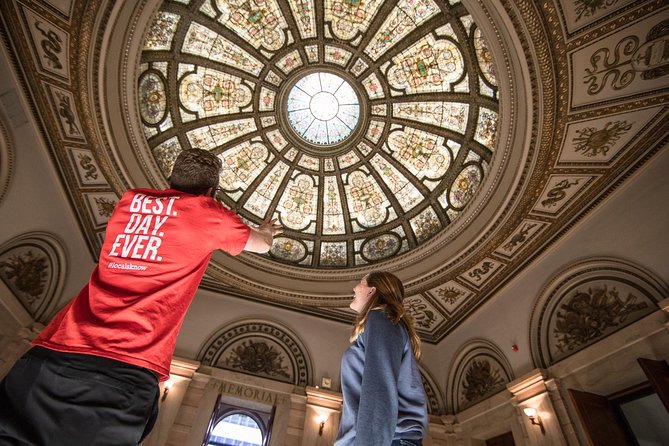
Chicago in half a day is a smart move. This small-group walk mixes iconic food, skyline-defining architecture, and real stories about how the city became Chicago.
I like two things right away. First, the scale: capped at 12 people, so you actually hear the guide and don’t spend the day playing human shuffle. Second, the mix of “see it” and “taste it” keeps your brain engaged, from the Chicago River views to the classic bites that add up to a full lunch.
One thing to plan for: a big chunk of the morning is mostly walking and sightseeing before the food ramps up. If you skip breakfast, you may feel that gap in your stomach and your focus.
In This Review
- Key Takeaways Before You Go
- A Half-Day Mix of Chicago Food and Skyscraper Stories
- Starting Under the Chicago Theatre Marquee
- The Chicago Pedway: Where Locals Walk in Winter
- Passing City Hall and County Building Power Lines
- Chicago River Walk: The View and the Commute
- Magnificent Mile Moments: Wrigley Building and More
- Tribune Tower: Neo-Gothic in the Middle of the Sky
- Millennium Park and The Bean: More Than a Photo Stop
- End Near the Loop: A Strong Finish for Continuing on Your Own
- Food Portion Reality: When Tastings Start (and What That Means)
- Walking Pace, Distance, and What to Wear
- Group Size Makes a Difference (Especially for Safety and Questions)
- Dietary Needs: What You Can and Can’t Count On
- Value for $100.95: What You’re Really Paying For
- Who Should Book This Chicago in a Day Walk
- Should You Book This Tour? My Decision Guide
- FAQ
- How long is the Chicago in a Day walking tour?
- How much does the tour cost?
- How many people are in the group?
- Where does the tour start and end?
- What food is included?
- Are vegetarian options available?
- How much walking should I expect?
- Does the tour run in bad weather?
- Is it child-friendly?
- What is the cancellation policy?
Key Takeaways Before You Go
- Small group size (max 12) means easier questions and less stress at crowded stops
- Architecture + food + history are woven through the day, not tacked on at random
- Pedway and Riverwalk area give you a local-feeling route, especially if winter weather hits
- Millennium Park and The Bean are a main event for photos and context
- You should eat beforehand since tastings start later than you might expect
A Half-Day Mix of Chicago Food and Skyscraper Stories
This tour is designed for people who want the best of downtown Chicago fast, without turning the day into a checklist sprint. You get major landmarks, plus the “why this place matters” stuff that makes architecture and neighborhoods feel less like postcards.
I especially like the way the guide connects buildings to everyday life. The skyline isn’t just pretty; it’s tied to business power, design trends, and even the city’s changing rules for how people move and work.
Neck craned in the Loop, more building walks
Starting Under the Chicago Theatre Marquee
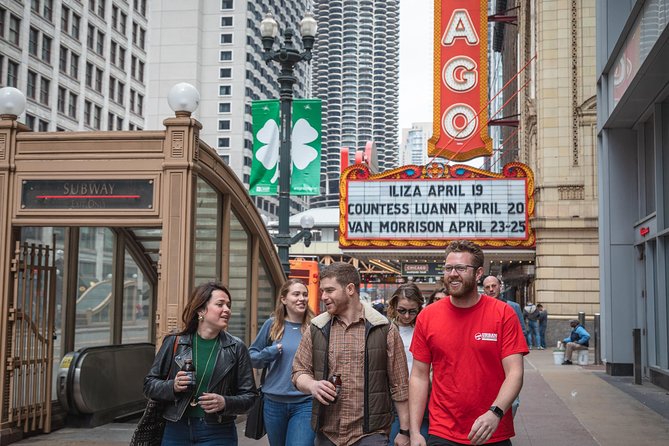
You begin at the Chicago Theatre on N State Street, right under the bright marquee that’s been used in movies and pop culture. It’s a great “first landmark” because it tells you straight away that this tour is about Chicago’s identity, not just geography.
From there, you slide into the surrounding streets and start picking up the city’s rhythm: busy sidewalks, big blocks, and plenty of places to pause and look up. It’s also a good warm-up before the walking really kicks in.
A small practical note: downtown can be loud, so if you’re sensitive to noise, know that you’ll spend time outdoors near traffic and rail lines.
The Chicago Pedway: Where Locals Walk in Winter
Next comes the Chicago Pedway, a network of underground tunnels used daily by commuters—especially when the weather is rough. If you’ve visited in snow season, this stop makes you feel how Chicago solves “winter inconvenience” with infrastructure.
Even without weather issues, the Pedway is useful because it shows another side of the Loop. It’s not flashy like a museum interior, but it’s a real part of city life, and that makes the history feel grounded.
Expect this to be more about understanding how the city works than ticking off another photo spot.
From the fire of 1871 forward, more history
- Chicago in a Day: Food, History & Architecture Walking Tour
★ 5.0 · 1,153 reviews - Chicago: Field Museum of Natural History Ticket or VIP Tour
★ 4.7 · 717 reviews - Field Museum of Natural History Admission Tickets
★ 4.5 · 489 reviews
Passing City Hall and County Building Power Lines
As you move through the Loop, you pass the City Hall–County Building, where city and county government offices sit. Seeing it on foot helps, because government buildings can feel abstract when you only look at photos.
Your guide’s storytelling here tends to connect the building’s role to major moments in Chicago’s past—think shifts in population, politics, and immigration waves. It’s the kind of context that helps you later recognize why certain neighborhoods and institutions developed the way they did.
Chicago River Walk: The View and the Commute
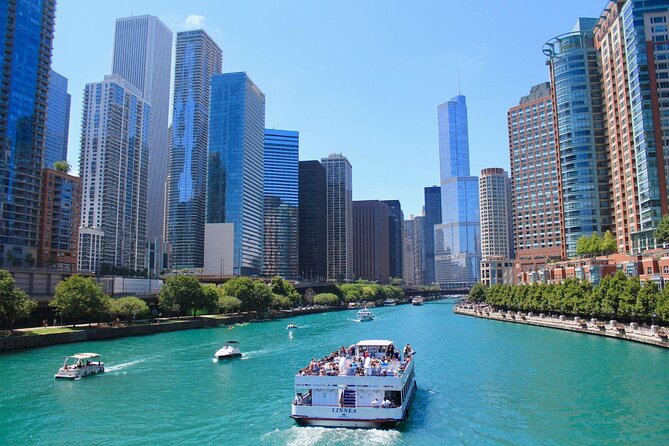
Then you hit the Chicago River area, where the skyline feels close and dramatic at the same time. This part is one of the easiest “wow” sections on the route because you’re watching how people actually use the waterfront.
You’ll get time walking past iconic buildings and enjoying skyline views, plus the feel of a daily commute. That’s important: it keeps the tour from turning into pure sightseeing mode.
If you’re the type who likes to photograph reflections, this stretch can be a strong moment—just bring your patience, since downtown crowds can make it slow.
Magnificent Mile Moments: Wrigley Building and More
Next, you’re in the zone people associate with downtown shopping and corporate power. You’ll pass the Wrigley Building, built between 1920 and 1924 as the Wrigley Company’s headquarters.
Worth reading discoveringchicago.com before you book.
This isn’t just “look at a tall building.” It’s a chance to understand how Chicago’s architecture rose with major corporations and how design choices signaled stability and ambition in the early 20th century.
Walking the route here is also useful if you’re planning your own day later. You’ll get a mental map of where the big names are and where the calmer streets run parallel.
Tribune Tower: Neo-Gothic in the Middle of the Sky
One of the most recognizable stops is the Tribune Tower at 435 North Michigan Avenue. It’s a 463-foot, 36-story neo-Gothic skyscraper, and the shape alone grabs your attention.
Your guide’s job here is to connect the style to the kind of power a newspaper company wanted to project: tradition, permanence, and authority. Even if you’re not an architecture nerd, you’ll likely leave this stop looking up at angles you usually ignore.
Millennium Park and The Bean: More Than a Photo Stop
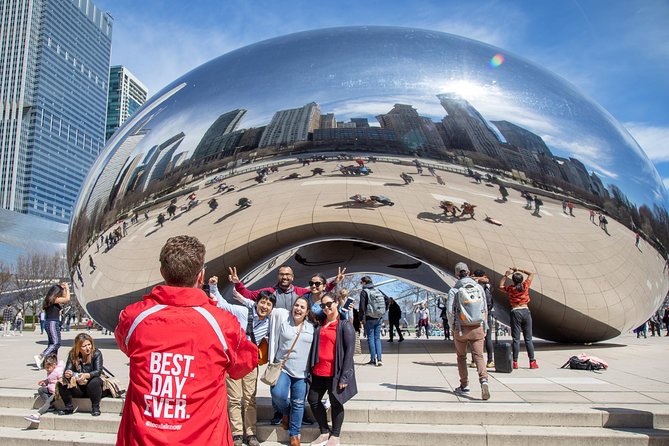
Millennium Park is where the tour shifts into a modern Chicago mood. You’ll visit this area, including the iconic Bean sculpture—Cloud Gate—so you can snap pictures at one of the city’s most famous spots.
What makes this stop work on a guided walk is context. The Bean isn’t only about reflection and fun angles; it sits inside a planned public space that tells you a lot about Chicago’s shift toward designed civic experiences.
Your guide also gives recommendations for more sights and where to eat or grab drinks. That’s handy because the park area can feel like “what do I do next,” especially if you only have a few days in town.
End Near the Loop: A Strong Finish for Continuing on Your Own
The tour wraps up with a stroll near the Loop, where museums, restaurants, bars, historic landmarks, and modern architecture blend in a tight area. Finishing here is practical because you’re close to many options for food and transit after the tour ends.
If your energy is still decent, this is also a smart place to add a final walk. You’ll already understand the “big picture” landmarks, so you can start noticing smaller details on your own—street textures, building entrances, and how the blocks are laid out.
Food Portion Reality: When Tastings Start (and What That Means)
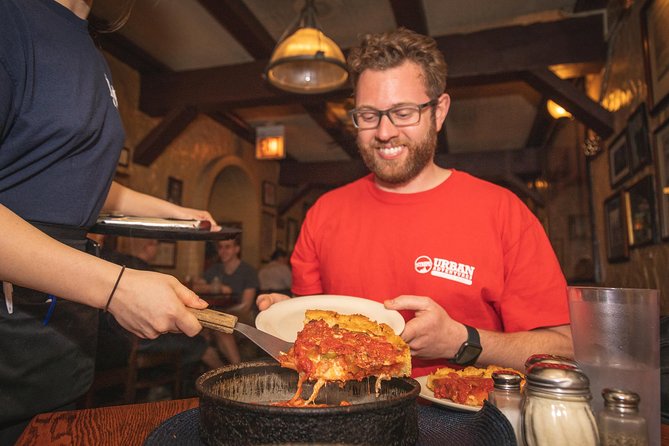
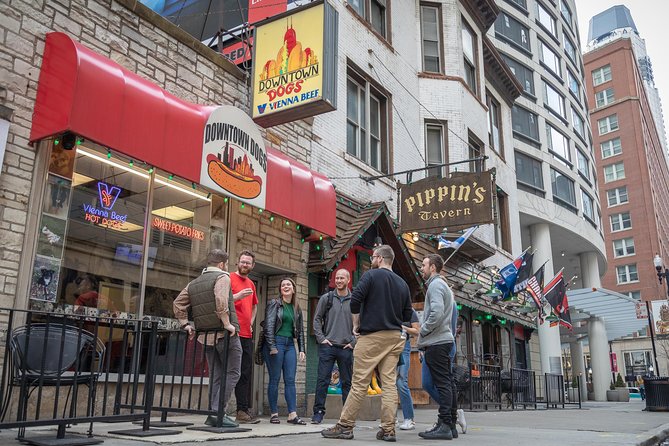
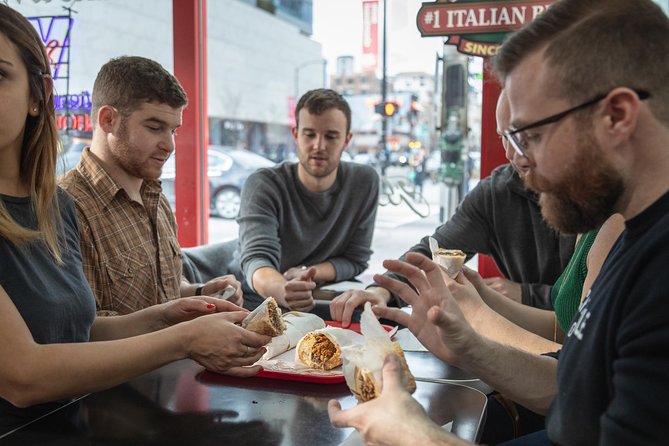
Let’s talk food timing, because it affects your day more than you’d think. The tour includes classic Chicago dishes—deep-dish pizza, hot dog, Italian beef, and more—and the total amount is designed to equal a full meal.
But based on the experience pattern people describe, the food part starts later than many food tours. Some mention that the first major items land around the later part of the walk, while others note that it begins roughly halfway through. Either way, you should assume you’ll do a lot of sightseeing before you get real bites.
That matters for two reasons:
- If you skip breakfast, the walking can feel longer because you’re waiting for the food.
- If you show up already hungry, you may feel rushed during the tastings instead of relaxed.
Also, portions are often described as “ample” and enough to add up to lunch, but they’re tastings, not an all-you-can-eat buffet. A couple of people point out that items like the hot dog and Italian beef are served in smaller amounts rather than full portions.
Finally, plan for drinks and water. One practical tip from the experience: bring some water, since water is only provided with the meals. If you’re visiting in summer or you run warm easily, this becomes more important.
Walking Pace, Distance, and What to Wear
This is a walking tour, with about 3–4 miles total at a relaxed pace and regular stops. That distance isn’t huge, but it’s enough that good shoes matter. You’ll be on pavement, curbs, and constant “stop and look up” moments.
Your day length is about 4 hours 30 minutes, so you’re trading one long sightseeing block for a packed, guided route. The best part is that you get guidance for what’s worth attention, so you don’t wander lost on your own.
Dress for the weather. The tour runs rain, shine, or snow, so layers are the move, plus something to manage wind on the river side.
Group Size Makes a Difference (Especially for Safety and Questions)
Because the group maxes at 12, the tour is easier to manage than big-city mega-groups. You’ll have more chances to ask questions, and the guide can slow down when needed.
One small detail I like in the way guides describe keeping everyone together: walking backward while speaking to ensure people stay safe and grouped. You can tell the difference when a guide is paying attention to the whole line, not just the person closest to them.
There are also signs of thoughtful planning for breaks. People describe stops for shade, restroom time, and opportunities to sit and reset when needed.
Dietary Needs: What You Can and Can’t Count On
Food options include vegetarian choices, but the tour data is clear that it can’t accommodate other allergies or dietary preferences. If you have multiple restrictions, you’ll want to contact the operator ahead of time and confirm exactly what’s possible.
So the best strategy is simple:
- If you’re vegetarian, you can feel comfortable that your needs can be planned.
- If you have food allergies beyond vegetarian preferences, treat this as a “must confirm first” situation.
Value for $100.95: What You’re Really Paying For
At about $100.95 per person, this tour isn’t cheap, but it also isn’t just “a walk with a few snacks.” You’re paying for:
- a route that hits major architecture points (the Theatre area, Pedway, River views, Millennium Park, and more)
- guided context that connects buildings to Chicago’s story
- a meal-equivalent set of iconic dishes, including deep-dish pizza and classic street-food style items
Also, you get mobile ticketing and a small group cap, which usually means better use of your time. For many first-timers, that combination is the value: less figuring out where to go, and more understanding what you’re looking at while you’re there.
If you’re short on days in Chicago, half a day is a strong way to build your bearings fast—then you can spend the rest of your trip choosing what to repeat on your own.
Who Should Book This Chicago in a Day Walk
This tour fits best if you:
- want a “downtown orientation” that mixes food and architecture
- prefer small groups and steady pacing over racing between stops
- like history told through real places, not lectures with slides
It’s also family-friendly. Children under 4 can join free, and there’s a reduced price for kids aged 4 to 11. The walk is moderate, with stops built in, and it’s listed as suitable for different fitness levels.
If you’re dealing with mobility challenges, I’d still approach carefully because it’s around 3–4 miles and covers outdoor streets. However, one helpful clue from the experience: guides may notice physical strain and adjust walking for the group when possible.
Should You Book This Tour? My Decision Guide
Book it if you want a well-paced, guided taste of Chicago that doesn’t leave you hungry or confused about what to see next. The small group size, the food that adds up to a full meal, and the lineup of landmarks make it a solid “first half-day” choice.
Skip it or plan differently if you:
- can’t handle a 3–4 mile walking day
- want frequent snack stops early in the tour (the tastings tend to start later)
- need special allergy accommodations beyond vegetarian options
If your goal is to leave downtown with the city’s key landmarks in your head and its signature foods in your stomach, this is a smart way to do it.
FAQ
How long is the Chicago in a Day walking tour?
It runs about 4 hours 30 minutes (approximately).
How much does the tour cost?
The price is $100.95 per person.
How many people are in the group?
The tour is limited to a maximum of 12 travelers.
Where does the tour start and end?
The start is at the Chicago Theatre, 175 N State St, Chicago, IL 60601. The tour ends in River North near N Clark St & W Ontario St.
What food is included?
You’ll taste Chicago classics such as deep-dish pizza, hot dog, Italian beef, and other bites as part of the meal-equivalent tastings.
Are vegetarian options available?
Yes. Vegetarian options are available, but the tour cannot accommodate other food allergies or dietary preferences. Let the operator know in advance if you need the vegetarian option.
How much walking should I expect?
Plan on about 3–4 miles total (approximately 4.8 to 6.4 km) at a relaxed pace with regular stops.
Does the tour run in bad weather?
Yes, it runs in rain, shine, or snow. If it’s canceled due to poor weather, you’ll be offered a different date or a full refund.
Is it child-friendly?
Yes. Children under 4 can join free of charge, and there is a reduced child price for ages 4 to 11.
What is the cancellation policy?
You can cancel for free up to 24 hours before the experience start time for a full refund. If you cancel less than 24 hours before, the amount paid is not refunded.
The Chicago Table, Extended
- Chicago Favorites Ultimate Food and Walking Tour★ 5.0 · 1,962 reviews
- Delicious Donuts & City Sights: Chicago’s Original Donut Tour★ 5.0 · 1,389 reviews
- Chicago Loop District Food Tour with Deep Dish & Beef Sandwich★ 5.0 · 870 reviews
- Bikes, Bites & Views: Chicago’s Signature Dishes Bike Tour-Adults★ 5.0 · 732 reviews
- Chicago’s Chinatown Food and Walking Tour★ 5.0 · 600 reviews
Since the Fire: Chicago History
- Chicago: Field Museum of Natural History Ticket or VIP Tour★ 4.7 · 717 reviews
- Field Museum of Natural History Admission Tickets★ 4.5 · 489 reviews
- Chicago Walking Tour: Historic Treasures of Chicago★ 5.0 · 362 reviews
- Historical and Architectural Chicago Fireboat River & Lake Cruise★ 5.0 · 246 reviews
- Walkin’ with Colin: Chicago History-Mystery-Comedy-Tragedy Tour★ 5.0 · 218 reviews
Chicago, Read from the Sidewalk
- Chicago’s Secret Interiors Architectural Walking Tour★ 5.0 · 635 reviews
- Chicago: Secret Interiors Architecture Walking Tour★ 4.9 · 498 reviews
- Chicago Architecture Tour: Underground Pedway and the Loop★ 5.0 · 388 reviews
- Chicago Walking Tour: Art Deco Skyscrapers Loop★ 5.0 · 138 reviews
- Frank Lloyd Wright Robie House Admission★ 4.0 · 130 reviews
The Ink Is Still Wet on These Chicago Reviews




Architecture Walking Tours, compared.
 ★ 5.0Chicago’s Secret Interiors Architectural Walking TourFrom $35635 reviews
 ★ 4.9Secret Interiors Architecture Walking TourFrom $35498 reviews
 ★ 5.0Chicago Architecture Tour: Underground Pedway and the LoopFrom $35388 reviews
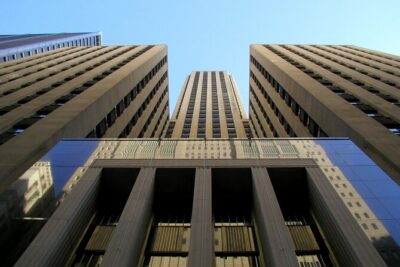 ★ 5.0Chicago Walking Tour: Art Deco Skyscrapers LoopFrom $35138 reviews
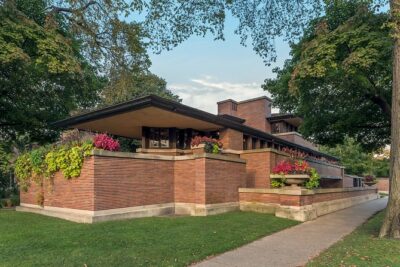 ★ 4.0Frank Lloyd Wright Robie House Admission130 reviews
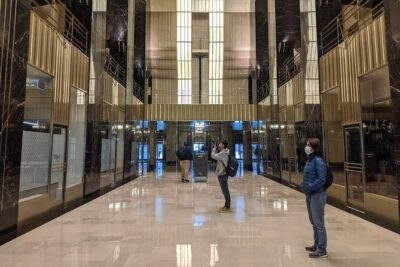 ★ 5.0Chicago Architecture Walking Tour: Incredible Art Deco InteriorsFrom $3585 reviews
 ★ 5.0Chicago Walking Tour: Historic SkyscrapersFrom $3567 reviews
 ★ 5.0Chicago City Tour: Elevated Architecture Tour with Train Ticket IncludedFrom $4165 reviews
Browse the lists this tour appears in