
REVIEW · WALKING TOURS
Chicago: Downtown Loop & Millennium Park 2 Hour Walking Tour
Steel and glass, plus a giant walking lesson. In just two hours, you’ll move through Chicago’s Loop and land in Millennium Park, with a guide who ties together architecture, art, and real city stories as you go. You also get a weather-aware format, with indoor stops planned when winter or rain shows up.
What I like most is how the tour makes famous sights easier to understand—especially the Wonder Theatre of the World vibe at the Chicago Theatre marquee and the way the Loop’s elevated train tracks shaped the city. I also love the photo-and-stroll energy at Millennium Park, where Cloud Gate (The Bean) reflects the skyline and you get a quick, well-timed moment to play with angles.
One thing to consider: this is still a walking tour, with short pauses and a brisk pace (and Chicago can be cold, windy, and damp even when the sun is out). Dress for winter, and plan your next stop because the walk finishes near Cloud Gate.
Key things to know before you walk
- Chicago Theatre as a history anchor with its famous marquee and “Wonder Theatre of the World” story
- Loop walking with context—Great Chicago Fire of 1871 and why the elevated tracks matter
- Daley Bicentennial Plaza photo stop focused on the Picasso sculpture as a city symbol
- Tiffany Windows at the Chicago Cultural Center for a quick hit of colorful stained-glass beauty
- Cloud Gate timing and angles—reflective surface views of Chicago in motion
- Millennium Park highlights in a short window including Jay Pritzker Pavilion and Lurie Garden
In This Review
- Why the Chicago Loop + Millennium Park Combo Works in Two Hours
- Starting at the Chicago Theatre: Marquee Energy and a Strong First Story
- Marshall Field, Daley Bicentennial Plaza, and the Loop’s Train-Track Story
- Millennium Station and the Chicago Cultural Center: Architecture You Can Read Fast
- Cloud Gate at Millennium Park: The Bean’s Reflections (and How to Enjoy Them)
- Price and Logistics: Is $49 Worth It?
- Who Should Take This Tour (and Who Might Skip It)
- Quick Tips to Get the Most Out of Your Walk
- Should You Book This Chicago Loop & Millennium Park Walking Tour?
- FAQ
- How long is the Chicago Loop & Millennium Park walking tour?
- How much does the tour cost?
- Where does the tour start and end?
- What are the main sights included?
- Is this tour suitable for winter or bad weather?
- Will I receive a mobile ticket?
- How large is the group?
- Can I cancel for a full refund?
- Are service animals allowed?
Why the Chicago Loop + Millennium Park Combo Works in Two Hours
Chicago has a lot of “big sights.” The trick is seeing the story behind them without spending your whole day commuting from one landmark to the next. This tour is built for that. You start in the Loop core—where the city’s business, architecture, and infrastructure live right next to each other—then you head into Millennium Park, where the art and skyline views do the talking.
I like that it’s structured in bite-sized stops. You’re not asked to memorize a lecture. Instead, you get a small scene, a story that explains what you’re looking at, and then you move on while the details are still fresh. That pacing is especially helpful if you’re visiting in winter, because you’ll get indoor moments when conditions are rough.
The other smart bit: you’re ending at Cloud Gate, right where the park becomes a people-watching scene. That makes the last minutes feel less like “wrap-up” and more like “go linger if you want.”
Starting at the Chicago Theatre: Marquee Energy and a Strong First Story
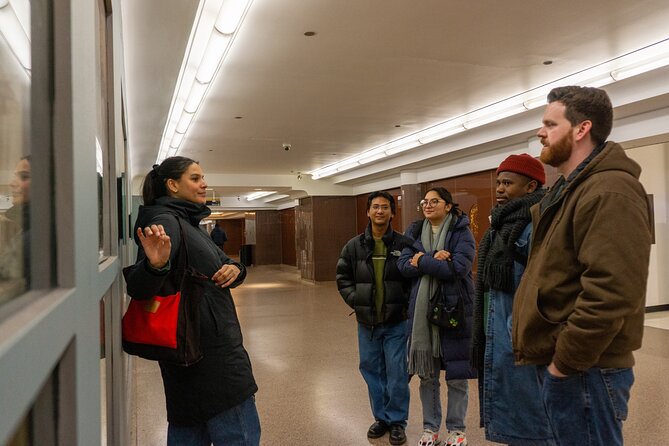
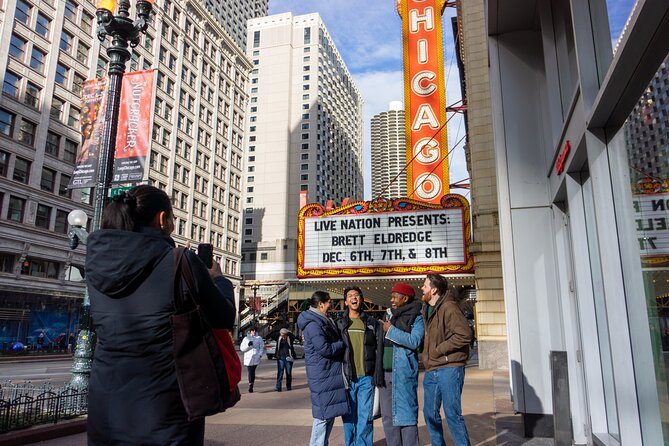
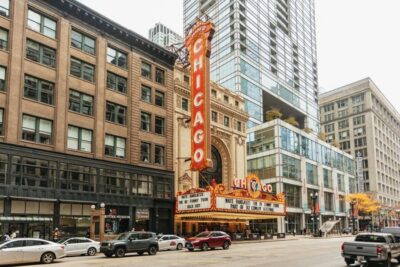
You’ll meet at 175 N State St, in front of the Chicago Theatre. It’s a great start point because the building is instantly recognizable, even if you only know it from movie posters, show promos, or that grand marquee glow that seems to belong to Chicago’s nighttime identity.
The guide focuses on why this theatre mattered—especially its nickname Wonder Theatre of the World—and how the marquee fits into the idea of Chicago as a place where showmanship and design go hand in hand. That matters because it stops you from treating the building like just another handsome façade. You start noticing details right away: how it’s positioned, how it reads from the sidewalk, and how it sets the tone for the city architecture ahead.
Practical tip: if you like photos with less crowd chaos, pay attention to the guide’s timing here. The stop is short, so take a breath, frame your shots quickly, and then move on with the group.
Around the Bean and Millennium Park again


Marshall Field, Daley Bicentennial Plaza, and the Loop’s Train-Track Story
After the theatre, the tour shifts into “Chicago institutions” mode. You’ll learn about the Marshall Field and Company building—why this department store became part of the city’s identity, not just a place to shop. It’s the kind of story that helps you understand Chicago as a city of big-name commerce and big-name design, where public life and retail culture overlap.
Then you head toward Daley Bicentennial Plaza, where the star is the Picasso sculpture. Even if you’re not a sculpture scholar, the guide helps you read it as a city symbol—something meant to connect art, public space, and local pride. This is one of those stops where you can let your eyes do the work. Walk around the edges, look up for how it sits with the surrounding buildings, and use the guide’s context to give meaning to what your brain already sees.
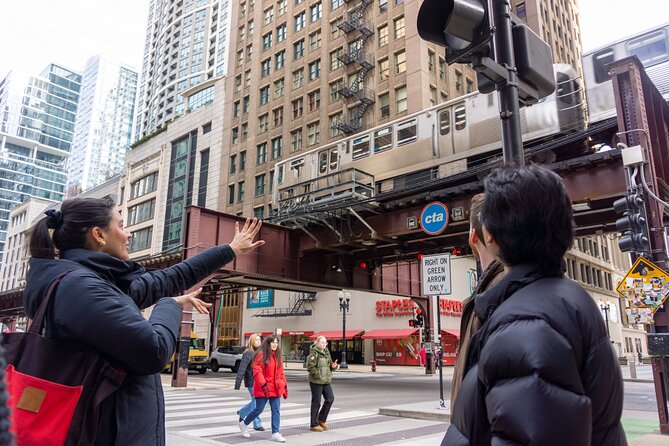
From there, you transition into the broader Loop story: the area known as the Loop, defined by its iconic elevated train tracks. The guide connects the tracks to the city’s growth and resilience, including the impact of the Great Chicago Fire of 1871 and how Chicago rebuilt into the modern metropolis you see today.
I find this stretch especially valuable because it turns “infrastructure” from background noise into a central character. Once you understand the elevated rail system’s role in shaping movement and development, the Loop stops feeling random. You start recognizing why certain streets, intersections, and building clusters feel the way they do.
Millennium Station and the Chicago Cultural Center: Architecture You Can Read Fast
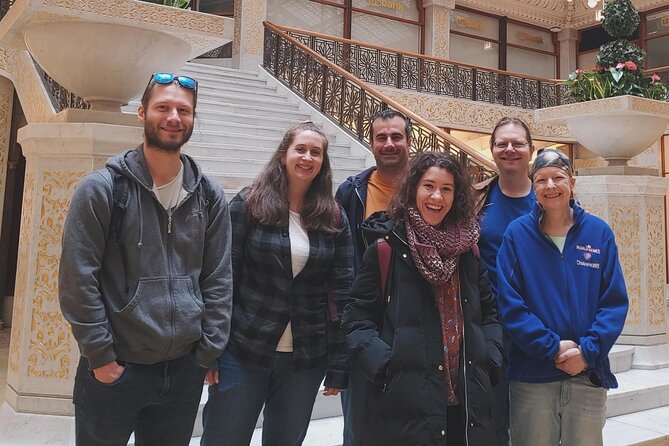
You’ll make time at Millennium Station, with an explanation of the elevated train system that gives the Loop its name. If you’ve ever wondered why Chicago’s transit feels both older and more intense than other cities, this is where you get the quick “why.” You don’t need technical transit knowledge—just enough context to see the city’s movement pattern as part of its identity.
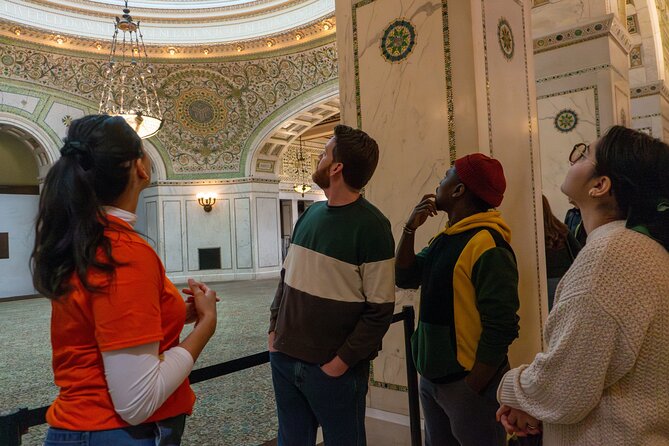
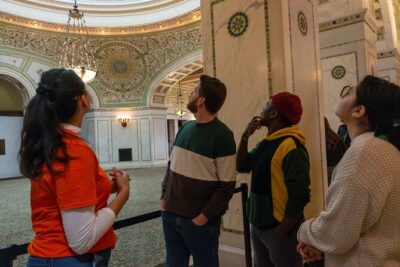
Next comes the Chicago Cultural Center, where you’ll focus on the Tiffany Windows—those delicate, colorful glass artworks. This stop is a smart change of pace because it shifts you from street-level to a more indoor, detail-focused experience. In winter, that matters. In summer, it still matters. Stopping inside helps you reset your eyes and your legs, and it’s a nice contrast to the big-scale views earlier.
What I like here is how the guide frames it as art you can actually enjoy in a short visit. You’re not stuck rushing to “cover everything.” You get enough time to look closely and understand why the windows are famous, without it turning into a long museum assignment.
Chicago at sidewalk speed, more routes
- Chicago: Gangsters and Ghosts Walking Tour
★ 5.0 · 7,155 reviews - Chicago Favorites Ultimate Food and Walking Tour
★ 5.0 · 1,962 reviews - Chicago: Gangsters and Ghosts Guided Walking Tour
★ 4.7 · 1,697 reviews
Cloud Gate at Millennium Park: The Bean’s Reflections (and How to Enjoy Them)
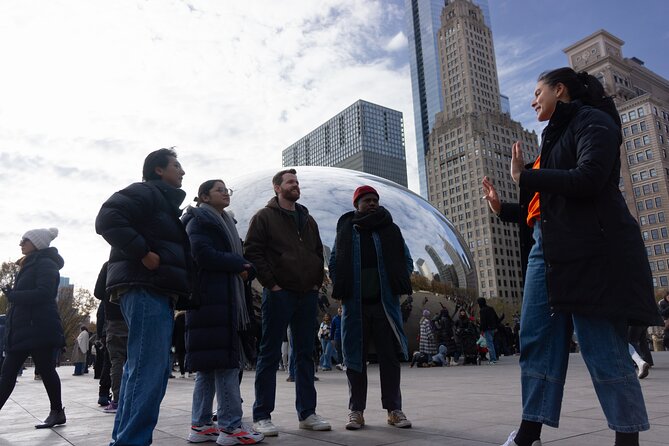
Then you arrive at the main moment for many people: Cloud Gate at Millennium Park—The Bean. The guide points out that it’s designed by Anish Kapoor, and the key feature is the reflective surface that captures Chicago’s skyline and invites you to interact with the sculpture’s shape.
This part is only a few minutes, so don’t treat it like a casual drive-by. The value isn’t just seeing the Bean. It’s learning to look at it. Move slightly, watch how reflections warp as you change your position, and try a couple of quick angles rather than one “stand and hope” photo.
Cloud Gate has that magical quality where your photo tells a different story each time. One minute the skyline looks crisp; the next, it’s stretched by the sculpture’s curvature. If you’re traveling with friends, I’d take turns shooting and then swap roles so everyone gets at least one solid shot without the whole group waiting.
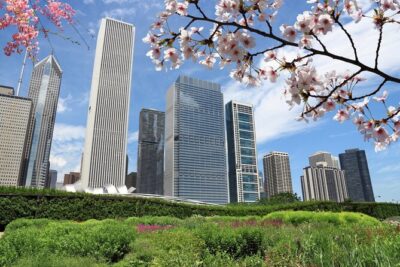
Just after Cloud Gate, you’ll spend time in Millennium Park itself, a major urban space that mixes art, architecture, and greenery. The guide calls out landmarks like the Jay Pritzker Pavilion and Lurie Garden, so even if you don’t linger for long, you leave knowing what you’re looking at.
Practical tip: if the weather is cooperating, this is where you can slow down after the tour if you want. The finish is near Cloud Gate, so you’re already placed where the park energy is.
Price and Logistics: Is $49 Worth It?
At $49 per person for about two hours, the best way to judge value is what you’re buying: guided context plus time-saving routing across major Loop-and-park sights. For many visitors, that saves energy more than it saves money. Chicago’s downtown can feel like a lot of buildings and street corners. A guide helps you connect what you see to why it exists.
A few details make the price feel more reasonable:
- The group size is capped at 15, so you’re not stuck behind a wall of people.
- The tour includes professional guidance, which is the difference between “seeing landmarks” and “understanding what they mean.”
- It’s designed to handle Chicago winter conditions, with indoor stops when it’s cold or rainy. That’s a big practical win because a self-guided walk can turn miserable quickly.
Also, you get a mobile ticket, which cuts down friction at check-in. The tour ends at Cloud Gate, and that’s a natural place to continue independently if you want to browse the park longer.
My quick take: if you have limited time downtown and want a guided hit of Loop + Millennium Park without overplanning, $49 is a fair price for what you get.
Who Should Take This Tour (and Who Might Skip It)
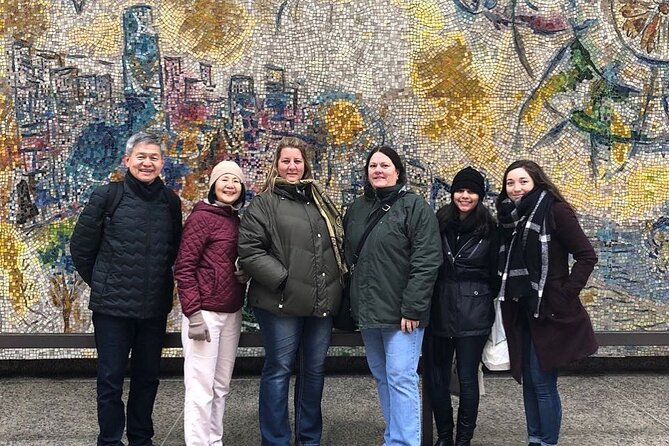
This tour fits best if you:
- Want an efficient way to understand Chicago downtown without getting lost in the streets
- Like photography at iconic spots like Cloud Gate but still want a guide to steer your attention
- Visit in colder months and appreciate planned indoor stops
- Prefer small-group pacing over hop-on hop-off bus randomness
You might skip it if:
- You’re looking for a long, slow museum-style experience (this is short stops, not deep classroom time)
- You dislike walking even with breaks and indoor moments
- You want to spend lots of time inside bigger attractions—this tour focuses more on city sights and public spaces
It’s also a good option if you value “getting your bearings fast.” The Loop and Millennium Park can feel intimidating at first glance. This tour helps you build a mental map quickly.
Quick Tips to Get the Most Out of Your Walk
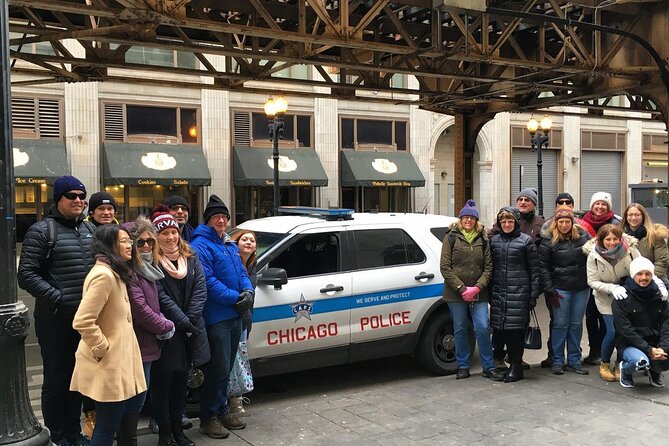
Even with a guide, you’ll enjoy it more if you come prepared:
Wear layers for Chicago winter, and plan for stop-and-go weather. The tour is built to include indoor moments, but you’ll still be outside for parts of the route.
Bring a phone with enough battery for photo reflections. Cloud Gate is the kind of place where one charging interruption can ruin your photo rhythm.
If you care about photos, move when the guide suggests it. The best angles at reflective sculptures come from quick repositioning, not from standing still for too long.
Finally, keep your expectations realistic: it’s a compact two-hour experience across major highlights. The win is context and flow, not unlimited time at every stop.
Should You Book This Chicago Loop & Millennium Park Walking Tour?
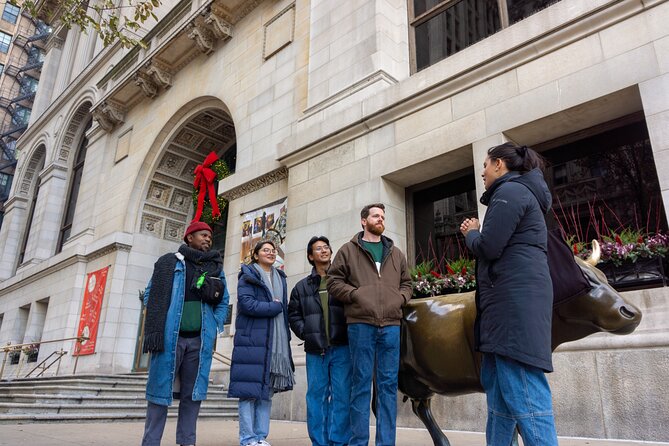
I think you should book this tour if you want a guided, time-efficient introduction to Chicago’s downtown personality. It’s strong on the basics most first-timers need: orientation in the Loop, architecture context, and art that’s easy to understand fast—especially Cloud Gate and the Tiffany Windows.
It’s also a good call if you’re visiting in winter or during unsettled weather because the route includes indoor stops so the experience doesn’t fall apart when conditions change.
I’d pass only if you want a long, self-paced wander with no structure. Otherwise, this is a practical way to see the headline sights and leave with a clearer story of how Chicago became Chicago.
FAQ
How long is the Chicago Loop & Millennium Park walking tour?
It’s approximately 2 hours.
How much does the tour cost?
The price is $49.00 per person.
Where does the tour start and end?
The tour starts at 175 N State St, Chicago, IL 60601 (Chicago Theatre) and ends at 201 E Randolph St, Chicago, IL 60602 (Cloud Gate).
What are the main sights included?
You’ll visit the Chicago Theatre, Marshall Field and Company building, Daley Bicentennial Plaza (Picasso sculpture), the Chicago Loop and Millennium Station area, the Chicago Cultural Center (Tiffany Windows), and Millennium Park (including Cloud Gate and other park highlights).
Is this tour suitable for winter or bad weather?
Yes. It’s suited for Chicago winter, and it includes indoor stops when it’s cold and rainy.
Will I receive a mobile ticket?
Yes, it uses a mobile ticket.
How large is the group?
The tour has a maximum of 15 travelers.
Can I cancel for a full refund?
Yes—free cancellation is available up to 24 hours in advance of the experience start time.
Are service animals allowed?
Yes, service animals are allowed.
Chicago on Foot, Block After Block
- Chicago: Gangsters and Ghosts Walking Tour★ 5.0 · 7,155 reviews
- Chicago Favorites Ultimate Food and Walking Tour★ 5.0 · 1,962 reviews
- Chicago: Gangsters and Ghosts Guided Walking Tour★ 4.7 · 1,697 reviews
- Chicago in a Day: Food, History & Architecture Walking Tour★ 5.0 · 1,153 reviews
- Chicago’s Secret Interiors Architectural Walking Tour★ 5.0 · 635 reviews
The Wider Chicago Shortlist
- Chicago Architecture River Cruise★ 5.0 · 15,756 reviews
- Chicago River 90-Minute Architecture Tour★ 4.5 · 9,629 reviews
- Chicago River: 1.5-Hour Guided Architecture Cruise★ 4.8 · 8,046 reviews
- Chicago: Gangsters and Ghosts Walking Tour★ 5.0 · 7,155 reviews
- Chicago Architecture Center River Cruise aboard First Lady★ 5.0 · 5,536 reviews
Meet You at the Bean
- Chicago Photo Walk to Bean and Landmarks★ 5.0 · 31 reviews
- Candle Making Experience Near Museums & Millennium Park★ 5.0 · 7 reviews
- Chicago Loop: Art, Skyscrapers, Millennium Park & “The Bean”★ 5.0 · 6 reviews
- Chicago Millennium Park Self-Guided Walking Tour★ 4.5 · 5 reviews
- Chicago Foods Tour with The Loop, Skyline, Millennium Park★ 5.0 · 4 reviews
The Ink Is Still Wet on These Chicago Reviews




Walking Tours, compared.
 ★ 5.0Gangsters and Ghosts Walking TourFrom $527,155 reviews
 ★ 5.0Chicago Favorites Ultimate Food and Walking TourFrom $841,962 reviews
 ★ 4.7Gangsters and Ghosts Guided Walking TourFrom $361,697 reviews
 ★ 5.0Chicago in a Day: Food, History & Architecture Walking TourFrom $1001,153 reviews
 ★ 5.0Chicago’s Secret Interiors Architectural Walking TourFrom $35635 reviews
 ★ 5.0Chicago’s Chinatown Food and Walking TourFrom $79600 reviews
 ★ 4.9Secret Interiors Architecture Walking TourFrom $35498 reviews
 ★ 5.0Chicago Gangster and Food Walking TourFrom $79471 reviews
Browse the lists this tour appears in