
REVIEW · ARCHITECTURE WALKING TOURS
Small Group History And Architecture Walking Tour of Chicago
Chicago in one long, smart walk. You start at Millennium Park for Cloud Gate, then use the Chicago Pedway to keep moving between big sights with less weather hassle.
I like the clear mix of iconic landmarks and the city’s behind-the-scenes connections. You get Chicago Riverwalk viewpoints plus stops tied to major stories like the Chicago Fire, and you also pass famous architecture along Michigan Avenue.
One thing to plan for: this is a brisk, packed route. Most photo stops are short, so comfy shoes matter more than you think.
In This Review
- Key highlights worth planning for
- A tight 2.5 hours from Cloud Gate to Navy Pier
- Millennium Park and Cloud Gate: your instant Chicago reference point
- Using the Chicago Pedway to read the city below street level
- Chicago Riverwalk stops that connect architecture and the water
- Chicago Architecture Center: when you want context, not just views
- Tribune Tower and Michigan Avenue: ornate stones and big-city ambition
- The DuSable Bridge and a quick history lesson on movement
- InterContinental Chicago and the “big buildings” feel of the Magnificent Mile
- Starbucks Reserve Roastery: one of the world’s biggest coffee stops
- Navy Pier: the scenic landing spot and your cruise choice
- About the guide: why Andrew’s style gets noticed
- Who this tour fits best (and who should think twice)
- Should you book this Chicago history and architecture walk?
- FAQ
- How long is the Small Group History and Architecture Walking Tour of Chicago?
- Where does the tour start and end?
- What does the price include?
- What is not included in the tour price?
- Is it a mobile ticket?
- How many people are in the group?
- How physically demanding is the walk?
- Are service animals allowed?
- What is the cancellation policy?
Key highlights worth planning for
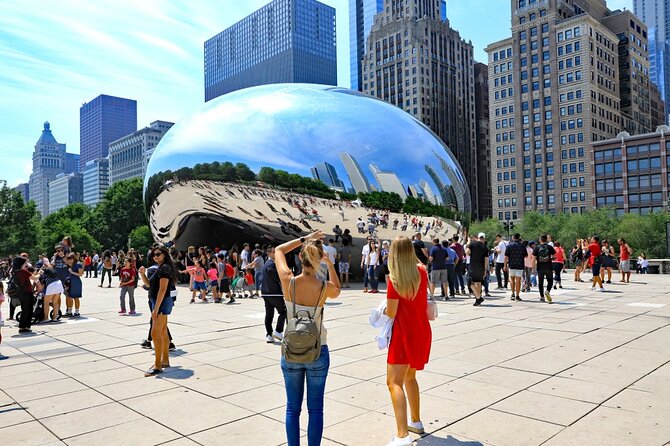
- Millennium Park’s Cloud Gate: polished steel reflections that change as you walk around
- The Chicago Pedway: an underground-to-skyway network that protects your walk across downtown
- Chicago Riverwalk architecture angles: great sight lines as you move along the waterfront
- Michigan Avenue icons: Tribune Tower plus the Wrigley Building and major bridge history
- Starbucks Reserve Roastery on the Magnificent Mile: a big, interactive coffee stop if you want a break
- Small group size: max 10 travelers, which usually keeps the pace and Q&A more manageable
A tight 2.5 hours from Cloud Gate to Navy Pier
This tour is built like a greatest-hits route, but it’s not just a checklist. The goal is simple: give you a fast, walkable sense of how Chicago fits together—park to river, then downtown connections, then landmark-heavy Michigan Avenue, ending at Navy Pier.
The duration is about 2 hours 30 minutes, so you’re moving often. That’s not a bad thing if you like momentum, but it does mean you won’t linger like you might in a museum. Still, you cover enough ground that you’ll start to recognize the city’s layout and architectural “clusters” without needing to study a map all day.
The group is small (up to 10 travelers), which usually makes it easier to stay together and ask questions. It’s also mobile-ticket based, so you’re not juggling paper confirmations.
Pricing at $64.99 per person includes all fees and taxes. In practical terms, you’re paying for the guide’s route-and-story design more than for paid entry tickets, since multiple stops are listed as free admissions. You’ll still want to budget for optional food and coffee stops.
Neck craned in the Loop, more building walks
Millennium Park and Cloud Gate: your instant Chicago reference point
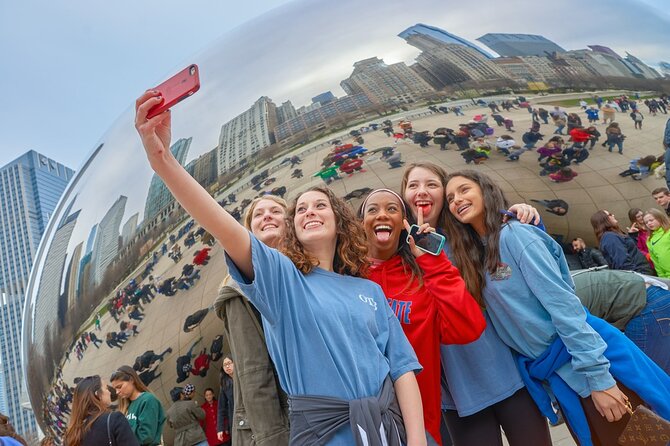
You begin at Millennium Park with Cloud Gate, also known as The Bean. It’s polished stainless steel, so the sculpture works like a mirror—your reflection and the skyline bounce back at you. The most useful part isn’t just the photo. It’s that you get a quick visual lesson in how Chicago’s public spaces and architecture reflect each other.
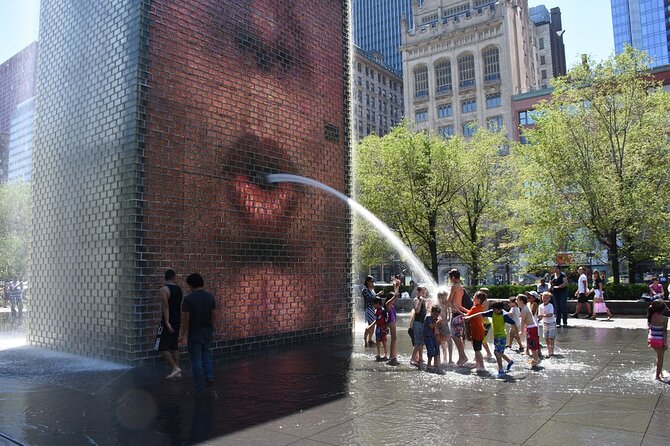
Millennium Park itself matters because it’s not just one attraction. The park is built as a civic space with major art and event venues. You’ll see references to places like the Jay Pritzker Pavilion and the Crown Fountain, and that helps explain why locals and visitors treat this area like a living room for the city.
Practical tip: when you’re at Cloud Gate, don’t just aim for one angle. Walk around the edges. The reflections shift with your position, and that’s the whole point.
What to watch for: since Millennium Park is the opening act, the stop is time-limited. If you want extra photo time, plan to arrive nearby early on your own another day.
Using the Chicago Pedway to read the city below street level

After the park, you move into one of Chicago’s smartest walking hacks: the Chicago Pedway. This network connects buildings downtown through underground tunnels, sky bridges, and concourses. It spans over 40 blocks, and it’s designed to keep pedestrians moving between places like office buildings, hotels, and transit stations.
Even if you’ve never heard of the Pedway, you’ll understand why it exists once you experience it. The city is vertical, weather can be unpredictable, and distances between major attractions can feel long. The Pedway turns that problem into a system. You’re not just walking; you’re seeing how Chicago manages flow.
The best part for first-timers is the way it helps you keep your bearings. As you move through these connected corridors, you start to “map” downtown in your head: where major lines run, where buildings funnel you, and how the city makes it easier to move without constantly re-crossing the street.
What to consider: because it’s a network, the walking can feel slightly less open than street-level strolling. If you dislike enclosed spaces, it may feel a bit different from classic outdoor sightseeing.
From the fire of 1871 forward, more history
- Chicago in a Day: Food, History & Architecture Walking Tour
★ 5.0 · 1,153 reviews - Chicago: Field Museum of Natural History Ticket or VIP Tour
★ 4.7 · 717 reviews - Field Museum of Natural History Admission Tickets
★ 4.5 · 489 reviews
Chicago Riverwalk stops that connect architecture and the water
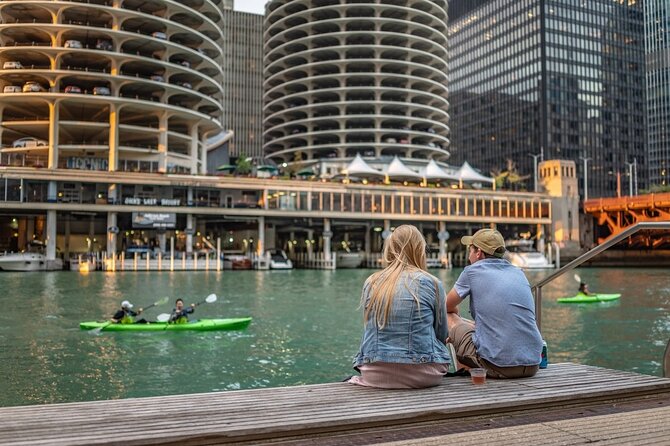
From there, you shift toward the waterfront and Chicago Riverwalk. This section is where the architecture starts to “make sense” in relation to the river.
The Riverwalk offers promenades with paths and outdoor seating, and it’s packed with dining options. It’s also a hub for activity nearby, including boat tours and kayaking. Even if you don’t do an activity that day, you’ll feel the energy of the riverfront as a public space, not just a backdrop.
This is also where you get architecture context tied to Chicago’s most famous narrative threads. You learn about major moments like the Chicago Fire, which helps frame why rebuilding and design matter so much in the city.
Practical tip: bring a light layer if you’re sensitive to wind. The Riverwalk can feel cooler near the water, and you’ll be walking between photo points.
Chicago Architecture Center: when you want context, not just views
Next is the Chicago Architecture Center (CAC), located on the banks of the Chicago River. The CAC is dedicated to celebrating and promoting Chicago’s architectural legacy through exhibits, tours, and educational programs.
The key value here is that you’re getting a guided interpretation of the skyline you’re seeing around you. If you’re the type who likes to know what you’re looking at—why something was built, how styles spread, what the city learned—this stop turns your walk from pretty to meaningful.
Admission is listed as free for this stop, which makes it one of the best “value per minute” moments on the route. Even if you only spend part of your time on the exhibits, the context can change how you view nearby buildings for the rest of the day.
What to watch for: your time here is limited. If you’re the type who loves reading every placard, you may want to plan an extra visit later on your own.
Tribune Tower and Michigan Avenue: ornate stones and big-city ambition
On Michigan Avenue, the tour hits two headline-style landmarks.
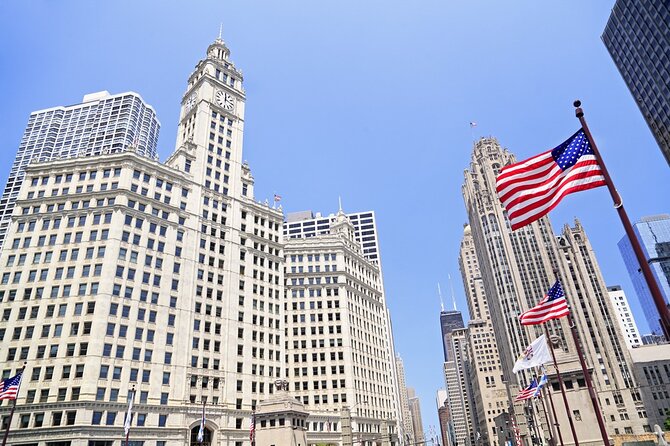
First is the Tribune Tower, a neo-Gothic skyscraper completed in 1925. It was built for the Chicago Tribune newspaper, and its facade is known for ornate detail. One standout feature is that it incorporates stones from famous landmarks around the world, which turns a local skyscraper into a global collage.
Then you pass by other Michigan Avenue icons, including the Wrigley Building. It’s a two-tower structure completed in the 1920s, famous for its white terra cotta facade and Spanish Colonial Revival style. It was originally the Wrigley Company headquarters and remains one of those buildings you recognize even from far away.
Why this matters for you: Chicago’s architecture isn’t just about tall buildings. It’s about style choices, corporate identity, and civic pride—written into stone and metal. Stops like these give you quick visual anchors, so later you’ll be better at spotting details on your own.
Practical tip: if you’re into photography, spend a minute looking up. These buildings reward upward attention.
The DuSable Bridge and a quick history lesson on movement
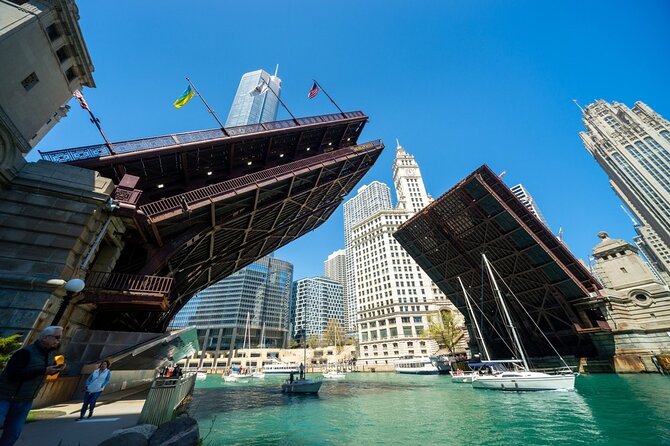
A key connector stop in the day is the DuSable Bridge, carrying Michigan Avenue over the main stem of the Chicago River. It’s a moving bridge, and its location is significant in early Chicago history.
Crossing a major bridge during an architecture walk does something simple and effective: it gives you shifting sight lines. You see how buildings frame the river, and you understand how streets link parts of the city that otherwise feel separated.
This is also where stories about the city’s past—especially the kind tied to rebuilding and planning—land more clearly. When you learn the context while standing in the place where the action happened, the city’s timeline starts to feel less abstract.
InterContinental Chicago and the “big buildings” feel of the Magnificent Mile
As you keep working down the Magnificent Mile corridor, you pass the InterContinental Chicago Hotel, a historic building originally built in 1929 as the Medinah Athletic Club.
What makes this stop more than name recognition is the blend of old and new. The property is known for architectural features like an opulent grand ballroom and a junior Olympic size swimming pool. It’s the kind of place where the city’s idea of luxury, sport, and community showed up in brick-and-stone form.
You won’t get a full museum-level explanation here, but you do get the sense that Chicago built big public-facing spaces early. That helps you read the downtown core as more than offices and traffic.
Starbucks Reserve Roastery: one of the world’s biggest coffee stops
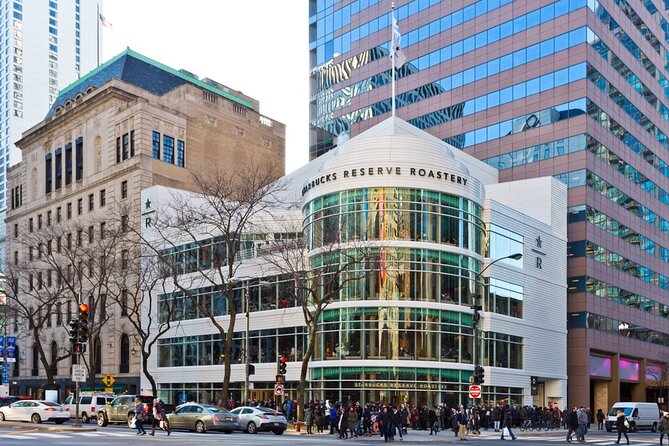
Next is Starbucks Reserve Roastery, the largest Starbucks in the world. It’s a five-story space that opened in 2019, and it offers an immersive coffee experience, including on-site roasting and exclusive Reserve coffee blends. There are also artisanal food offerings.
If coffee is your thing, this is a fun break that feels like a mini attraction. Even if you’re not a coffee superfan, it’s a strong example of how Chicago turns a brand experience into a destination.
The stop is listed as free for admission, but coffee and food purchases are naturally extra. So think of this as a chance to reset your energy, not to stay within a strict budget without spending.
Practical tip: if you want a drink, decide what you’ll order before you get fully absorbed in the space. Otherwise, the choices can eat up time.
Navy Pier: the scenic landing spot and your cruise choice
The tour ends at Navy Pier on Lake Michigan. It’s one of Chicago’s best-known attractions, stretching along the waterfront with year-round entertainment, dining, and cultural options.
Navy Pier opened in 1916, and it features things like a Ferris wheel, theaters, museums, and seasonal events. It’s also a natural place to soak in skyline and lake views at the end of your walking day.
The experience provider gives you options after the tour ends: you can take an architecture cruise or continue exploring on your own.
This is the smart finish. You start with iconic art, move through downtown connections, and then end where the city opens up to water and big views. It’s a good pacing decision.
About the guide: why Andrew’s style gets noticed
The biggest difference between a normal city walk and a really good one is the guide. This tour’s strengths are tied to clear communication and storytelling that helps you connect what you see to why it matters.
One tour leader named Andrew shows up in positive mentions for being passionate, kind, and very solid at answering questions, while also checking in on how comfortable people feel. That matters if you want the city explained, not just recited.
Safety and personal comfort note: one submitted account described an unsettling pre-meeting interaction, including texting and a mention of personal info tied to a phone number. I can’t judge what happened from a single message, but I do suggest a simple rule: meet at the planned location, keep conversations polite and bounded, and trust your instincts. If anything feels off, get help right away and don’t keep engaging.
Who this tour fits best (and who should think twice)
This walk is a strong fit if you:
- want a guided overview of Chicago architecture and major landmarks without spending all day on buses
- like short stops with clear stories attached
- enjoy moving between city spaces: park, river, downtown corridors, then waterfront
- appreciate small-group pacing (max 10)
It may not be the best fit if you:
- hate walking nonstop for hours (this is moderate fitness, but it’s still active)
- want long museum-style time or deep interior access
- need lots of quiet time at each landmark
Also, if you’re sensitive to enclosed areas, the Pedway sections might feel different from street-level strolling.
Should you book this Chicago history and architecture walk?
I’d book it if you want an efficient, well-paced way to connect Chicago’s landmarks to the stories behind them. The combination of Cloud Gate, the Pedway, Riverwalk viewpoints, and Michigan Avenue icons gives you a strong “map in your head” by the end of the day. The ending at Navy Pier is a great way to finish with scenery and options.
I’d pause before booking if you’re uncomfortable with a brisk walking pace or you really want slow, lingering time at each stop. Also, if you’re cautious about any pre-meeting messages from guides, stick to the planned meeting point and set boundaries.
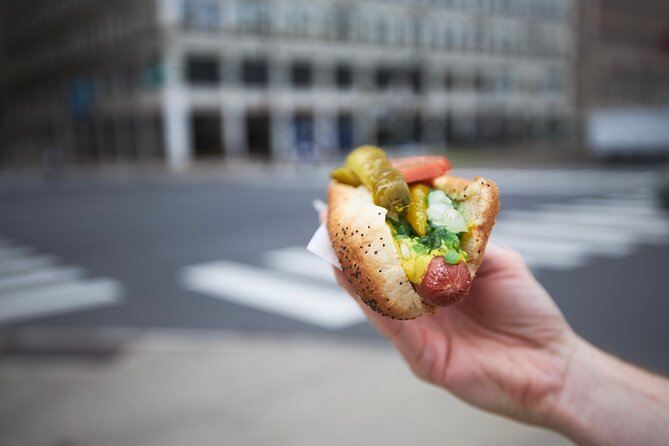
If you do go, bring comfy walking shoes, expect brief photo moments, and be ready to spend a little extra if you choose coffee or a classic Chicago savory treat.
FAQ
How long is the Small Group History and Architecture Walking Tour of Chicago?
It runs for about 2 hours 30 minutes.
Where does the tour start and end?
It starts at McCormick Tribune Plaza, 1 N Michigan Ave, Chicago, IL 60602, and ends at Navy Pier, 600 E Grand Ave, Chicago, IL 60611.
What does the price include?
The price is $64.99 per person and includes all fees and taxes.
What is not included in the tour price?
Coffee and/or tea are not included. The tour also notes coffee and snacks on tour aren’t included in the price.
Is it a mobile ticket?
Yes, the tour uses a mobile ticket.
How many people are in the group?
The group size is capped at 10 travelers.
How physically demanding is the walk?
It’s listed for travelers with moderate physical fitness.
Are service animals allowed?
Yes, service animals are allowed.
What is the cancellation policy?
You can cancel for a full refund up to 24 hours before the experience start time. After that, no refund is listed.
The Wider Chicago Shortlist
- Chicago Architecture River Cruise★ 5.0 · 15,756 reviews
- Chicago River 90-Minute Architecture Tour★ 4.5 · 9,629 reviews
- Chicago River: 1.5-Hour Guided Architecture Cruise★ 4.8 · 8,046 reviews
- Chicago: Gangsters and Ghosts Walking Tour★ 5.0 · 7,155 reviews
- Chicago Architecture Center River Cruise aboard First Lady★ 5.0 · 5,536 reviews
Since the Fire: Chicago History
- Chicago in a Day: Food, History & Architecture Walking Tour★ 5.0 · 1,153 reviews
- Chicago: Field Museum of Natural History Ticket or VIP Tour★ 4.7 · 717 reviews
- Field Museum of Natural History Admission Tickets★ 4.5 · 489 reviews
- Chicago Walking Tour: Historic Treasures of Chicago★ 5.0 · 362 reviews
- Historical and Architectural Chicago Fireboat River & Lake Cruise★ 5.0 · 246 reviews
Chicago, Read from the Sidewalk
- Chicago in a Day: Food, History & Architecture Walking Tour★ 5.0 · 1,153 reviews
- Chicago’s Secret Interiors Architectural Walking Tour★ 5.0 · 635 reviews
- Chicago: Secret Interiors Architecture Walking Tour★ 4.9 · 498 reviews
- Chicago Architecture Tour: Underground Pedway and the Loop★ 5.0 · 388 reviews
- Chicago Walking Tour: Art Deco Skyscrapers Loop★ 5.0 · 138 reviews
The Ink Is Still Wet on These Chicago Reviews




Architecture Walking Tours, compared.
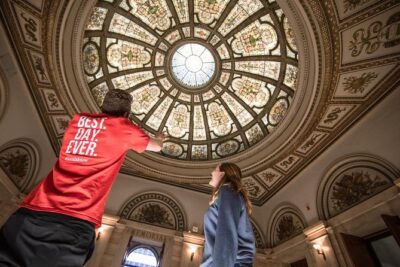 ★ 5.0Chicago in a Day: Food, History & Architecture Walking TourFrom $1001,153 reviews
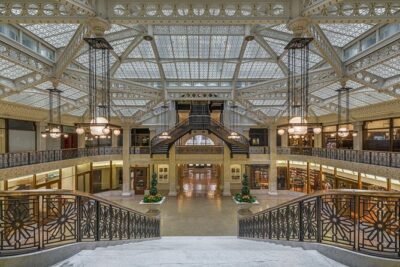 ★ 5.0Chicago’s Secret Interiors Architectural Walking TourFrom $35635 reviews
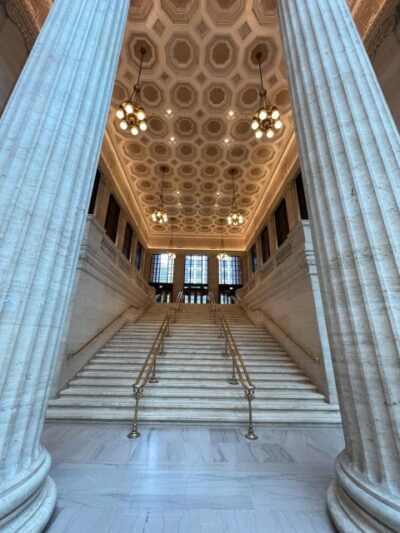 ★ 4.9Secret Interiors Architecture Walking TourFrom $35498 reviews
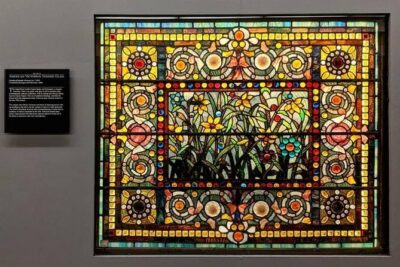 ★ 5.0Chicago Architecture Tour: Underground Pedway and the LoopFrom $35388 reviews
 ★ 5.0Chicago Walking Tour: Art Deco Skyscrapers LoopFrom $35138 reviews
 ★ 4.0Frank Lloyd Wright Robie House Admission130 reviews
 ★ 5.0Chicago Architecture Walking Tour: Incredible Art Deco InteriorsFrom $3585 reviews
 ★ 5.0Chicago Walking Tour: Historic SkyscrapersFrom $3567 reviews
Browse the lists this tour appears in