
REVIEW · ARCHITECTURE WALKING TOURS
Private Chicago Architecture Walking Tour
Chicago tells its story in stone and steel. This private 3-hour Loop walk is designed for people who want more than photos: you get an English-speaking guide, a clear stop-by-stop route, and several buildings where entry is part of the experience. I like how the itinerary mixes big-name landmarks with the kinds of details you’d normally miss at street level—plus you’re handed a mobile ticket so you’re not scrambling.
Two things I especially liked: first, the pacing works. You’re not stuck staring at one facade for 45 minutes—you get brief stops that still include meaningful interiors when available. Second, the variety is smart: you move from 19th-century office booms to early 1900s Chicago School work, then finish with famous towers and their signature looks. One drawback to keep in mind: not every building is meant for full inside access, and on weekends access can be more limited, so you may spend more time looking from outside when doors are shut.
In This Review
- Key Points You’ll Care About
- A Private Loop Walk That Feels Like a Storyline, Not a Checklist
- Marquette Building: Speculation 101, With Real Office-Block Drama
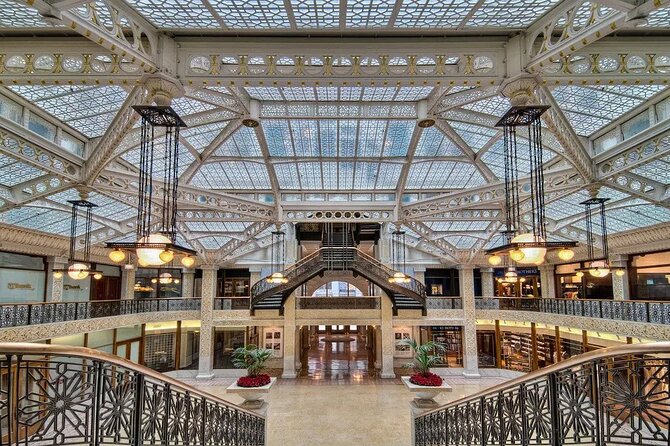
- The Rookery Building: Where Chicago Style Meets a Sense of Openness
- Palmer House Hilton Lobby and Chicago Athletic Association: Two Ways to Feel “Downtown”
- Sullivan Center (Carson Pirie Scott): The Chicago School in Stone
- Chicago Cultural Center: Tiffany Dome and Free Stuff If You Want to Stay Longer
- Tribune Tower and Wrigley Building: Finishing With Chicago’s Signature Silhouettes
- Price and Inclusions: What You’re Paying For (and What to Confirm)
- Inside Access Isn’t Guaranteed Every Time, Especially on Weekends
- Who Should Book This Tour
- Should You Book?
- FAQ
- How long is the Chicago architecture walking tour?
- Is this tour private or shared?
- What language is the guide?
- What does the tour cost?
- Are tickets and admissions included?
- Is lunch included?
- Where does the tour start and end?
- What’s included besides the guide?
- Can I use a mobile ticket, and is it near transit?
- Can I cancel for a full refund?
Key Points You’ll Care About
- Private tour = your group only: more time to ask questions and get the story tuned to your pace.
- Ticketed stops are a big part of the value: multiple entries are included across the route.
- Lunch and bottled water are included: you’ll stay fueled without hunting for food mid-walk.
- The route is Loop-friendly: it starts near Michigan Ave and ends near the Wrigley Building, so it’s easy to extend your day.
- Inside access depends on the day: some interiors may be limited, especially on weekends.
A Private Loop Walk That Feels Like a Storyline, Not a Checklist
This is a private walking tour, so it’s just your group. That matters because architecture talks better when you can ask questions without listening over other people. You’ll also have a guide who leads in English, and the tour runs about 3 hours—long enough to feel like you saw a lot, not so long that your feet call for a ceasefire.
Logistics are straightforward. Your meeting point is the Fine Arts Building at 410 S Michigan Ave, and the walk finishes at the Wrigley Building area, 400–410 Michigan Ave. You’ll use a mobile ticket, and bottled water is included, which is practical in Chicago weather when it decides to do everything at once.
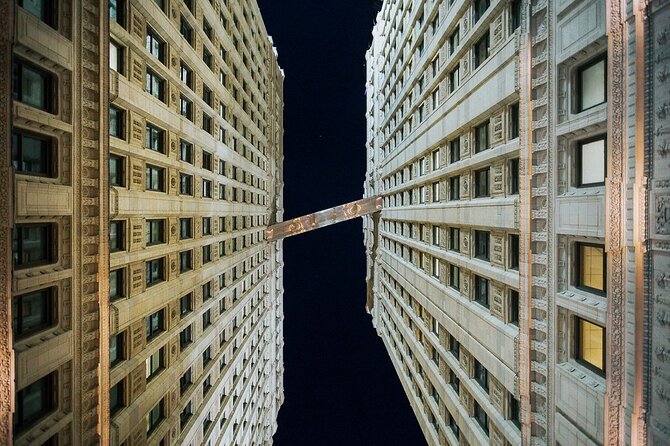
Neck craned in the Loop, more building walks
Marquette Building: Speculation 101, With Real Office-Block Drama
Your first major stop is the Marquette Building, a historic landmark tied to the late 1800s building boom. The key idea here is that it was designed like a bundle of high-quality office spaces meant to make investors money. In other words, you’re looking at architecture that was built with a profit plan—speculation given a skyline.
You get about 20 minutes here with an admission ticket included. Expect to notice how the building’s commercial purpose influenced its design and how the early skyscraper era in Chicago was driven by real estate risk. It’s a great kickoff because it sets the theme for everything that follows: Chicago’s towers weren’t just pretty—they were business machines.
The Rookery Building: Where Chicago Style Meets a Sense of Openness
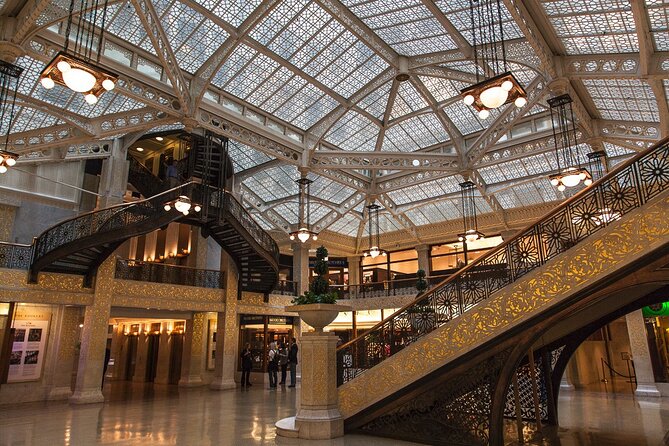
Next up is the Rookery Building at LaSalle and Adams—part of the famous LaSalle Street financial corridor. When it was finished, it was considered the largest and finest office building in the United States, and the impact of that ambition still feels strong today.
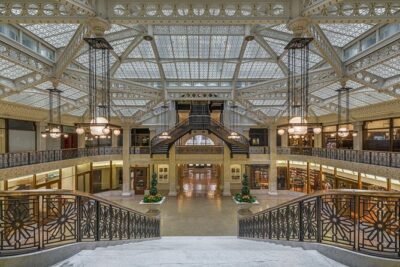
This stop also comes with about 20 minutes and admission included. What I like about the Rookery on a guided walk is that it helps you connect details you can see from the outside to the feeling you’d have if you were actually working there. Even when your time inside is limited, you’ll leave with a better sense of why Chicago’s early skyscrapers became models for the country.
Chicago at sidewalk speed, more routes
- Chicago: Gangsters and Ghosts Walking Tour
★ 5.0 · 7,155 reviews - Chicago Favorites Ultimate Food and Walking Tour
★ 5.0 · 1,962 reviews - Chicago: Gangsters and Ghosts Guided Walking Tour
★ 4.7 · 1,697 reviews
Palmer House Hilton Lobby and Chicago Athletic Association: Two Ways to Feel “Downtown”
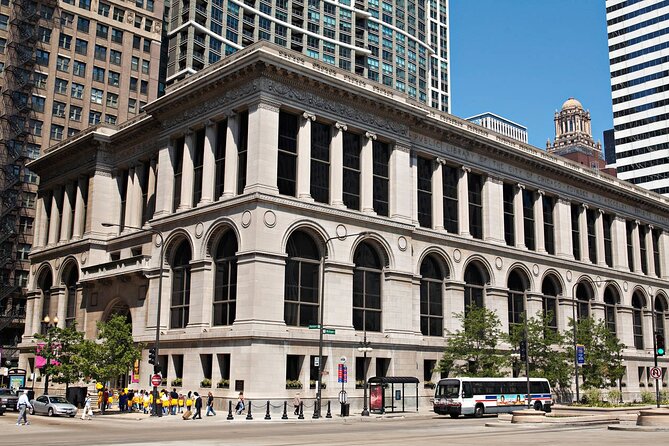
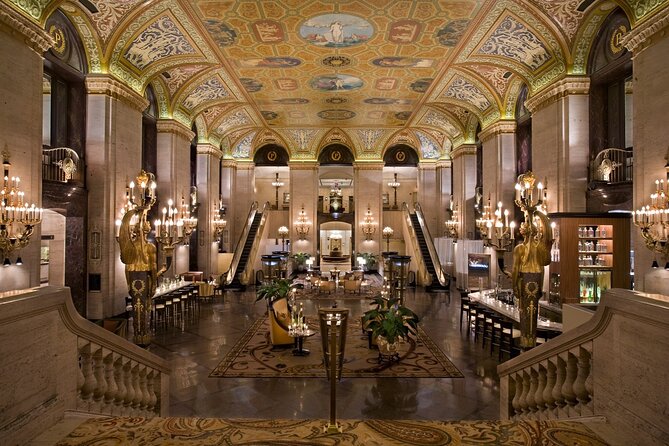
You’ll briefly hit the Palmer House Hilton Historic Lobby for about 10 minutes, and the admission is free. This is the kind of place where the building history is almost built into the walls. The Palmer House is the longest continuously operating hotel in North America, and it was the first hotel in Chicago with elevators. It also claims early tech bragging rights, like electric light bulbs and telephones in guest rooms.
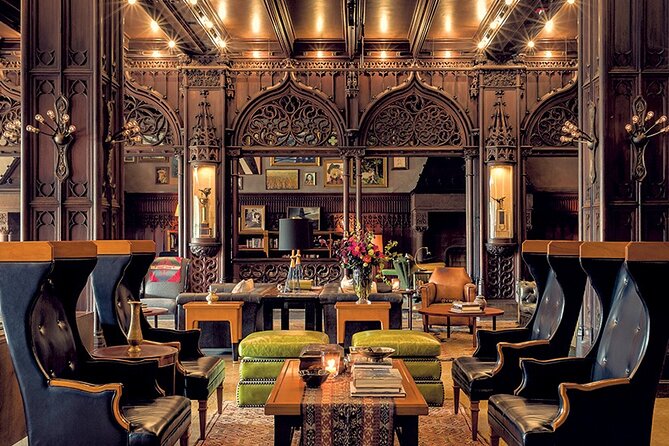
Then comes the Chicago Athletic Association hotel, for about 30 minutes, also free admission. It occupies an 11-story Venetian Gothic building designed by Henry Ives Cobb, completed in 1893. From the construction era until 2007 it functioned as a private club for wealthy Chicagoans, and that exclusive past still shapes the interior today—ornate paneling, molding, and lots of decorative details.
One practical reason I think this pair of hotel stops works: hotels are public enough that you can actually understand the architecture without needing a special membership or context. They also make a nice break from the constant “office tower” theme.
Sullivan Center (Carson Pirie Scott): The Chicago School in Stone
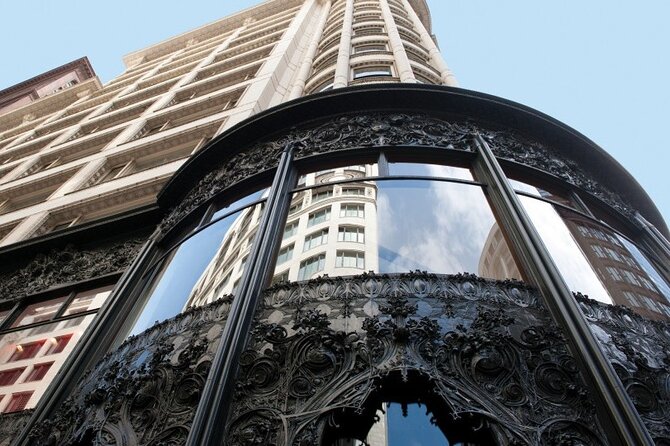
The next stop is the Sullivan Center, the former home of the Carson Pirie Scott store. This is where the tour leans into the Chicago School style—an important chapter in tall building design and a major moment in the history of skyscrapers. It was built between 1899 and 1903 and later declared a milestone of Chicago in 1975.
You’ll get around 20 minutes here with an admission ticket included. The big value of this stop is that it connects architecture to everyday retail. The building wasn’t just for offices; it served the street-level economy for a long time, used for retail trade throughout its life. That context makes the architecture feel less academic and more grounded.
Chicago Cultural Center: Tiffany Dome and Free Stuff If You Want to Stay Longer
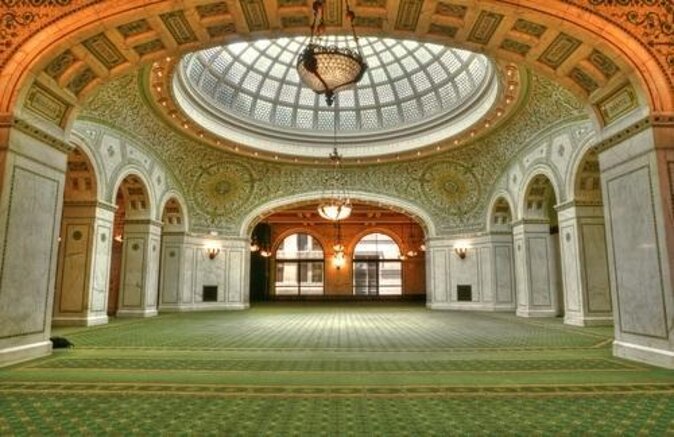
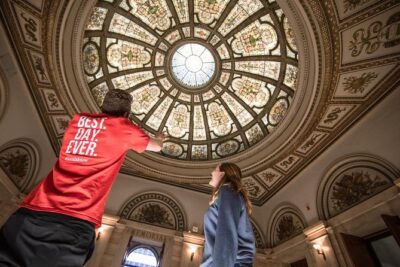
Next is the Chicago Cultural Center, where you’ll spend about 30 minutes with admission included. This is one of the city’s most popular downtown attractions and takes up an entire city block. The headline feature is the world’s largest Tiffany stained glass dome, which gives you a real sense of craft and scale.
It’s also more than a single photo spot. The building hosts more than 700 humanities programs a year, and many of them are free and open to the public. On a guided walk, you can use your time two ways: enjoy a focused “see the dome and major rooms” pass, or—if you find yourself slowing down—treat it like a mini detour where you could realistically spend more time.
Tribune Tower and Wrigley Building: Finishing With Chicago’s Signature Silhouettes
You’ll end with two icons that are easy to spot on any Chicago skyline, but different when you pay attention up close.
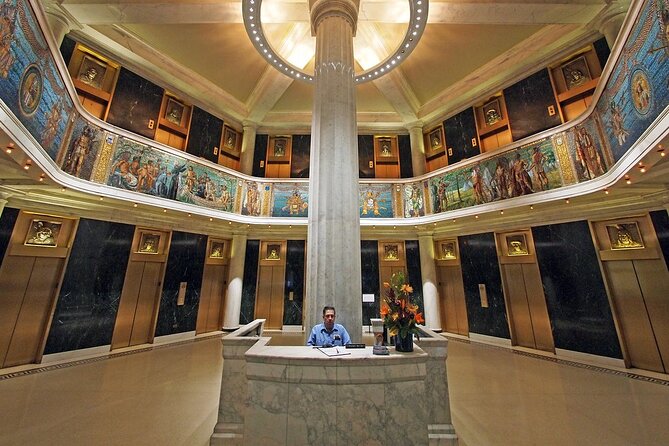
At the Tribune Tower, you’ll have about 15 minutes with admission included. The building isn’t just tall—it’s dramatic. It rises only 36 stories, but the Gothic spires and the shrine-like lobby are what made it an architectural identifier for the city. The lobby also features inspirational quotes, which makes this stop feel almost like a civic message rather than just an entrance.
Then you’ll move to the Wrigley Building for about 15 minutes with admission included. Dating to the 1920s, it has French Renaissance elements, but the clock tower is the main event. The tower reaches 130 meters (425 feet), turning it into a true skyscraper landmark rather than just a building with decoration.
This ending combo is smart because it gives your brain two kinds of closure: one finishing with the city’s media-and-institution vibe (Tribune Tower), and one finishing with the clock-and-time feel of a landmark that watches the whole Loop.
Price and Inclusions: What You’re Paying For (and What to Confirm)
The price is $211.00 per person, and for a walking tour in Chicago that includes multiple entries, it can be good value—especially if you’d otherwise pay admission fees on your own. What’s included: bottled water, all fees and taxes, an English-speaking guide, and lunch.
A note worth taking seriously: one piece of feedback flagged confusion about lunch not matching what was described or confirmed. I’d treat that as a reminder to check your confirmation details before you arrive. If lunch inclusion is important to you, verify it in the wording you receive.
Tips for the guide aren’t included, so you’ll want to budget for that if you’re happy with the experience. And if you care about inside access, know that not every stop guarantees you’ll enter every building every time, depending on conditions.
Inside Access Isn’t Guaranteed Every Time, Especially on Weekends
This kind of architecture walk is built around access where it’s available, but it’s not a promise of uninterrupted entry into every stop. Doors can be closed, hours can shift, and some spots may be limited, which affects how much time you get inside versus how much you spend outside observing details.
If you’re going on a weekend, I’d adjust expectations. You can still get a great experience from outside views, but you may have fewer interiors than you hoped for. The good news: several stops on the route come with admission included, so the tour isn’t only exterior sightseeing.
Who Should Book This Tour
I think this tour is a strong fit if you:
- want a guided Loop-focused architecture overview without building-by-building planning
- like learning how Chicago’s commercial boom shaped the skyline
- appreciate that lunch and water are handled, so you can concentrate on walking and looking
- prefer a private format where your questions don’t get swallowed by the crowd
If you’re the kind of traveler who wants one single “must-see” monument all day, you might feel the tour is too varied. But if you like patterns—office boom, retail-era design, civic culture, then iconic towers—this is the right style.
Should You Book?
Yes, if you want a smart, efficient Loop architecture walk with real structure: ticketed stops, a guide, and a finish at Wrigley Building so you can keep roaming afterward. The standout value is how many major landmarks you cover in about 3 hours, with lunch and bottled water included to keep the day easy on your feet.
Book with one caution: confirm lunch details and remember that inside access can be limited on some days. If you go in with that mindset, you’ll get a fun, high-impact look at why Chicago calls its buildings more than scenery—it calls them stories you can walk through.
FAQ
How long is the Chicago architecture walking tour?
It runs for about 3 hours (approx.).
Is this tour private or shared?
It’s a private tour/activity. Only your group participates.
What language is the guide?
The tour is offered in English, with an English-speaking guide.
What does the tour cost?
The price is $211.00 per person.
Are tickets and admissions included?
Admission tickets are included for some stops, and admission is also listed as free for a couple of buildings. The tour inclusions also cover all fees and taxes.
Is lunch included?
Lunch is listed as included in the tour inclusions.
Where does the tour start and end?
It starts at the Fine Arts Building, 410 S Michigan Ave, and ends at the Wrigley Building area, 400–410 Michigan Ave.
What’s included besides the guide?
Bottled water, lunch, all fees and taxes, and the English-speaking guide are included.
Can I use a mobile ticket, and is it near transit?
Yes, it includes a mobile ticket, and it’s noted as near public transportation.
Can I cancel for a full refund?
You can cancel up to 24 hours in advance for a full refund. After that window, refunds aren’t available.
Chicago on Foot, Block After Block
- Chicago: Gangsters and Ghosts Walking Tour★ 5.0 · 7,155 reviews
- Chicago Favorites Ultimate Food and Walking Tour★ 5.0 · 1,962 reviews
- Chicago: Gangsters and Ghosts Guided Walking Tour★ 4.7 · 1,697 reviews
- Chicago in a Day: Food, History & Architecture Walking Tour★ 5.0 · 1,153 reviews
- Chicago’s Secret Interiors Architectural Walking Tour★ 5.0 · 635 reviews
The Wider Chicago Shortlist
- Chicago Architecture River Cruise★ 5.0 · 15,756 reviews
- Chicago River 90-Minute Architecture Tour★ 4.5 · 9,629 reviews
- Chicago River: 1.5-Hour Guided Architecture Cruise★ 4.8 · 8,046 reviews
- Chicago: Gangsters and Ghosts Walking Tour★ 5.0 · 7,155 reviews
- Chicago Architecture Center River Cruise aboard First Lady★ 5.0 · 5,536 reviews
Chicago, Read from the Sidewalk
- Chicago in a Day: Food, History & Architecture Walking Tour★ 5.0 · 1,153 reviews
- Chicago’s Secret Interiors Architectural Walking Tour★ 5.0 · 635 reviews
- Chicago: Secret Interiors Architecture Walking Tour★ 4.9 · 498 reviews
- Chicago Architecture Tour: Underground Pedway and the Loop★ 5.0 · 388 reviews
- Chicago Walking Tour: Art Deco Skyscrapers Loop★ 5.0 · 138 reviews
The Ink Is Still Wet on These Chicago Reviews




Architecture Walking Tours, compared.
 ★ 5.0Chicago in a Day: Food, History & Architecture Walking TourFrom $1001,153 reviews
 ★ 5.0Chicago’s Secret Interiors Architectural Walking TourFrom $35635 reviews
 ★ 4.9Secret Interiors Architecture Walking TourFrom $35498 reviews
 ★ 5.0Chicago Architecture Tour: Underground Pedway and the LoopFrom $35388 reviews
 ★ 5.0Chicago Walking Tour: Art Deco Skyscrapers LoopFrom $35138 reviews
 ★ 4.0Frank Lloyd Wright Robie House Admission130 reviews
 ★ 5.0Chicago Architecture Walking Tour: Incredible Art Deco InteriorsFrom $3585 reviews
 ★ 5.0Chicago Walking Tour: Historic SkyscrapersFrom $3567 reviews
Browse the lists this tour appears in