
REVIEW · CHICAGO HISTORY TOURS
Explore Black History on the Southside of Chicago
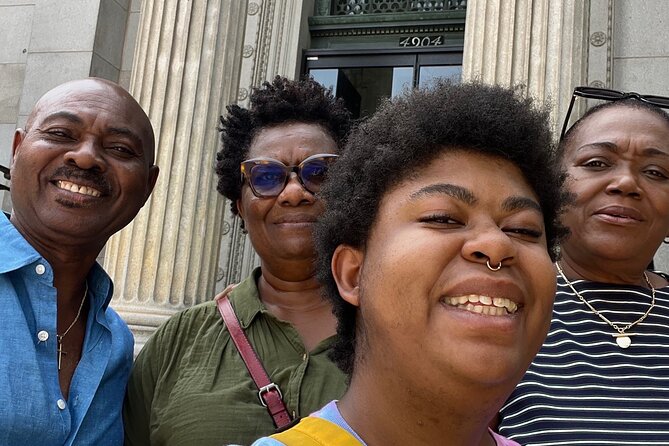
Chicago’s South Side rewards you when you slow down and look. This 2.5-hour walk through Bronzeville and nearby neighborhoods shares Black history from a 5th generation South Sider and keeps things grounded in the actual streets, landmarks, and people behind them.
I love that the tour mixes famous names with places you can actually point to, including stops connected to Barack Obama’s Chicago home and Muhammad Ali’s former home.
One consideration: it does not go inside the DuSable Black History Museum, so you’ll get the area context from outside and should plan to visit the museum separately if you want to go in.
In This Review
- Key highlights to know before you go
- A South Side walking tour built around real landmarks
- Price and what you actually get for $5
- Meet at DuSable Museum of African American History on 56th Place
- Washington Park: statues, 1800s context, and an easy first breather
- Kenwood’s Casa de Barak Obama stop: architecture and political history
- Operation Rainbow PUSH Headquarters and Dr. King’s Workshop link
- Muhammad Ali’s former home on Woodlawn Avenue
- Blackstone Branch Chicago Public Library: Greco-Roman, then thoughts
- Tips that make the tour easier (and your photos better)
- Who this tour suits best
- Should you book this tour?
- FAQ
- FAQ
- Where does the tour start?
- How long is the walking tour?
- How much does it cost?
- Does the tour include entry into the DuSable Black History Museum?
- What stops are included during the walk?
- Is the tour outdoors?
- Is there a mobile ticket?
- Are service animals allowed?
Key highlights to know before you go
- DuSable Museum meeting point with the option to arrive early for a look around
- Washington Park right across the way, with statues and stories reaching back to the 1800s
- Kenwood photo stop for the Casa de Barak Obama area, plus time to talk context
- Operation Rainbow PUSH HQ and Dr. King’s Workshop connection tied to Rev. Jesse Jackson
- Muhammad Ali’s former home on Woodlawn, discussed with the personal faith angle behind his decision
- Blackstone Branch Chicago Public Library as a classic architectural finish
A South Side walking tour built around real landmarks
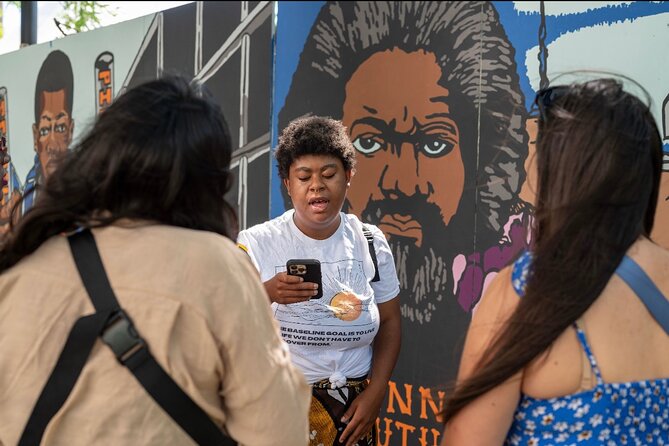
This isn’t the kind of tour where you stare at a plaque and move on. You walk, you stop, you talk. The pace is designed for a 2 to 3 hour experience, and it’s led by Gillian, a guide with deep South Side roots and a clear focus on firsthand meaning.
You’ll move through Bronzeville and beyond, but the route stays practical: key sites are close enough to stitch together into a story. You also get photo time at the major “this is the place” moments, because a lot of the power here comes from seeing the homes, parks, and civic buildings in their real setting.
And yes, there’s a drinks element built into the experience. It’s a small detail, but it helps on a walking tour—especially in Chicago weather swings.
From the fire of 1871 forward, more history
Price and what you actually get for $5
$5 is almost comically low for a guided neighborhood walk that hits multiple famous landmarks plus community institutions. The math here is about value, not about spectacle. You’re paying for context and guidance—someone to point out what matters and why.
You also get a mobile ticket, and the format is straightforward: meet at the DuSable Museum area, walk a loop of nearby sites, and end in a different location (so you’re not just going back to where you started). With a maximum group size of 50, the tour still feels like a group experience, not a crowd crush.
If you’re trying to stretch your Chicago budget but still want something thoughtful and on-the-ground, this is an easy choice.
Meet at DuSable Museum of African American History on 56th Place
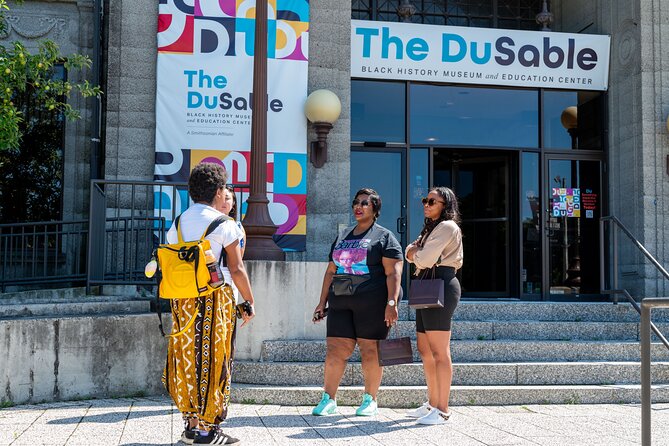
The tour starts in front of the DuSable Museum of African American History and Education Center, at 740 E 56th Pl, Chicago, IL 60637. This museum is Chicago’s African American museum named for Jean Baptiste Point du Sable, the first non-native person said to settle in Chicago.
Important note: the tour does not include going inside the museum. That sounds like a drawback, but it can also be a smart strategy. You’ll get the outside framing and then you’ll have a natural reason to return on another day if you want the deeper museum experience. If you arrive early, you can use that time to get your bearings and see the space before you start walking.
When the group gathers, you’re not starting in the middle of nowhere. You’re starting at a cultural anchor, and that matters for how the rest of the stops connect.
More Black Chicago history, South Side and beyond
- Small-Group Tour of Chicago Neighborhoods: North and South Side
★ 4.5 · 50 reviews - Chicago Tour – South Side
★ 4.5 · 38 reviews - Chicago Black History Highlights Walking Tour
★ 4.0 · 5 reviews
Washington Park: statues, 1800s context, and an easy first breather
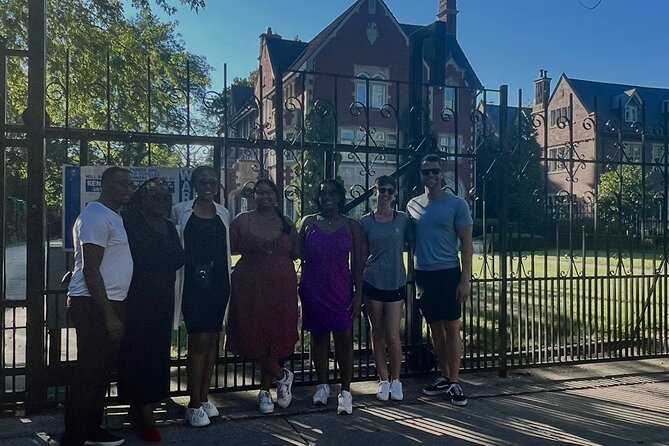
From the museum area, you’ll head to Washington Park, a massive green space sitting in front of the DuSable Museum. It’s a good early stop because it gives you room to orient yourself before the walk tightens into the story.
You’ll spend about 20 minutes here, and you’re looking at statues and sculptures alongside history that goes back to the 1800s. The practical benefit: you get a visual memory you can carry to later stops. The historical benefit: the tour doesn’t treat the South Side as one time period. It shows layers.
A small pro tip: if you want photos, this is where you’ll get nice angles without rushing. Use your camera or phone, then save the speed for the residential and institutional stops later.
Kenwood’s Casa de Barak Obama stop: architecture and political history
One of the tour highlights is a stop for photos at Casa de Barak Obama in the Kenwood neighborhood. You’ll get roughly 25 minutes for pictures and discussion.
This is more than a famous-home moment. Kenwood’s setting is part of the lesson. In this stretch, you can see the kind of preserved brown and grey stone mansions that have lasted for more than a hundred years. That architecture helps you understand how major moments in history live inside specific neighborhoods, not in a vacuum.
The discussion also ties the visit to the story of President Obama’s Chicago and the significance of his election as the nation’s first Black President. Even if you already know the headline, hearing it connected to place is different—and it helps you notice details you might otherwise skip.
A consideration here: this stop is built for viewing and photos. You’re not going to walk deep into private property spaces, so focus your attention on what you can see from the sidewalk and on the guide’s explanation.
Operation Rainbow PUSH Headquarters and Dr. King’s Workshop link
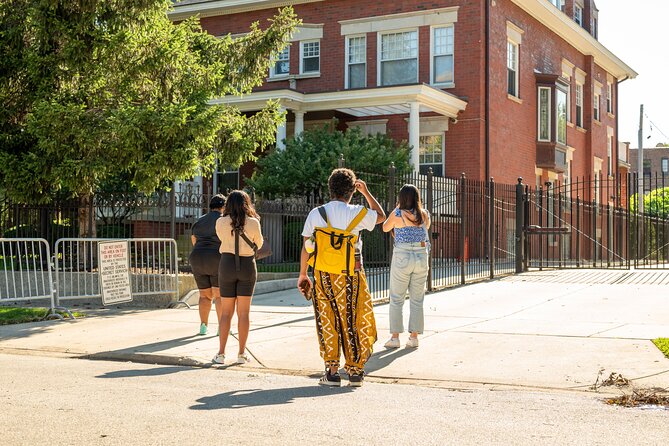
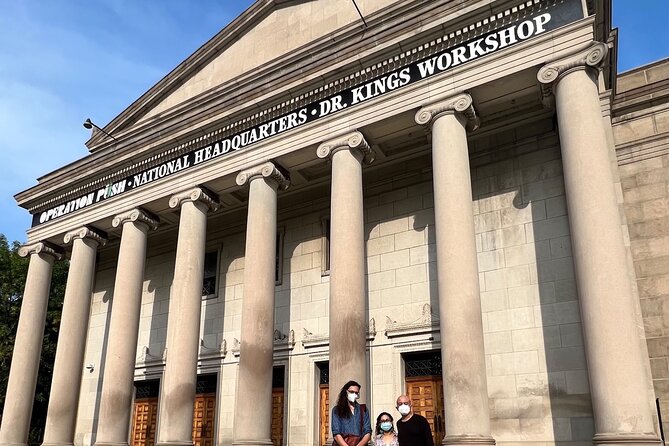
Next up is 930 E 50th St, connected to Operation Rainbow PUSH National Headquarters. The tour explains that Dr. King’s Workshop was founded by Rev. Jesse Jackson, who was a constituent of Dr. Martin Luther King.
What I like about this stop is how it bridges generations of activism. The tour frames PUSH as an international human and civil rights organization known for activism and advocacy that spans from the 1960s to today. That timeline matters, because it keeps you from thinking civil rights work is only a past chapter.
At this point in the walk, I recommend you ask questions if you have them. The guide explicitly welcomes questions, and this is the kind of stop where a little back-and-forth can turn names into meaning.
Also, be ready for a different vibe than the residential blocks. This is institutional territory—so keep your attention on the organization’s role in the story you’re building across the walk.
Muhammad Ali’s former home on Woodlawn Avenue
The tour’s Muhammad Ali stop is at 4944 S Woodlawn Ave, where you’ll learn about his former home. Expect about 20 minutes here, with photos and explanation.
Ali’s story on this tour isn’t just fame. It’s also faith and principle. The guide connects Ali’s move to Chicago with his decision to refuse military service based on religious grounds, and the stop is framed as his desire to be closer to his spiritual mentor, Elijah Muhammad.
That angle changes how you look at a house. It becomes a symbol of choices—what it costs to hold to beliefs, and how that choice plays out in everyday life. You’ll likely notice that the discussion feels personal even though it’s historical. That’s the strength of a guide who lives this story through lived neighborhood knowledge.
Photo note: bring your phone/camera and aim to shoot what the guide points out. Residential exteriors can look slightly different depending on the light and the angle, and you’ll get the best results when you’re syncing with the stop’s key viewing points.
Blackstone Branch Chicago Public Library: Greco-Roman, then thoughts
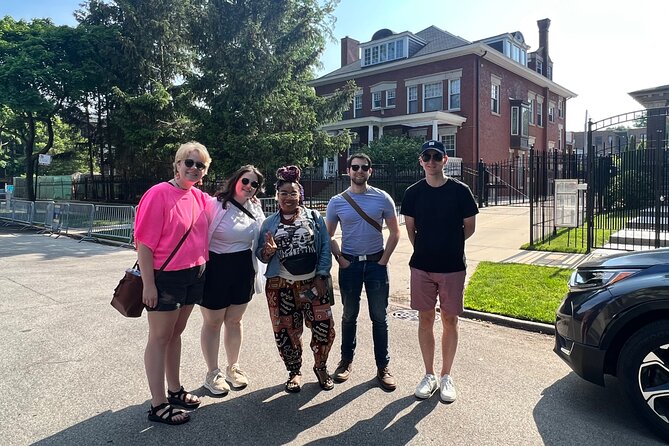
The tour finishes at the Blackstone Branch of the Chicago Public Library, described as the city’s oldest public library and known for breathtaking Greco-Roman architecture.
You’ll spend about 20 minutes here, which feels like the right amount of time to land the final idea: Black history here isn’t only about homes and activism sites. It’s also about public institutions—spaces that shape learning, community, and everyday access to information.
The Greco-Roman style is a striking contrast with the rest of what you’ve seen. The point isn’t that architecture is the theme. The point is that this neighborhood story includes civic ambition and public culture, not just milestones.
If you like taking photos of buildings, this is your last chance. After this, you’ll be done and the tour ends at a different location than where you started.
Tips that make the tour easier (and your photos better)
This is a walking tour, so you’ll get more from it if you show up ready for movement and weather. The tour requires good weather, and it comes with a note for moderate physical fitness. That doesn’t mean it’s a hard hike, but it does mean you should wear comfortable shoes and expect steady walking.
Bring your camera or phone—you’ll be stopping for photos at key points like the Obama home area, Ali’s home area, and the final library.
Come with curiosity. The guide says you can ask questions, and I’d actually do it. If you’re the type who wonders how activism links to specific addresses, or how neighborhoods shape political life, this is the moment to ask.
Also, plan on the timing. The tour runs about 2 to 3 hours, so treat it like a real commitment in your day. If you’re hopping between multiple Chicago activities, leave enough buffer before and after.
Who this tour suits best
I think this tour is best for you if:
- You want Black history in Chicago tied to physical places you can see
- You like walking tours that explain the why, not just the what
- You’re curious about neighborhoods beyond the downtown highlight reel
- You appreciate learning from someone with deep local roots like Gillian
- You’re traveling on a budget and want real value without rushing
It also works well for first-time Chicago visitors who want a grounded look at the South Side without needing to rent a car.
Should you book this tour?
Yes, if you want a low-cost, high-meaning walking experience focused on Black history landmarks. The $5 price makes it a smart add-on even if you’ve already done other Chicago tours—because the setting is different and the guide’s perspective is the main attraction.
I’d only hesitate if you’re specifically hoping for museum time inside the DuSable Museum. Since the tour doesn’t go inside, you’ll get outside context plus the push to visit the museum separately if you want that full experience.
FAQ
FAQ
Where does the tour start?
The tour starts at the DuSable Black History Museum and Education Center, 740 E 56th Pl, Chicago, IL 60637.
How long is the walking tour?
It runs about 2 to 3 hours.
How much does it cost?
It’s $5.00 per person.
Does the tour include entry into the DuSable Black History Museum?
No. The tour does not include going inside the DuSable Museum, though visiting the museum is encouraged separately.
What stops are included during the walk?
The tour includes stops at the DuSable Museum area, Washington Park, a stop at Casa de Barak Obama, Operation Rainbow PUSH National Headquarters (930 E 50th St), Muhammad Ali’s former home (4944 S Woodlawn Ave), and the Blackstone Branch Chicago Public Library.
Is the tour outdoors?
It is a walking tour and it requires good weather.
Is there a mobile ticket?
Yes. The experience uses a mobile ticket.
Are service animals allowed?
Yes, service animals are allowed.
The Wider Chicago Shortlist
- Chicago Architecture River Cruise★ 5.0 · 15,756 reviews
- Chicago River 90-Minute Architecture Tour★ 4.5 · 9,629 reviews
- Chicago River: 1.5-Hour Guided Architecture Cruise★ 4.8 · 8,046 reviews
- Chicago: Gangsters and Ghosts Walking Tour★ 5.0 · 7,155 reviews
- Chicago Architecture Center River Cruise aboard First Lady★ 5.0 · 5,536 reviews
Black Chicago, Told in Full
- African American Heritage Tour of Chicago★ 4.5 · 127 reviews
- Small-Group Tour of Chicago Neighborhoods: North and South Side★ 4.5 · 50 reviews
- Chicago Tour – South Side★ 4.5 · 38 reviews
- Chicago Black History Highlights Walking Tour★ 4.0 · 5 reviews
- 2 Hour Private Chicago Soul House Tour★ 4.0 · 4 reviews
Since the Fire: Chicago History
- Chicago in a Day: Food, History & Architecture Walking Tour★ 5.0 · 1,153 reviews
- Chicago: Field Museum of Natural History Ticket or VIP Tour★ 4.7 · 717 reviews
- Field Museum of Natural History Admission Tickets★ 4.5 · 489 reviews
- Chicago Walking Tour: Historic Treasures of Chicago★ 5.0 · 362 reviews
- Historical and Architectural Chicago Fireboat River & Lake Cruise★ 5.0 · 246 reviews
The Ink Is Still Wet on These Chicago Reviews




Chicago History Tours, compared.
 ★ 5.0Chicago in a Day: Food, History & Architecture Walking TourFrom $1001,153 reviews
 ★ 4.7Field Museum of Natural History Ticket or VIP TourFrom $29717 reviews
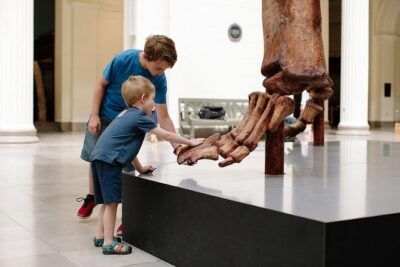 ★ 4.5Field Museum of Natural History Admission TicketsFrom $29489 reviews
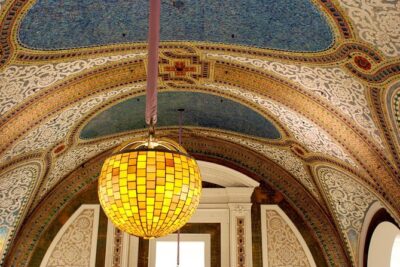 ★ 5.0Chicago Walking Tour: Historic Treasures of ChicagoFrom $35362 reviews
 ★ 5.0Historical and Architectural Chicago Fireboat River & Lake CruiseFrom $47246 reviews
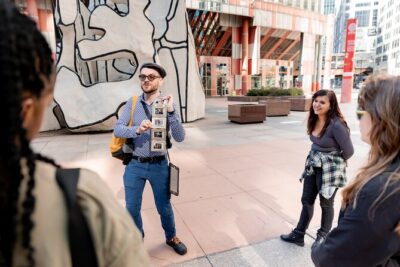 ★ 5.0Walkin’ with Colin: Chicago History-Mystery-Comedy-Tragedy TourFrom $44218 reviews
 ★ 5.0Chicago Walking Tour: A Walk Through TimeFrom $35181 reviews
 ★ 4.5Field Museum of Natural History All-Access PassFrom $41135 reviews
Browse the lists this tour appears in