
REVIEW · ARCHITECTURE WALKING TOURS
Chicago History and Architecture Walking Tour
That first skyline sweep hits fast. This small-group Chicago history and architecture walking tour ties Millennium Park to the Chicago Riverwalk with stories you’ll actually remember. Led by local guide Andrew (often called Andy), it mixes big-name landmarks with the kind of city trivia that makes the Loop feel personal.
I especially love the photo-ready stops at Millennium Park, including Cloud Gate and The Bean, plus the way you get skyline viewpoints while walking at street level. I also like that the route moves through the Chicago Riverwalk and the Magnificent Mile, so you’re not stuck doing one neighborhood loop.
One thing to consider: this tour leans more into Chicago history and lived-in storytelling than pure building-nerd architecture detail. If you want deep technical talk about design, you might wish for more of that and less focus on events like the Chicago Fire.
In This Review
- Key Highlights to Watch For
- From McCormick Tribune Plaza to a City-Wide Story in 2.5 Hours
- Millennium Park and Cloud Gate: The Best Start for First-Time Visitors
- Pedway Connections and the Chicago Riverwalk Skyline Switch
- The Magnificent Mile Walk: Wrigley, Tribune Tower, John Hancock
- DuSable Bridge and the Chicago Fire: Why Reconstruction Shaped the City
- Food Breaks Without Pressure: Savory Treat Options and Starbucks Reserve Roastery
- What You’ll Learn From Andrew (and Why the Stories Matter)
- Who Should Book This Tour (and Who Might Want Something Else)
- Should You Book This Chicago History and Architecture Tour?
- FAQ
- How long is the Chicago History and Architecture Walking Tour?
- How much does the tour cost?
- Where do I meet the guide?
- How big is the group?
- Which major landmarks are included?
- Are food and drinks included?
- What language is the tour guide?
- Can I cancel or pay later?
Key Highlights to Watch For

- Cloud Gate photo moments at Millennium Park with a guide who knows where to stand
- Small group size (up to 10) so you can ask questions and keep moving
- Chicago Riverwalk skyline views without needing tickets or a separate attraction
- Magnificent Mile icons including Wrigley Building, Tribune Tower, and John Hancock
- Pedway connections that make downtown feel like a puzzle you can solve on foot
- DuSable Bridge history stop that explains why Chicago rebuilt the way it did
From McCormick Tribune Plaza to a City-Wide Story in 2.5 Hours
This tour is built for people who want a lot of Chicago, without spending the day on transit. You meet at McCormick Tribune Plaza in front of the Park Grill, with restrooms available before you start. From there, it’s a steady walking route through the downtown core—enough movement to feel like you traveled across the city, but not so much that you’re wiped out after.
The duration is 2.5 hours, offered in the morning and afternoon. That timing matters. You’ll catch the main highlights while the light is usually decent for photos, and you still have plenty of time to eat on your own afterward. With a small group capped at 10 participants, you also get a calmer rhythm than you do on big bus tours. You can hear the guide. You can move at a human pace. You can stop when something is worth looking at.
Price is $49 per person. For Chicago, that’s a fair deal because you’re paying for more than “walking.” You’re paying for a guide who connects buildings to events, street layouts, and the way the city thinks about itself. If you’ve never really understood why Chicago looks the way it does, this format gives you a fast orientation.
Neck craned in the Loop, more building walks
Millennium Park and Cloud Gate: The Best Start for First-Time Visitors
Your walking tour begins where Chicago flexes in public art and design. Millennium Park is a strong opener because it’s a place where you can instantly see the city’s modern confidence—then you can pivot to older stories and still feel anchored.
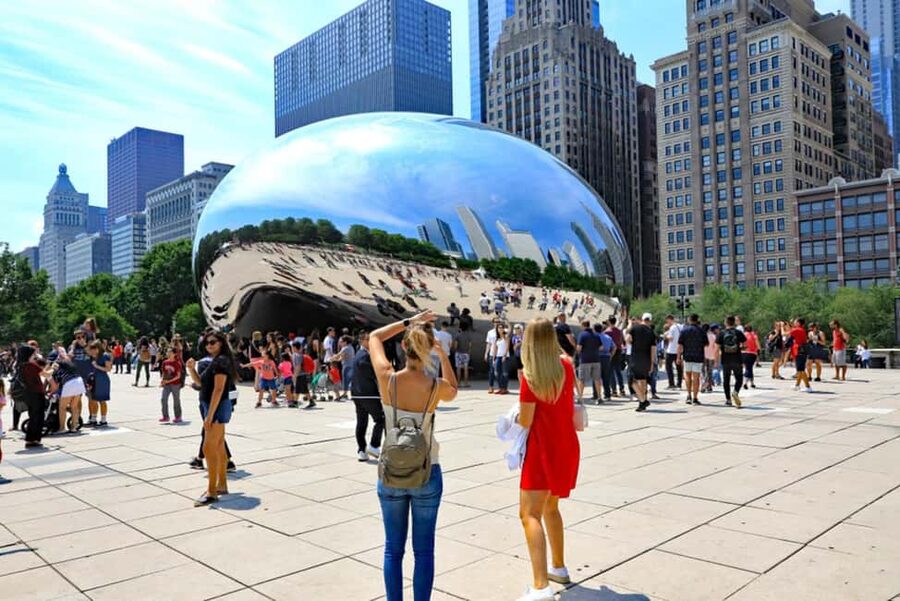
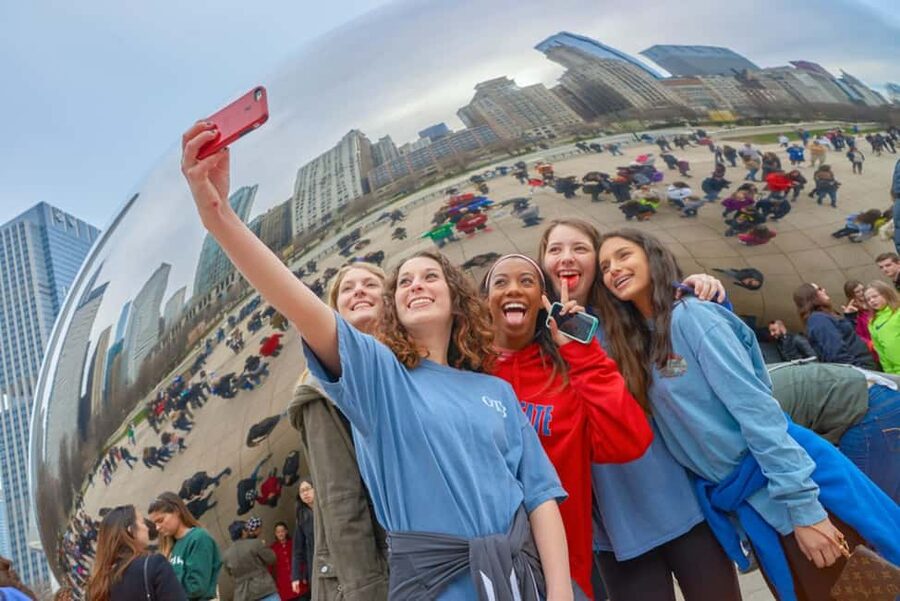
The star stop is Cloud Gate, also known as The Bean. You’ll get time to snap photos, and the guide’s job here is practical: help you understand where the reflections and angles work best so your pictures look intentional instead of random. Even if you’ve seen photos online, standing there in person is different. The curved metal surface turns the crowd and buildings into a moving backdrop, and you’ll notice details you’d miss if you just walked past.
Millennium Park also gives you room to breathe between skyscraper blocks. You’ll see gardens and public art, which matters because downtown can feel like wall-to-wall buildings if you don’t mix in a calmer public space. This kind of stop is more than decoration; it’s part of how Chicago stages everyday life for locals and visitors.
What I like most: the tour doesn’t treat Millennium Park as a quick checklist. It’s a launchpad for understanding Chicago’s identity—how the city builds attention around public spaces, not only private addresses.
Pedway Connections and the Chicago Riverwalk Skyline Switch

After the park, the tour shifts into the downtown flow that locals use every day: the Chicago Pedway. This is one of the things I think first-timers appreciate most. Instead of fighting the outdoors for every block, you get a glimpse of how Chicago stitches buildings together at street level and above street level. It also helps the whole walk feel efficient, which is huge when you have only 2.5 hours.
Then you come up to one of the best walking stretches in the city: the Chicago Riverwalk. This is where the tour really earns its keep. You get skyline views while moving along the river, which means you’re not staring at one angle for too long. The city’s tall buildings look different from the river edge—taller, sharper, and more layered.
You’ll also get to admire iconic skyscrapers up close as you walk. That’s a key point: you’re viewing architecture in context. It’s not just “look at tall building.” It’s “look at tall building and notice how it sits in a working city corridor.” The riverwalk does that for you, and a guided route makes sure you notice the good vantage points instead of just walking by them.
From the fire of 1871 forward, more history
- Chicago in a Day: Food, History & Architecture Walking Tour
★ 5.0 · 1,153 reviews - Chicago: Field Museum of Natural History Ticket or VIP Tour
★ 4.7 · 717 reviews - Field Museum of Natural History Admission Tickets
★ 4.5 · 489 reviews
The Magnificent Mile Walk: Wrigley, Tribune Tower, John Hancock
Next comes the stretch most people already recognize: the Magnificent Mile. Walking it with a guide changes the experience. You stop seeing it as a shopping strip and start seeing it as a collection of architectural statements.
You’ll pass or see major landmarks, including:
- Wrigley Building
- Tribune Tower
- John Hancock
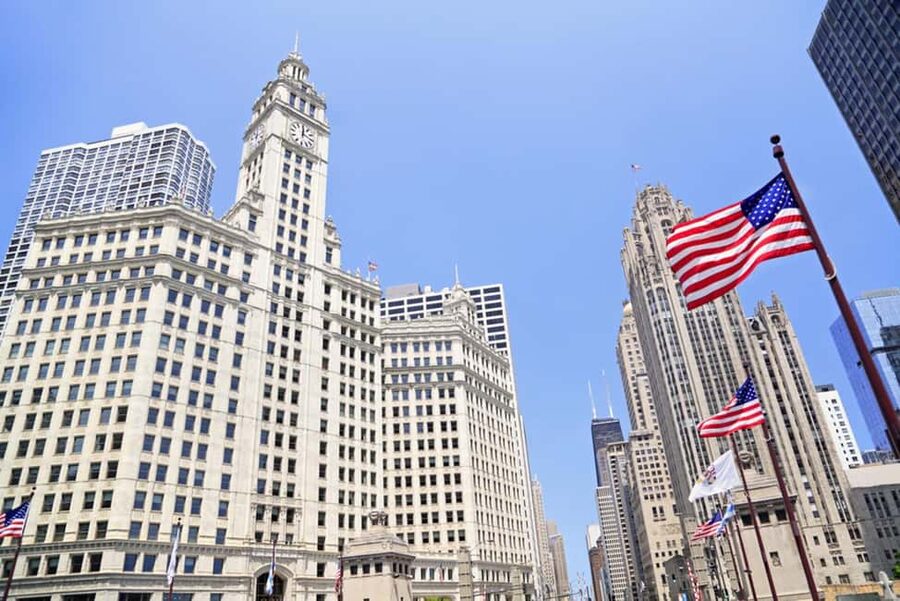
This is where the tour can feel like a satisfying mash-up of architecture and city branding. Those buildings are famous for a reason, but the guide’s storytelling helps you understand what they represented at the time and why they still matter now. Even if you’re not an architecture obsessive, you’ll start reading the skyline like a timeline.
One practical benefit: this section is easy to enjoy even on days when the weather isn’t perfect. The route is designed for continuous movement and frequent visual payoffs, so you’re not stuck waiting for “the next stop” to make the walk worth it.
If you’re hoping for ultra-technical architecture analysis—materials, engineering details, and that kind of deep dive—you may feel the emphasis is lighter here. Still, the trade-off is good storytelling and a clear “why this matters” thread from stop to stop.
DuSable Bridge and the Chicago Fire: Why Reconstruction Shaped the City
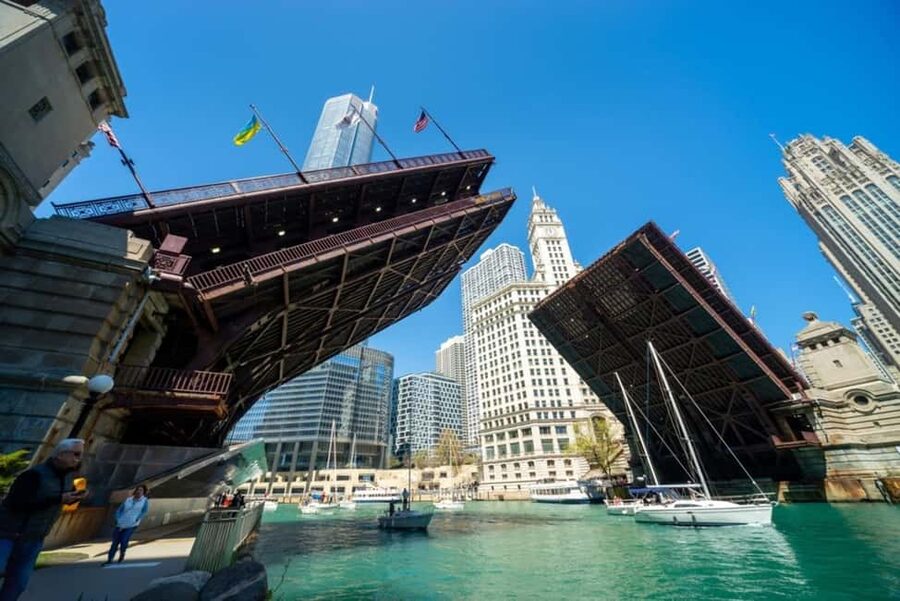
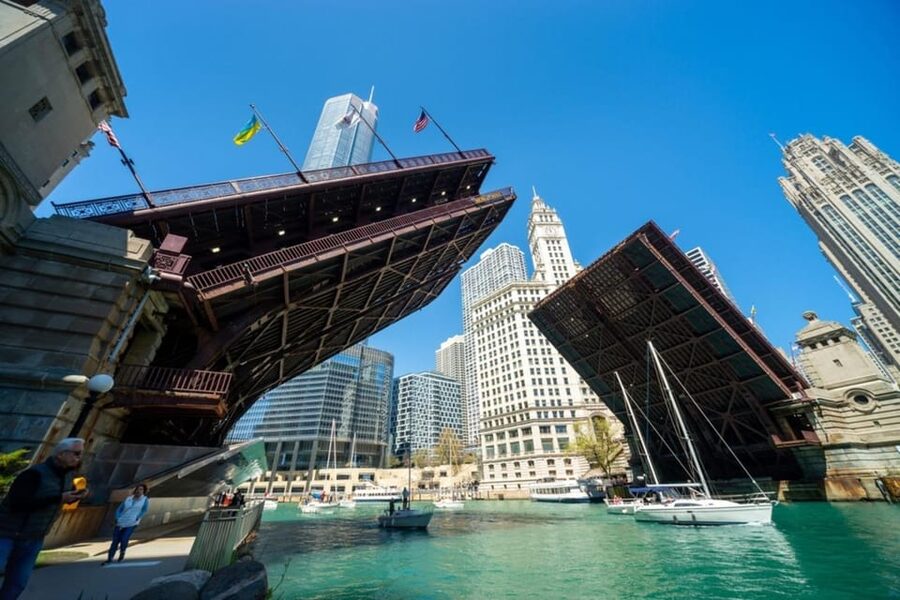
A standout moment on this tour is the DuSable Bridge stop, where you learn about the Chicago Fire and the city’s resilience after it. This is one of those history stops that doesn’t feel like homework. It turns into a lens for everything you’re seeing.
Here’s why it’s valuable: Chicago’s identity isn’t only about its skyline today. It’s about the choices made after disaster—how quickly the city rebuilt, and how that rebuilding influenced the next era of growth. When you later look at tall downtown buildings, you’re not just admiring height. You’re thinking about what came after upheaval.
The guide’s stories, including personal touches connected to the city, help this history stick. In one case from the tour experience, you’ll hear family-history details that reach back to earlier centuries. That kind of personal thread isn’t necessary for the facts to be meaningful, but it does make the tour feel more human—and easier to remember.
Food Breaks Without Pressure: Savory Treat Options and Starbucks Reserve Roastery
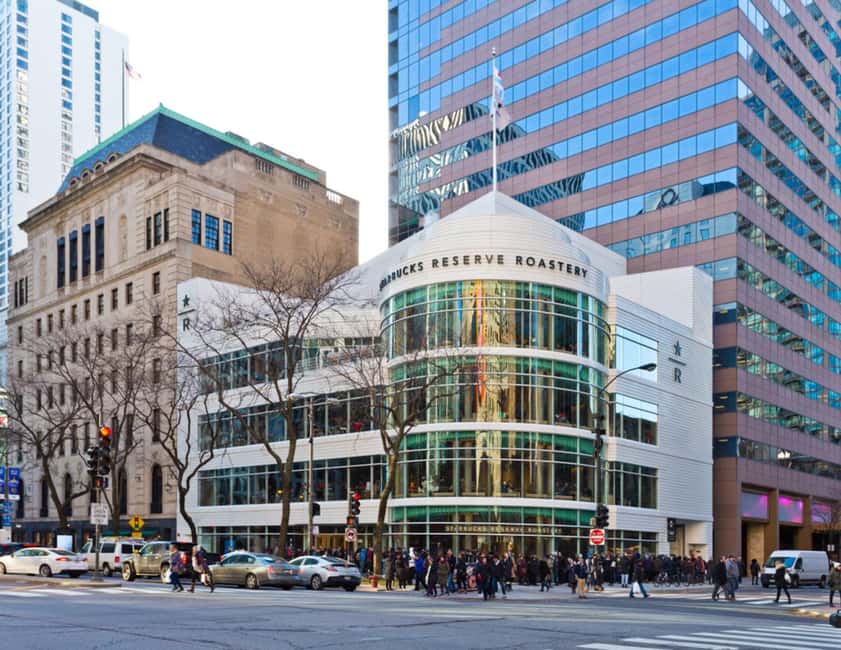
This walking tour includes a planned stop for food flavor, but it doesn’t force you to buy anything on the tour itself. You can enjoy a classic Chicago savory treat option along the way, but food and drinks are not included in the price.
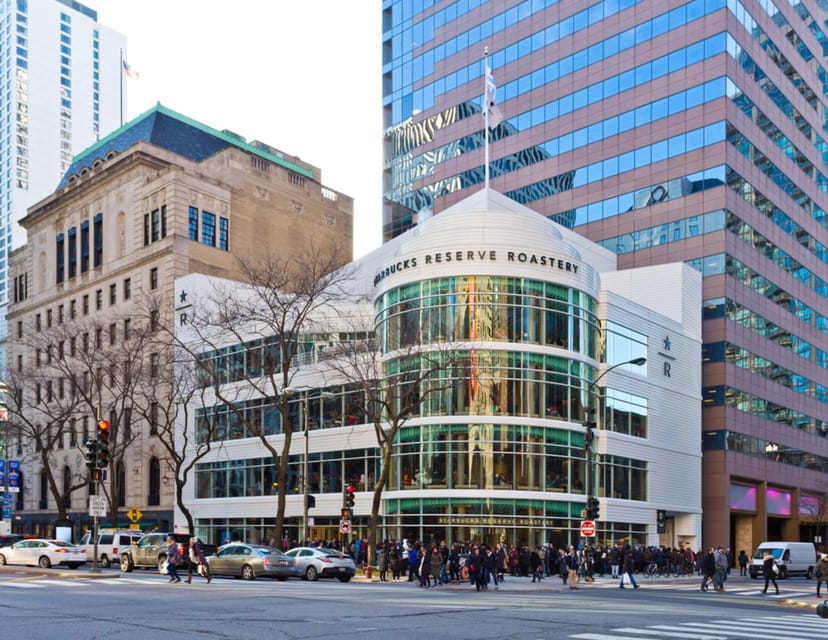
You’ll also stop at the Starbucks Reserve Roastery. Even if coffee isn’t your thing, it’s a useful marker in the route. It gives you a chance to reset, stretch your legs, and make a quick decision: snack now or save room for a proper meal afterward. Because the tour is only 2.5 hours, you don’t want a long sit-down interruption anyway.
My practical advice: if you’re going to try a Chicago classic, do it after the main walk. The tour gives you so many photo and viewpoint moments that you’ll enjoy food more when you’re not juggling both at once.
What You’ll Learn From Andrew (and Why the Stories Matter)
The guide on this tour is often Andrew, and the most consistent theme in the experience is his commitment to Chicago context. He talks with real passion, but it’s not just enthusiasm for its own sake. He connects geography (where things are), history (what happened), architecture (what you’re looking at), and culture (how people live with these landmarks).
That matters because Chicago is a “readable” city once you know what to look for. Without a guide, you can visit Millennium Park, the Riverwalk, and the Magnificent Mile and still miss the bigger picture. With Andrew, the city becomes a set of relationships: public spaces linked to civic pride, riverfront built into daily life, and skyline features tied to eras of rebuilding and ambition.
A key nuance: some people feel the balance leans more toward history than strict architecture critique. I’d frame it this way. If you want the story behind the buildings, you’re in the right place. If you want pure architecture scholarship, you might treat this as an intro and then follow up with a dedicated building-focused option later in your trip.
Who Should Book This Tour (and Who Might Want Something Else)
This is a great fit if:
- You’re visiting Chicago for the first time and want an efficient, meaningful introduction
- You like walking tours where the guide explains what you’re seeing, not just recites facts
- You want iconic highlights like Cloud Gate and the Magnificent Mile without planning
- You enjoy history tied to real places, especially the Chicago Fire story
You might consider a different option if:
- You’re primarily hunting for technical architecture analysis rather than story-driven context
- You want a longer route that goes deeper into multiple neighborhoods beyond the downtown core
Also think about pacing. This is a walking tour, so wear comfortable shoes. The route covers multiple major districts and viewpoint changes—great for energy, not great for people who want a mostly seated experience.
One more real-world note: while the tour is usually smooth, there has been at least one reported case where a guide didn’t show up for a scheduled time. If that kind of thing would ruin your day, consider building a little schedule buffer, and keep an eye on your confirmation details the day of your tour.
Should You Book This Chicago History and Architecture Tour?

If you want the fastest way to connect Chicago’s big landmarks with the stories that explain them, I think this is worth your time. The small-group size, the iconic stops (Millennium Park, Cloud Gate, the Riverwalk, and the Magnificent Mile), and a guide like Andrew who can make history feel personal are the big reasons.
Book it if your trip has limited time and you want to leave with a clear mental map of the city. Skip it or supplement it if your main goal is hardcore architecture deep analysis.
If your schedule is tight, the tour’s 2.5-hour length is a sweet spot. You’ll get a lot of Chicago without losing your whole day to walking. And when you finish, you’ll be ready to eat your own way—because you’ll know what you just saw, and why it matters.
FAQ
How long is the Chicago History and Architecture Walking Tour?
The tour lasts 2.5 hours.
How much does the tour cost?
It costs $49 per person.
Where do I meet the guide?
Meet your guide at McCormick Tribune Plaza in front of the Park Grill. Restrooms are available there before the tour starts.
How big is the group?
The tour is a small group limited to 10 participants.
Which major landmarks are included?
You’ll visit Millennium Park and see Cloud Gate (The Bean), walk parts of the Magnificent Mile, explore the Chicago Riverwalk, and see Wrigley Building, Tribune Tower, and John Hancock. You’ll also learn about the Chicago Fire at the DuSable Bridge stop.
Are food and drinks included?
No. Food and drinks are not included, though there’s an option for a classic Chicago savory treat and a stop at the Starbucks Reserve Roastery.
What language is the tour guide?
The live tour guide speaks English.
Can I cancel or pay later?
The experience offers free cancellation up to 24 hours in advance for a full refund and also reserve now & pay later.
The Wider Chicago Shortlist
- Chicago Architecture River Cruise★ 5.0 · 15,756 reviews
- Chicago River 90-Minute Architecture Tour★ 4.5 · 9,629 reviews
- Chicago River: 1.5-Hour Guided Architecture Cruise★ 4.8 · 8,046 reviews
- Chicago: Gangsters and Ghosts Walking Tour★ 5.0 · 7,155 reviews
- Chicago Architecture Center River Cruise aboard First Lady★ 5.0 · 5,536 reviews
Since the Fire: Chicago History
- Chicago in a Day: Food, History & Architecture Walking Tour★ 5.0 · 1,153 reviews
- Chicago: Field Museum of Natural History Ticket or VIP Tour★ 4.7 · 717 reviews
- Field Museum of Natural History Admission Tickets★ 4.5 · 489 reviews
- Chicago Walking Tour: Historic Treasures of Chicago★ 5.0 · 362 reviews
- Historical and Architectural Chicago Fireboat River & Lake Cruise★ 5.0 · 246 reviews
Chicago, Read from the Sidewalk
- Chicago in a Day: Food, History & Architecture Walking Tour★ 5.0 · 1,153 reviews
- Chicago’s Secret Interiors Architectural Walking Tour★ 5.0 · 635 reviews
- Chicago: Secret Interiors Architecture Walking Tour★ 4.9 · 498 reviews
- Chicago Architecture Tour: Underground Pedway and the Loop★ 5.0 · 388 reviews
- Chicago Walking Tour: Art Deco Skyscrapers Loop★ 5.0 · 138 reviews
The Ink Is Still Wet on These Chicago Reviews




Architecture Walking Tours, compared.
 ★ 5.0Chicago in a Day: Food, History & Architecture Walking TourFrom $1001,153 reviews
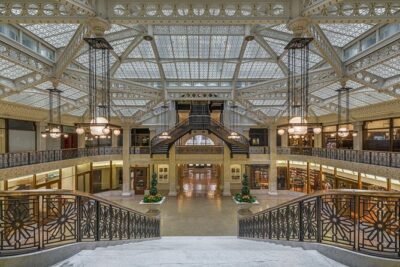 ★ 5.0Chicago’s Secret Interiors Architectural Walking TourFrom $35635 reviews
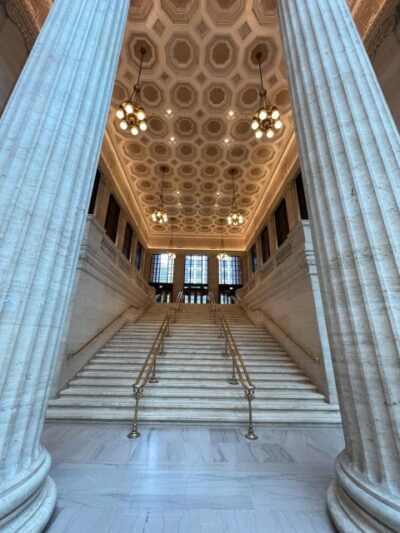 ★ 4.9Secret Interiors Architecture Walking TourFrom $35498 reviews
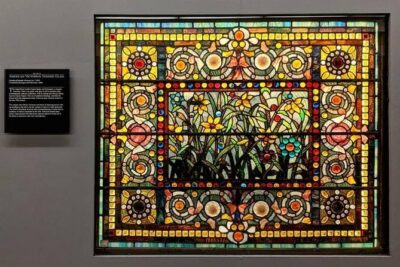 ★ 5.0Chicago Architecture Tour: Underground Pedway and the LoopFrom $35388 reviews
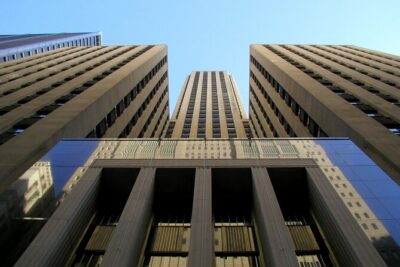 ★ 5.0Chicago Walking Tour: Art Deco Skyscrapers LoopFrom $35138 reviews
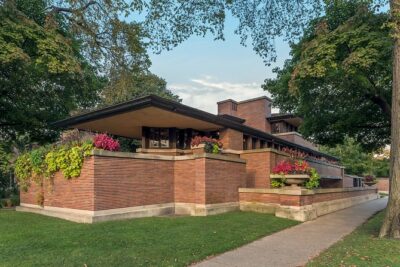 ★ 4.0Frank Lloyd Wright Robie House Admission130 reviews
 ★ 5.0Chicago Architecture Walking Tour: Incredible Art Deco InteriorsFrom $3585 reviews
 ★ 5.0Chicago Walking Tour: Historic SkyscrapersFrom $3567 reviews
Browse the lists this tour appears in