

REVIEW · ARCHITECTURE WALKING TOURS
Chicago: Elevated Architecture Walking Tour
Chicago looks different from above the tracks. This walk-and-ride blends Loop architecture with a real ride on the L, so you see downtown the way most people never do. You’ll also get inside the Chicago Architecture Center galleries when the outdoor part wraps up.
Two things I really like about this tour: first, you get to sit on the L and watch buildings slide past from more than 20 feet up. Second, the guide connects what you’re seeing to the history of the L system and how it influenced downtown growth. In a past group led by Chris, he handled questions with confidence, which made the architecture lessons feel practical instead of just lecture-style.
One thing to plan for: it’s outdoors, it runs rain or shine, and it’s not ADA accessible. You’ll be standing, walking, and dealing with station stairs.
In This Review
- Key highlights you’ll feel right away
- Why the Chicago L is the fastest way to read the Loop
- Meeting at the Chicago Architecture Center and getting your Ventra card
- How the 2-hour timing works (walking, then riding, then galleries)
- Station platforms and above-street views that change how you see buildings
- The L history you’ll connect to real development in the Loop
- Chicago Architecture Center galleries: where the lessons stick
- Worth the $35: what you get, and why it’s fair value
- Small group energy: easier questions on the platforms
- Practical tips to keep the tour comfortable and drama-free
- Who should book this tour (and who might skip it)
- Should you book this Chicago Loop L architecture tour?
- FAQ
- Where does the tour start?
- Do I need a Ventra card for the L?
- How long is the tour?
- How many people are in each group?
- What’s included with the ticket price?
- Is food or drinks allowed during the tour?
- What should I bring?
- Is the tour ADA accessible?
Key highlights you’ll feel right away

- Over-street views from L platforms that show architectural details pedestrians miss
- A real ride on the L, not just photos from ground level
- History tied to downtown development, including how the L started in 1892
- Hundreds of architecture and city sights as you move through the Loop area
- Included Chicago Architecture Center gallery admission to cement what you learned
- Small group size (up to 10), which makes Q&A easier on station platforms
Why the Chicago L is the fastest way to read the Loop
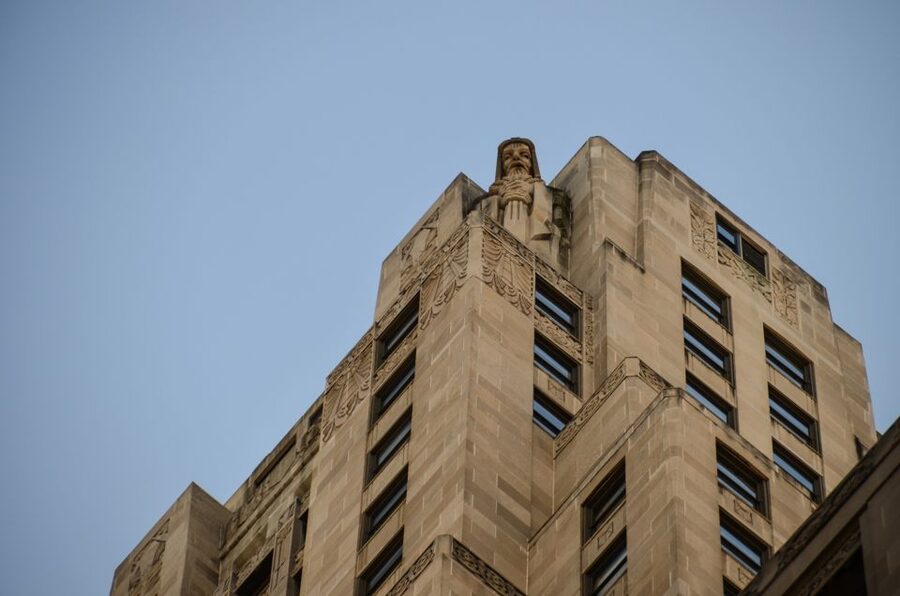
The Loop can feel like a sea of glass towers and busy sidewalks. The trick on this tour is that you’re not looking at it only from the pavement. By riding the L and spending time on station platforms, you get a “second layer” view of downtown.
From street level, you notice entrances, signage, and street-corner landmarks. From the train, you start noticing different things: repeating window rhythms, rooflines, the way facades line up with streets, and the texture of buildings as they rise. Even if you’re not an architecture nerd, the change in angle makes you see structure and scale faster.
And you’re learning while you’re moving. The narration is built around the idea that Chicago’s transit and Chicago’s buildings grew up together. That’s the core value here: architecture education that doesn’t feel stuck in one place.
Neck craned in the Loop, more building walks
Meeting at the Chicago Architecture Center and getting your Ventra card
Your tour starts at the Chicago Architecture Center, where you should arrive early and check in at the box office. After that, you’ll receive a Ventra card, and that card is necessary for accessing the Chicago L system.
This part matters more than it sounds. If you show up late, you can easily lose time sorting out the card and getting to the station. If you show up early, you can settle in, meet your guide and group, and get your bearings before the ride begins.
Also, plan on keeping your hands free. The tour doesn’t list storage for luggage or strollers, and it doesn’t allow luggage or large bags anyway.
How the 2-hour timing works (walking, then riding, then galleries)
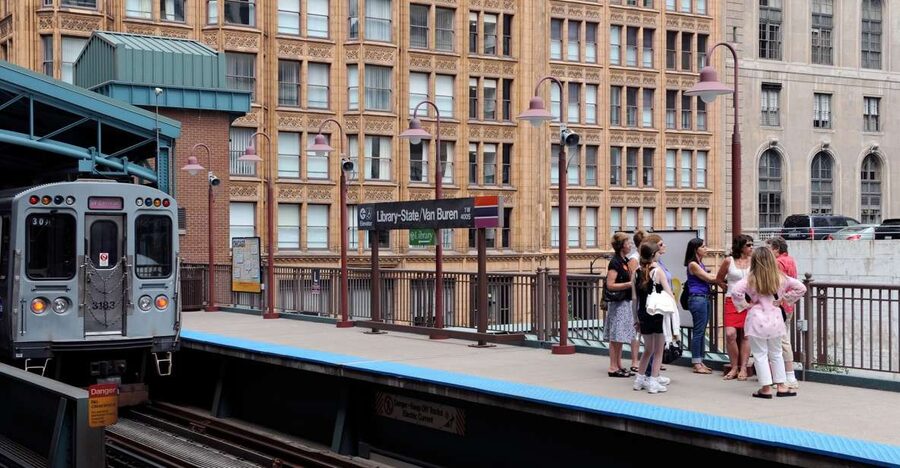
This is a tight 2-hour outing. You’re not spending half a day on the trains, and you’re not doing a long, slow walk through a single neighborhood. The format is designed to keep you exposed to a lot of city sights without exhausting you beyond your tolerance for standing and stairs.
A typical flow feels like this:
- Start at the Chicago Architecture Center to check in and get your Ventra card.
- Move through the Loop area together as your guide narrates what you’ll be seeing.
- Ride the L and pause for platform moments where the elevated angle makes architecture details click.
- Finish back at the Chicago Architecture Center, where you use your included admission for the galleries.
Because the tour runs rain or shine, you’re also trading “flexibility” for “momentum.” You don’t get a weather break; you get a schedule that continues.
Chicago at sidewalk speed, more routes
- Chicago: Gangsters and Ghosts Walking Tour
★ 5.0 · 7,155 reviews - Chicago Favorites Ultimate Food and Walking Tour
★ 5.0 · 1,962 reviews - Chicago: Gangsters and Ghosts Guided Walking Tour
★ 4.7 · 1,697 reviews
Station platforms and above-street views that change how you see buildings
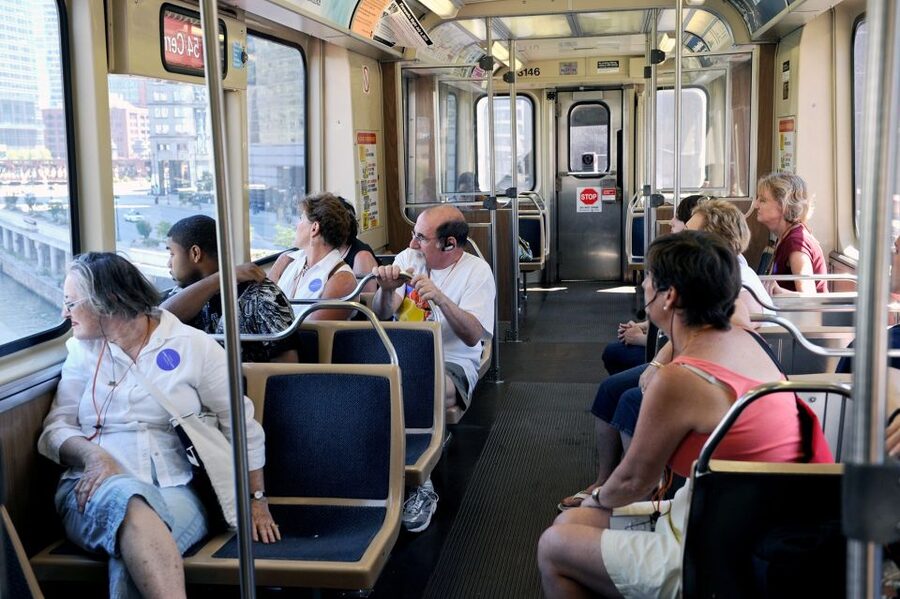
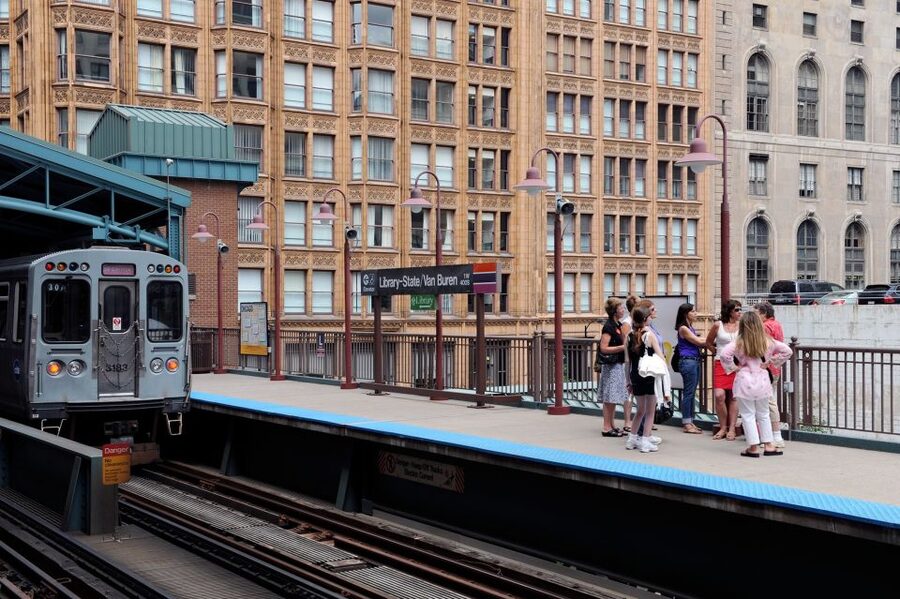
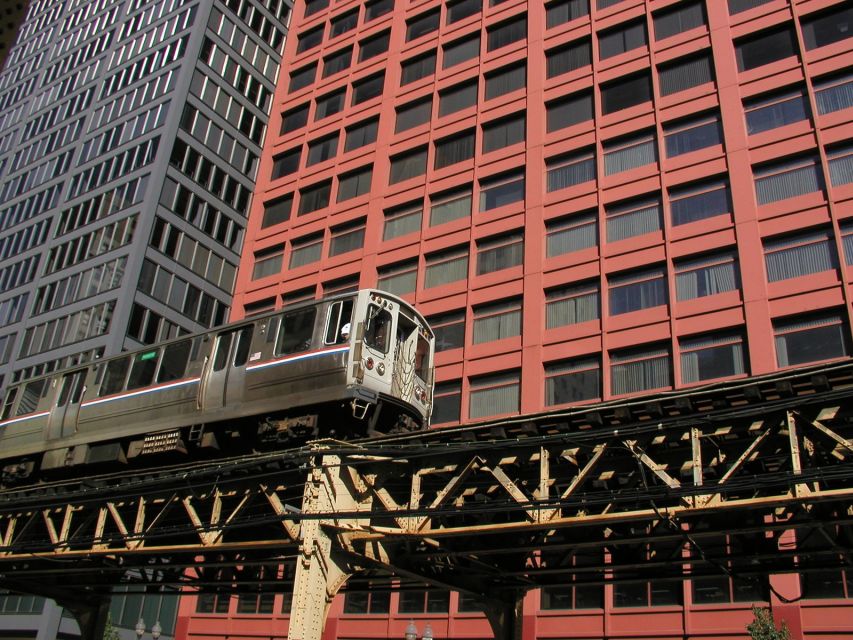
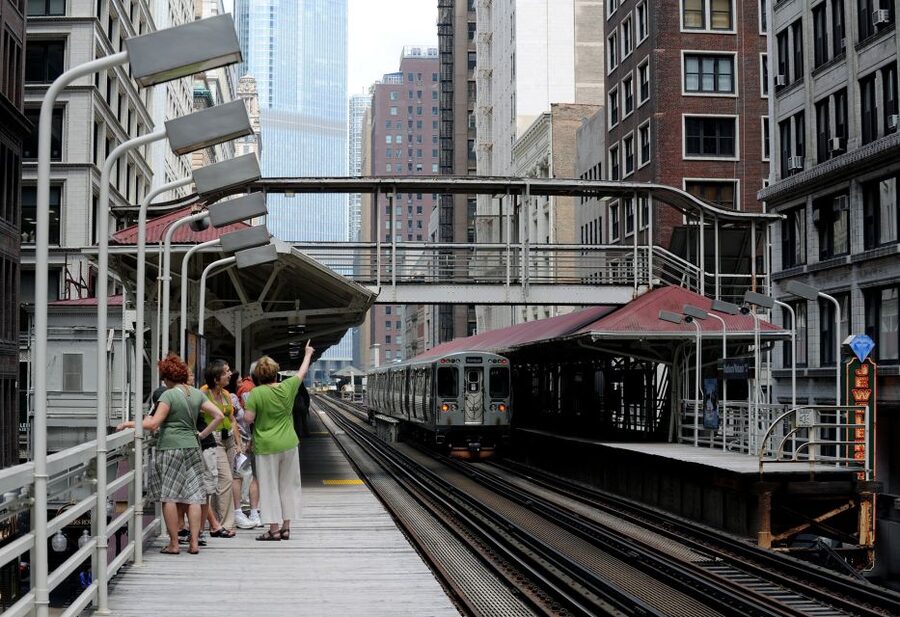
One of the most memorable parts is the simple act of sitting down on the L and watching downtown roll by. The tour description makes the height point clearly: you’ll be more than 20 feet off the ground. That changes everything.
From up there, you can spot patterns:
- How window grids match (or don’t match) older building styles
- How cornices and roof edges read against the sky
- How buildings relate to the streets below, even when the entrances aren’t visible
You’ll also pass hundreds of buildings and Chicago highlights as you move around. The guide keeps the storytelling anchored to what you’re looking at right now, which helps you avoid the “I heard something about a building but can’t remember which one” problem.
If you like photography, bring a practical mindset: don’t count on every moment to be perfect for shots. Instead, focus on the quick architectural cues you can catch between announcements and station stops.
The L history you’ll connect to real development in the Loop
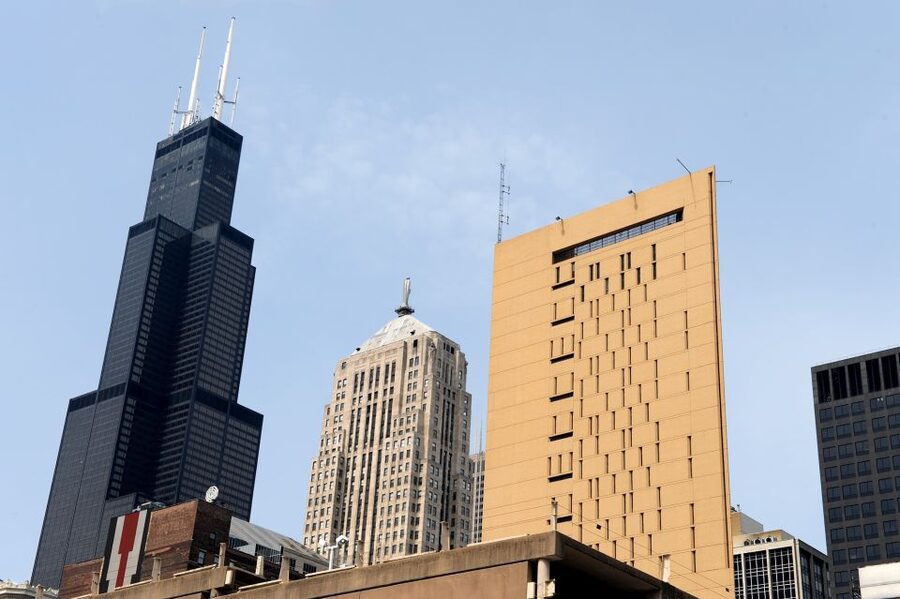
This tour doesn’t treat transit as background noise. It frames the L as a shaping force for downtown.
Here’s the key timeline your guide will emphasize: Chicago’s first elevated train started making trips in 1892. That early start helped lock in an idea of downtown as a place you can reach fast, even as the city grew outward.
The narration connects the dots between that transit system and the Loop’s architecture. When a transit line is reliable and frequent, land values, building density, and development patterns often follow. In other words: the L isn’t just a way to get somewhere. Over time, it helps define what gets built and where.
That’s why the guide keeps pointing out architectural significance while you’re riding. You’re not memorizing dates for their own sake. You’re building a mental map of how transportation and architecture reinforce each other.
Chicago Architecture Center galleries: where the lessons stick
The outdoor part is only half the experience. The tour includes admission to the galleries of the Chicago Architecture Center, and this is a smart pairing.
Why it works: when you’re on the L, you’re reacting to what you see minute by minute. When you step into the galleries afterward, you get a calmer space to connect those visuals to context.
Even without getting too specific about which exhibits you’ll see on a given day, the purpose is clear. You’ll leave with a stronger sense of what you just rode past: why the Loop looks the way it does, and how architecture is interpreted and taught.
If you’re the type who likes to confirm what you learned, plan to spend a bit of time reading and looking around rather than sprinting through. You’ll get more out of it that way.
Worth the $35: what you get, and why it’s fair value
This tour is $35 per group spot (up to 1, as listed) and runs for about 2 hours. On paper, that can sound like a lot for a short walk.
In practice, the pricing makes more sense because you’re paying for four concrete pieces:
- A walking tour with a certified guide
- Your fare to ride the L transit system
- Admission to the Chicago Architecture Center galleries
- A small group format (limited to 10 participants)
So you’re not just hiring someone to talk while you walk. You’re paying for guided architecture learning plus the transit access that makes the whole perspective possible.
Also, your ticket supports a nonprofit. The Chicago Architecture Center uses ticket sales to fund local education and community engagement programs such as Girls Build!, Teen Fellows, and the Newhouse Architecture + Design Competition. It also helps keep programs like Open House Chicago free for participants for years to come.
That doesn’t change whether the tour is good, but it does add a layer of value beyond sightseeing. You’re supporting the organization that teaches architecture to people locally, not just visitors.
Small group energy: easier questions on the platforms
This is capped at 10 participants. That limit is a big deal because station platforms are not quiet, wide hallways where you can vanish into the crowd. They’re functional spaces where you need to hear instructions and stay together.
A smaller group also makes the guide more effective. In a previous group led by Chris, the feedback emphasized that he handled questions competently. That’s exactly what you want when you’re standing near train tracks, looking up at architecture, and trying to match explanations to what’s in front of you.
If you enjoy asking questions—about styles, about why the Loop developed this way, about how the transit shaped the city—this size is one of the best features.
Practical tips to keep the tour comfortable and drama-free
This tour is outdoors and operates rain or shine. That means you should dress for weather fast, not “maybe it’ll be fine.” Bring weather-appropriate clothing and a face mask or protective covering, since that’s listed as something to have.
A few more practical constraints:
- No food or drinks are allowed
- No luggage or large bags
- Storage for luggage or strollers is not included
Also, this isn’t an easy-grind walking plan. It’s not ADA accessible and it’s not suitable for people with mobility impairments or wheelchair users. The tour involves standing on station platforms and walking stairs.
If you’re deciding whether to go, think about your comfort with stairs and standing time more than your overall interest in architecture. You’ll get a better experience when you’re not spending mental energy coping with the physical parts.
Who should book this tour (and who might skip it)
Book it if you want an architecture tour that uses Chicago’s transit as the teaching tool. This is a strong fit for:
- First-timers who want the Loop’s “why” not just the “what”
- People who enjoy train rides and city movement
- Anyone who likes learning with their eyes, not only from plaques
- Travelers who appreciate a small group and guided Q&A
Consider skipping if:
- You need ADA-accessible routes
- You avoid stairs or long standing
- You dislike weather-dependent plans, since it runs rain or shine
Should you book this Chicago Loop L architecture tour?
If you’re torn, here’s the decision shortcut I’d use: if you want to see architecture from a different angle, and you’re comfortable with outdoor standing and stairs, this tour is a great value. The L ride is doing real work here, not acting like a novelty segment.
If you’re mainly looking for a quiet, fully accessible stroll, you might not enjoy it as much. The physical reality of station platforms is part of the experience, and it’s clearly not built for mobility needs.
My recommendation: book this when you want a smarter way to read the Loop—by height, speed, and guided context—and when you’ll actually use the included gallery time afterward.
FAQ
Where does the tour start?
The tour starts at the Chicago Architecture Center. You should arrive prior to departure time and present your ticket at the box office.
Do I need a Ventra card for the L?
Yes. You’ll receive a Ventra card during check-in at the Chicago Architecture Center, and you need it to access the Chicago L transit system.
How long is the tour?
It lasts about 2 hours.
How many people are in each group?
It’s a small group limited to 10 participants.
What’s included with the ticket price?
Included items are the walking tour, a certified guide, the fare to ride Chicago’s L, and admission to the Chicago Architecture Center galleries.
Is food or drinks allowed during the tour?
No. Food and drinks are not allowed.
What should I bring?
Bring a face mask or protective covering and weather-appropriate clothing. It also helps to dress for outdoor time.
Is the tour ADA accessible?
No. The tour is not ADA accessible and is not suitable for people with mobility impairments or wheelchair users. It involves outdoor time, standing on station platforms, and walking stairs.
Chicago on Foot, Block After Block
- Chicago: Gangsters and Ghosts Walking Tour★ 5.0 · 7,155 reviews
- Chicago Favorites Ultimate Food and Walking Tour★ 5.0 · 1,962 reviews
- Chicago: Gangsters and Ghosts Guided Walking Tour★ 4.7 · 1,697 reviews
- Chicago in a Day: Food, History & Architecture Walking Tour★ 5.0 · 1,153 reviews
- Chicago’s Secret Interiors Architectural Walking Tour★ 5.0 · 635 reviews
The Wider Chicago Shortlist
- Chicago Architecture River Cruise★ 5.0 · 15,756 reviews
- Chicago River 90-Minute Architecture Tour★ 4.5 · 9,629 reviews
- Chicago River: 1.5-Hour Guided Architecture Cruise★ 4.8 · 8,046 reviews
- Chicago: Gangsters and Ghosts Walking Tour★ 5.0 · 7,155 reviews
- Chicago Architecture Center River Cruise aboard First Lady★ 5.0 · 5,536 reviews
Chicago, Read from the Sidewalk
- Chicago in a Day: Food, History & Architecture Walking Tour★ 5.0 · 1,153 reviews
- Chicago’s Secret Interiors Architectural Walking Tour★ 5.0 · 635 reviews
- Chicago: Secret Interiors Architecture Walking Tour★ 4.9 · 498 reviews
- Chicago Architecture Tour: Underground Pedway and the Loop★ 5.0 · 388 reviews
- Chicago Walking Tour: Art Deco Skyscrapers Loop★ 5.0 · 138 reviews
The Ink Is Still Wet on These Chicago Reviews




Architecture Walking Tours, compared.
 ★ 5.0Chicago in a Day: Food, History & Architecture Walking TourFrom $1001,153 reviews
 ★ 5.0Chicago’s Secret Interiors Architectural Walking TourFrom $35635 reviews
 ★ 4.9Secret Interiors Architecture Walking TourFrom $35498 reviews
 ★ 5.0Chicago Architecture Tour: Underground Pedway and the LoopFrom $35388 reviews
 ★ 5.0Chicago Walking Tour: Art Deco Skyscrapers LoopFrom $35138 reviews
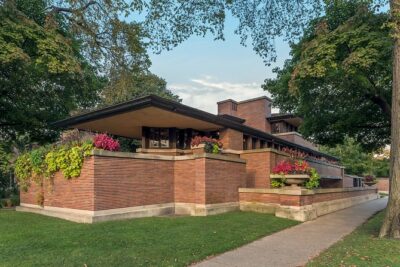 ★ 4.0Frank Lloyd Wright Robie House Admission130 reviews
 ★ 5.0Chicago Architecture Walking Tour: Incredible Art Deco InteriorsFrom $3585 reviews
 ★ 5.0Chicago Walking Tour: Historic SkyscrapersFrom $3567 reviews
Browse the lists this tour appears in