
REVIEW · CHICAGO HISTORY TOURS
Workers Cottages of Oldtown Triangle Walking Tour
Old Town Triangle has a way of making Chicago feel older. This tour walks you past workers’ cottages and standout historic buildings that still survived the Great Chicago Fire era, plus you’ll get real guidance on what you’re seeing instead of vague postcard talk. Two things I really love: the small group size (max 8) that keeps questions coming, and the focused architecture storytelling that makes these blocks make sense fast.
One consideration: this is an outdoor walking tour, and it needs good weather and a moderate fitness level, so you’ll want comfy shoes and a plan for staying warm or dry.
For the kind of Chicago you can actually picture, you’ll appreciate the way the route mixes home styles with major landmarks. It’s also priced at $45 per person—not free, but fair when you consider the careful route, the limited group, and the fact that the stops are listed as admission ticket free (you’re paying for the guide, not building tickets). If you want a quick city drive-through, this is not it. If you want to see how people lived—and why certain buildings matter—this fits.
In This Review
- Key Highlights You’ll Care About
- Old Town Triangle’s Workers’ Cottages: Why This Walk Works
- Price and Group Size: What You’re Paying For (and Why It’s Fair)
- Getting Oriented: Start on Eugenie Street, End Near Menomonee
- Stop-by-Stop: Eugenie Street to Menomonee Street
- Stop 1: Old Town Triangle and the Workers’ Cottage Block Patterns
- Stop 2: West Eugenie Street Rowhouses by Harald Hansen (Built 1886)
- Stop 3: North Crilly Court and a National Landmark
- Stop 4: St. Michael House of Prayer (St. Michael Church, Built 1866–1869)
- Stop 5: Twin Anchors Restaurant & Tavern and the Sinatra Connection
- Stop 6: Old Town Triangle and the Wacker Family Homes
- Stop 7: Ann Halsted Rowhouses and Louis Sullivan’s Early Work
- Stop 8: The Only Remaining Farmhouse from Oldtown’s Farmland Days
- What Makes the Cottages Story Stick
- Weather, Timing, and How to Prepare
- Who This Tour Fits Best
- Should You Book Workers Cottages of Oldtown Triangle?
- FAQ
- FAQ
- How much does the Oldtown Triangle Walking Tour cost?
- How long is the tour?
- Where do I meet my guide?
- Where does the tour end?
- What is the group size limit?
- Do I need to buy admission tickets for the stops?
- Is the tour accessible for people with moderate mobility needs?
- What happens if the weather is bad?
Key Highlights You’ll Care About
- Small group of 8: more time to ask questions and get details you’d miss in a crowd
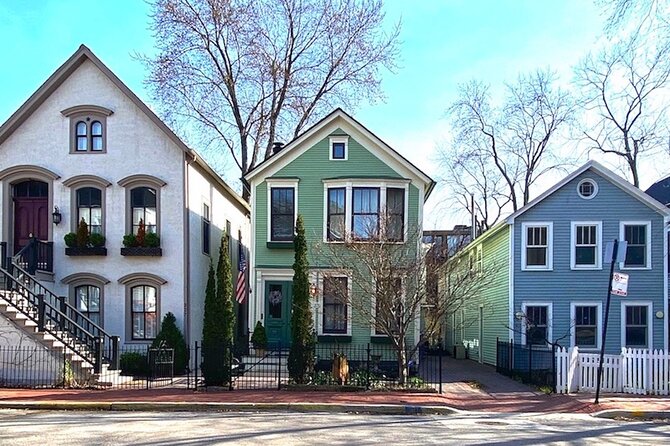
- 40–50 workers’ cottages on the route: you’ll compare styles and see rare street patterns
- Architectural names you can place: Harald Hansen, Louis Sullivan, and the Wacker family
- Landmark stops without extra admissions: most stops are listed as admission ticket free
- Celebrity tie-in: a neighborhood tavern long associated with Frank Sinatra
Old Town Triangle’s Workers’ Cottages: Why This Walk Works
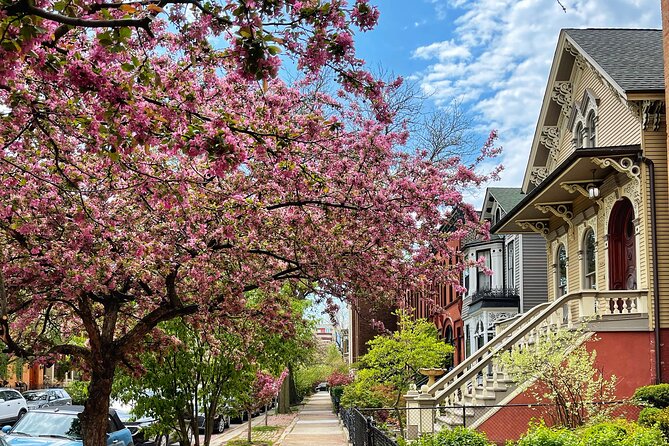
Old Town Triangle is one of those Chicago neighborhoods where history is not stuck in a museum. It’s on the street, in the scale of the buildings, and in the way entire blocks still feel like they belong to another time. This tour is built for that feeling. You’re not just passing pretty facades. You’re learning what those homes were, who they were for, and how the neighborhood’s survival shaped what you see today.
I like that the tour makes the Great Chicago Fire era feel practical. You don’t just hear that something survived—you learn what “survived” looks like when you’re standing in front of rows of mid-1800s workers’ cottages. That shift is big. It’s the difference between knowing a fact and being able to point it out.
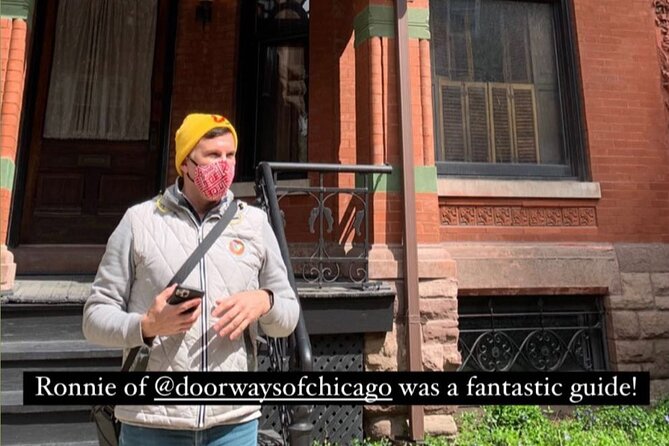
The other big reason it works is the guide focus. The experience is designed for a group of up to 8, so the conversation stays relevant instead of general. In the reviews, the guide Ronnie is singled out for being passionate and professional, and that matters here because the details are the point.
From the fire of 1871 forward, more history
Price and Group Size: What You’re Paying For (and Why It’s Fair)
At $45 per person, this is not a bargain tour. Still, it’s a good value for what you get: a tight route, a lot of close-up architecture viewing, and a limited group that keeps you from losing half the story to the person next to you.
A key detail: it’s scheduled for about 1 hour 45 minutes. That’s long enough to cover serious ground and still short enough that you’re not stuck for hours outside. The pace feels like walking, stopping, looking, and listening—repeat. You’ll also have a mobile ticket, which keeps things simple when you meet at 164 W Eugenie St.
Also, the itinerary lists admission ticket free at the stops. That means your money goes to the guide experience, not entry fees. You’re paying for interpretation: what a rowhouse style meant, how a landmark building stood out for decades, and why some blocks are more unusual than others.
Getting Oriented: Start on Eugenie Street, End Near Menomonee
You meet at 164 W Eugenie St, Chicago, IL 60614. The tour ends at 216 W Menomonee St, just a few short blocks from where you began. That design is smart. You’ll walk a sensible loop in Old Town rather than crisscrossing the city.
One practical tip: plan to arrive a few minutes early, because the “easy meetup right on Eugenie Street” style only works if you’re already there. When the group is small, the guide can start talking quickly once everyone is present.
You’ll want moderate physical fitness because it’s a walking tour with multiple stops. If you’re used to city walking, you’ll be fine. If you prefer long museum stays to frequent sidewalk stops, you might find the pacing brisk.
Past the downtown core, more neighborhoods
- The Escape Game Chicago: Epic 60-Minute Adventures in River North
★ 5.0 · 332 reviews - Bike Tour of Chicago’s Lakefront Neighborhoods
★ 5.0 · 241 reviews - Chicago: Lakefront Neighborhoods Bike Tour
★ 4.9 · 123 reviews
Stop-by-Stop: Eugenie Street to Menomonee Street
This route is carefully set up so you can look at homes first, then move through named streets and buildings where the city’s story shows up in a more dramatic way.
Stop 1: Old Town Triangle and the Workers’ Cottage Block Patterns
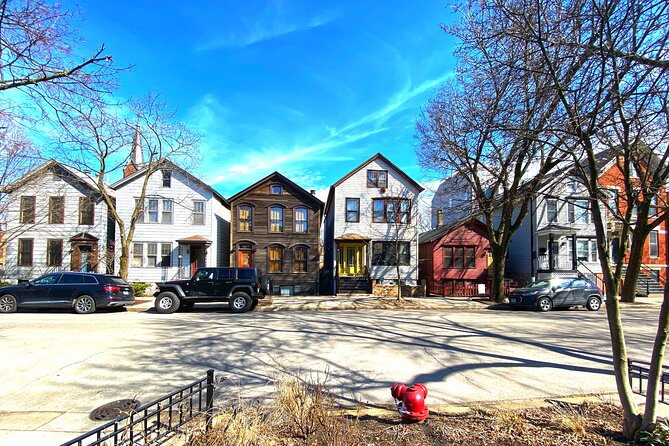
The tour’s heart is where you’ll spend most of your time: Old Town Triangle. You’ll see 40–50 workers’ cottages built in the mid-1800s and learn how different styles and construction choices show up on the street.
Here’s the part I think you’ll enjoy most: the guide shows how often these cottages were placed close together. And you’ll also notice rare variations—instances where there are multiple cottages in a row, and even a case where an entire block has cottages on both sides of the street. That’s how you start to understand what “neighborhood housing” meant in that era. It wasn’t just scattered houses. It was an organized way of building communities for working people.
You’ll also be pointed toward other historic properties along the way. You’re basically getting a visual key to the neighborhood: how to spot the building types, how to read the design differences, and how the area developed before and after the city’s defining moments.
Stop 2: West Eugenie Street Rowhouses by Harald Hansen (Built 1886)
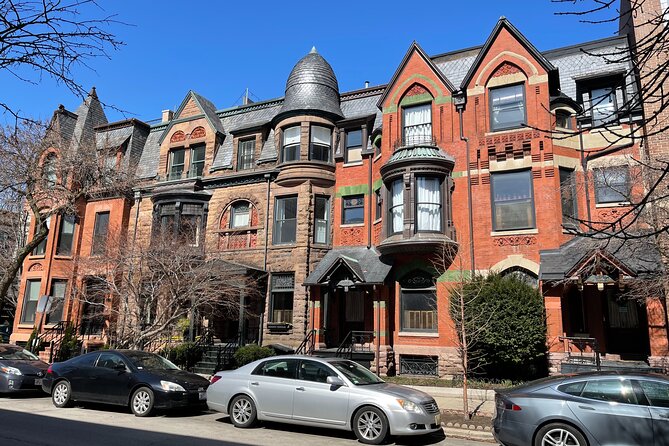
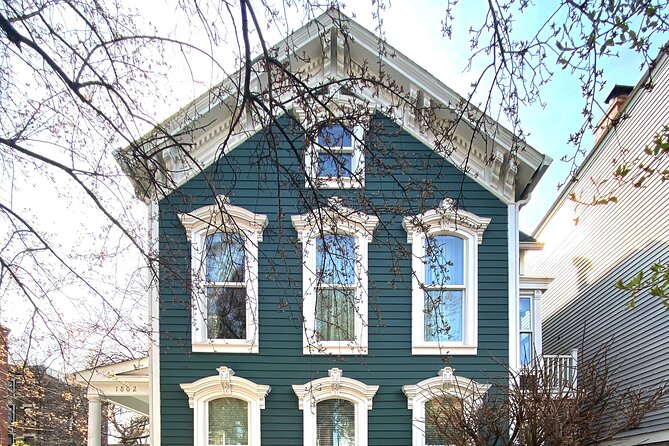
Next you move to West Eugenie Street for a concentrated look at rowhouses. You’ll learn about a set of five houses designed by Harald Hansen, built in 1886—described as an extremely rare variegated row of Queen Anne and Second Empire style homes.
This is a great stop if you like design variety. A row of similar-looking buildings can feel repetitive. This one feels unusual because the styles bring different features to the facade and roofline. The guide helps you connect those stylistic choices back to the city’s growth and wealth patterns.
If you’re short on time in Chicago, this stop alone might be worth the effort because you’re not just seeing one building—you’re seeing a tight group that makes comparisons easy.
Stop 3: North Crilly Court and a National Landmark
On North Crilly Court, you’ll hear how the street connects to famous residents. You’ll also get a chance to see one property listed as a National Landmark.
What makes this stop valuable is the way it ties architecture to people. It’s not just about form. It’s about why certain homes were desirable and what kind of status showed up in the neighborhood.
I’d suggest you pay attention to the transition here: you’ve been looking mostly at workers’ cottages and neighborhood housing patterns. Now the tour shifts into a story where the area crosses over into more notable public attention.
Stop 4: St. Michael House of Prayer (St. Michael Church, Built 1866–1869)
At St. Michael House of Prayer, you’ll focus on St. Michael Church of Old Town, a Roman Catholic church built 1866–1869. The key detail the tour highlights is that it was the tallest building in the United States for 16 years.
That’s a stop that changes your scale. You start imagining Chicago’s skyline ambitions before today’s towers. And even if you’re not big on churches, a building that held the tallest status for that long is a city-story milestone.
This is also where the tour does something smart: it reminds you that Old Town wasn’t just modest housing. It was part of a bigger national conversation about growth, engineering, and ambition.
Stop 5: Twin Anchors Restaurant & Tavern and the Sinatra Connection
Next is Twin Anchors Restaurant & Tavern, one of the oldest restaurants in Chicago, founded in 1932. The tour notes it has been known for tender barbequed baby-back ribs, and it’s also described as a neighborhood tavern that was a favorite of Frank Sinatra.
This stop is short, but it adds something important: everyday history. Big landmarks are impressive, but restaurants and taverns are where a neighborhood’s social life shows up across decades. Even if you don’t stop for food, you’re getting a sense of what locals likely did here—and why the place kept its identity through changing Chicago eras.
If you want a practical takeaway, ask yourself whether you’d like to extend your day here. Twin Anchors is exactly the kind of place that can turn a walking tour into an actual evening plan.
Stop 6: Old Town Triangle and the Wacker Family Homes
Back in Old Town Triangle, you’ll learn about the homes of Charles and Frederick Wacker along Wacker Drive and why they were influential in early Chicago planning and design.
This is where the tour moves from housing examples to major city-builders. The Wackers are connected to shaping the built environment, and that makes the tour feel less like a random sequence of photo stops. You’re watching the neighborhood expand in different directions: worker housing, landmark architecture, and the influence of prominent families tied to city development.
Stop 7: Ann Halsted Rowhouses and Louis Sullivan’s Early Work
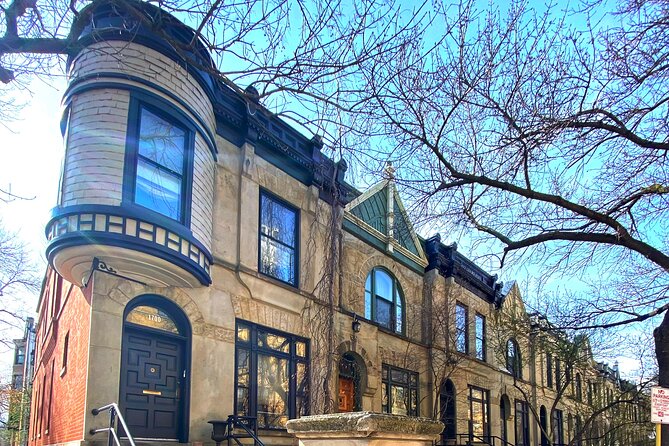
At Ann Halsted Rowhouses, the guide points out designs attributed to Louis Sullivan when he was in his early 20s, before he was widely known.
Sullivan fans will appreciate this stop because it frames “later famous architect” as someone who was already experimenting early on. If you’re not an architecture specialist, you can still enjoy it. The story helps you look at details like rooflines, facade rhythms, and proportions with more intent.
This stop gives the tour a Chicago-maker feel. You start seeing how the city’s design language developed here, not just elsewhere.
Stop 8: The Only Remaining Farmhouse from Oldtown’s Farmland Days
For the final stop, you’ll see the only remaining farmhouse that dates back to when the Old Town area was still farmland outside the city limits.
That closing image is powerful. The tour starts with mid-1800s workers’ cottages and ends with the last physical reminder of the area before the city swallowed the fields. Even if it’s a quick look, it gives you a timeline you can visualize: farmland → early neighborhood development → post-fire survival and architectural evolution.
What Makes the Cottages Story Stick
Most architecture tours leave you with a collection of photos. This one aims for something more useful: a mental model for the neighborhood.
By the time you reach the rare cottage patterns—cottages in unusual groupings, and that surprising block arrangement—you’ll start noticing how housing density and design communicate different stages of growth. You’ll also better understand why some blocks feel “old” even when modern street life surrounds them. The physical buildings do the storytelling.
The guide helps you connect:
- Design choices (Queen Anne, Second Empire, and other styles you see along the route)
- Construction patterns (how cottages are arranged and where you find exceptions)
- City change (how major milestones like the tallest-building church or the Great Fire era shaped the outcome)
Weather, Timing, and How to Prepare
This experience requires good weather, and it can be canceled due to poor conditions. If the tour is postponed, you’ll usually be offered another date or a full refund. So you’ll want to check the forecast if you’re booking near heavy rain or extreme cold.
Time-wise, plan for about 1 hour 45 minutes, plus a little buffer for arriving and meeting your group. Because it’s a walk-and-talk style, you’ll enjoy it more if you’re not racing through Chicago on a tight schedule.
Bring:
- comfortable walking shoes
- a light layer for wind off the lake (even in months that feel mild)
- water, especially on warmer days
The good news: the route is compact enough that you’re not spending the whole tour marching across the city.
Who This Tour Fits Best
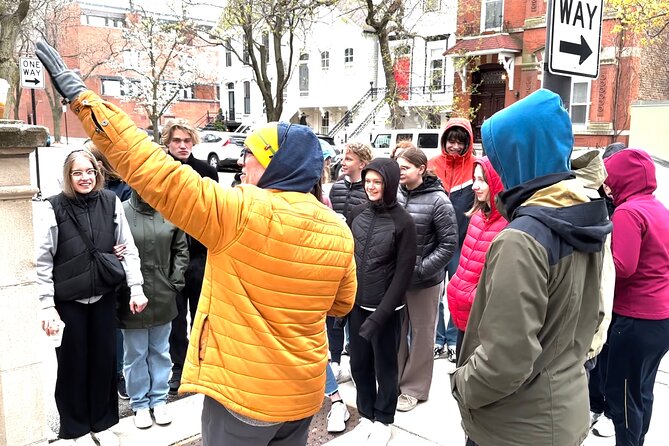
This tour is a great match if you like any of these:
- architecture at street level (not just skyline views)
- Chicago history tied to real neighborhoods
- learning names and building types so you can recognize them later
- small-group tours where your questions actually get answered
It’s also a nice fit if you already live in the area and want to see your own neighborhood with fresh eyes. The tour is designed for people who walk these streets daily but want a better “what am I looking at?” guide.
If you’re not into walking, or you need a lot of indoor time, you might prefer a museum-focused option instead. This one is made for the sidewalk.
Should You Book Workers Cottages of Oldtown Triangle?
If you want a Chicago experience that feels specific and personal—not a generic highlights run—this is a strong booking. The combination of small group size, a heavy focus on workers’ cottages, and stops tied to named architects and major landmarks gives you a lot to take home in under two hours.
Book it if you:
- care about architecture and want clear explanations
- enjoy comparing building styles and street patterns
- like tours where the guide can keep the group engaged
Skip it if you:
- hate outdoor walking or need long seated breaks
- only want broad city views rather than neighborhood details
If you’re the type of traveler who likes coming away with sharper instincts—knowing what to look for next time you’re in Chicago—this one will reward you fast. And on the way out, you’ll have a better sense of why Old Town still feels like a living page from the city’s past.
FAQ
FAQ
How much does the Oldtown Triangle Walking Tour cost?
It costs $45.00 per person.
How long is the tour?
The tour runs about 1 hour 45 minutes (approximately).
Where do I meet my guide?
You meet at 164 W Eugenie St, Chicago, IL 60614, USA.
Where does the tour end?
The tour ends at 216 W Menomonee St, Chicago, IL 60614, USA.
What is the group size limit?
The tour is limited to a maximum of 8 travelers.
Do I need to buy admission tickets for the stops?
The itinerary lists Admission Ticket Free for the stops, so there are no additional admission tickets listed in the schedule.
Is the tour accessible for people with moderate mobility needs?
The tour notes that travelers should have a moderate physical fitness level.
What happens if the weather is bad?
This experience requires good weather. If it’s canceled due to poor weather, you’ll be offered a different date or a full refund.
The Wider Chicago Shortlist
- Chicago Architecture River Cruise★ 5.0 · 15,756 reviews
- Chicago River 90-Minute Architecture Tour★ 4.5 · 9,629 reviews
- Chicago River: 1.5-Hour Guided Architecture Cruise★ 4.8 · 8,046 reviews
- Chicago: Gangsters and Ghosts Walking Tour★ 5.0 · 7,155 reviews
- Chicago Architecture Center River Cruise aboard First Lady★ 5.0 · 5,536 reviews
Out Into the Neighborhoods
- The Escape Game Chicago: Epic 60-Minute Adventures in River North★ 5.0 · 332 reviews
- Bike Tour of Chicago’s Lakefront Neighborhoods★ 5.0 · 241 reviews
- Chicago: Lakefront Neighborhoods Bike Tour★ 4.9 · 123 reviews
- River North Food Walking Tour★ 4.5 · 88 reviews
- Small-Group Tour of Chicago Neighborhoods: North and South Side★ 4.5 · 50 reviews
Since the Fire: Chicago History
- Chicago in a Day: Food, History & Architecture Walking Tour★ 5.0 · 1,153 reviews
- Chicago: Field Museum of Natural History Ticket or VIP Tour★ 4.7 · 717 reviews
- Field Museum of Natural History Admission Tickets★ 4.5 · 489 reviews
- Chicago Walking Tour: Historic Treasures of Chicago★ 5.0 · 362 reviews
- Historical and Architectural Chicago Fireboat River & Lake Cruise★ 5.0 · 246 reviews
The Ink Is Still Wet on These Chicago Reviews



Chicago History Tours, compared.
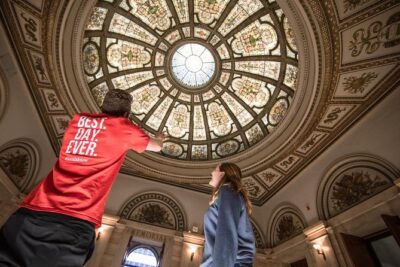 ★ 5.0Chicago in a Day: Food, History & Architecture Walking TourFrom $1001,153 reviews
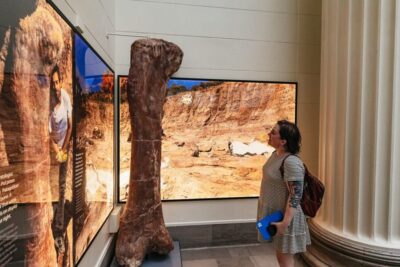 ★ 4.7Field Museum of Natural History Ticket or VIP TourFrom $29717 reviews
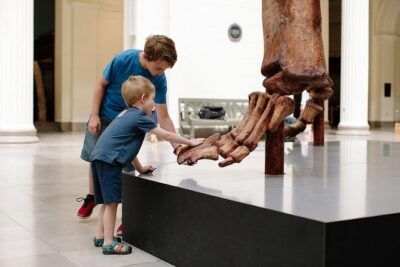 ★ 4.5Field Museum of Natural History Admission TicketsFrom $29489 reviews
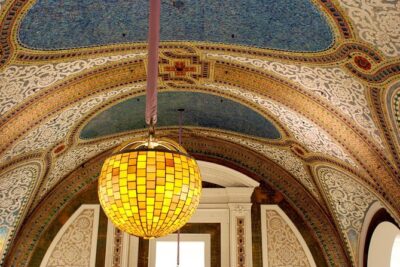 ★ 5.0Chicago Walking Tour: Historic Treasures of ChicagoFrom $35362 reviews
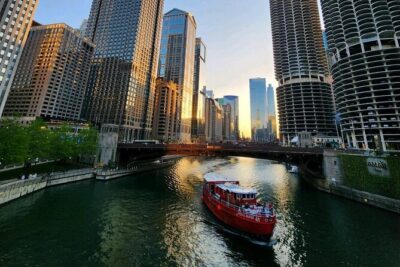 ★ 5.0Historical and Architectural Chicago Fireboat River & Lake CruiseFrom $47246 reviews
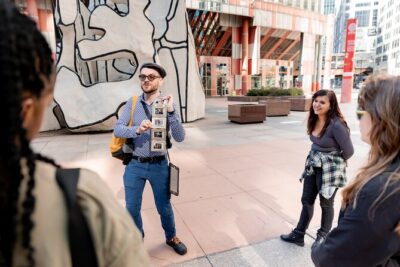 ★ 5.0Walkin’ with Colin: Chicago History-Mystery-Comedy-Tragedy TourFrom $44218 reviews
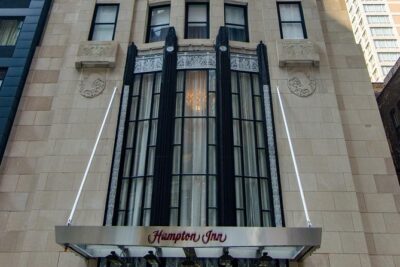 ★ 5.0Chicago Walking Tour: A Walk Through TimeFrom $35181 reviews
 ★ 4.5Field Museum of Natural History All-Access PassFrom $41135 reviews
Browse the lists this tour appears in