

REVIEW · CHICAGO NEIGHBORHOOD TOURS
Chicago’s Storied Neighborhood: An Audio Tour
Hyde Park talks back as you walk. This self-guided audio route in Hyde Park is narrated by Bill Ayers, a professor and activist, so you get an insider voice instead of generic facts. I like how his personal stories connect the landmarks, and I like that the VoiceMap app starts the audio at the right spot.
The trade-off is pacing. Some people find the walk includes long stretches of mostly quiet time, plus limited narration during longer distances, so it may not feel like a nonstop guided talk. If you want frequent commentary or guided entry into buildings, set your expectations carefully.
In This Review
- Key Things to Know Before You Go
- Hyde Park With a Real Local Voice: Bill Ayers on the Move
- Starting Outside the University of Chicago Laboratory Schools (and Getting Oriented Fast)
- Passing the Rockefeller Memorial Chapel: A Landmark Moment Without the Ticket Line
- Frederick C. Robie House: Let the Architecture Be the Pause Button
- University of Chicago Campus Blocks: Faculties, Buildings, and the Nuclear Energy Sculpture
- Washington Park Portions: Beautiful Setting, Uneven Commentary
- DuSable Museum Area and the Finish at 1101 E Hyde Park Boulevard
- Timing and Distance: Don’t Trust Only the 40 Minutes to 1 Hour Label
- VoiceMap Setup and Offline Audio: A Better Way to Walk Chicago
- Value Check: When This Audio Walk Feels Worth It (and When It Won’t)
- Who Should Book This Hyde Park Audio Tour?
- Should You Book This Chicago Audio Tour?
- FAQ
- What language is the audio tour offered in?
- How long is the Hyde Park audio walk?
- Where does the tour start and end?
- What landmarks will I pass during the route?
- Do I need a smartphone and headphones?
- Is the audio and map access available offline?
- Is the tour self-guided or a live guided group walk?
- Is it private?
- What if I need to cancel?
Key Things to Know Before You Go
- Bill Ayers narration gives you a local, professor-and-activist lens on Hyde Park’s landmarks
- VoiceMap location triggers help the audio begin where you are, not where you think you are
- Offline access for audio, maps, and geodata means you’re not stuck if service is spotty
- Landmark-to-landmark route links the University of Chicago area with Washington Park and the DuSable Museum zone
- You control the stops: pause, listen longer, or skip sections at your own pace
- English-only experience delivered through the VoiceMap app on iOS and Android
Hyde Park With a Real Local Voice: Bill Ayers on the Move
What makes this walk stand out is the narrator. Bill Ayers is not just reading facts—his background as a professor and activist comes through in the way he frames what you’re seeing around Hyde Park. It’s a useful reminder that places aren’t only about architecture; they’re also about people, ideas, and how neighborhoods evolve.
You’re also not tied to a group rhythm. Because it’s self-guided, you can slow down for a closer look at a landmark, or speed up when the sidewalks look straightforward. That flexibility matters in a city where blocks can feel longer than they look on a map.
One consideration: this is still an audio walk, not a fully guided lecture. If you’re expecting constant commentary the whole way, the format may feel uneven—especially during longer stretches between key points.
Past the downtown core, more neighborhoods
Starting Outside the University of Chicago Laboratory Schools (and Getting Oriented Fast)
The tour begins outside the University of Chicago Laboratory Schools at 1362 E 59th St. This is a smart starting point because you’re already in the University area, so the story can start immediately with what surrounds you rather than hopping in after you arrive late or lost.
A practical win is how the app handles timing. One of the strongest pieces of feedback is that the talking starts at the correct location, so you’re not left guessing which part of the route you’re on. That’s exactly what you want from location-based audio: fewer mental gymnastics, more listening.
Bring basic comfort items. You’ll need your own smartphone and headphones since those aren’t included. And because the experience can involve several long walking stretches, good walking shoes matter more than you might expect for a “short” audio tour.
Passing the Rockefeller Memorial Chapel: A Landmark Moment Without the Ticket Line
Soon after you start, you pass the Rockefeller Memorial Chapel. In an audio format like this, “passing” is important. You’re not paying for an interior visit during the experience, and you’re not waiting for a timed entry slot.
Instead, you use the narration to frame what you see from the sidewalk or courtyard edges—so the storytelling becomes your main “access.” If you’re the type of traveler who likes to look outward while listening for context, this part fits well.
If you’re the type who thinks an audio tour should mean going inside major sites, you might feel let down. That expectation mismatch shows up in the feedback, especially around the University side of the route.
Chicago at your own pace, more options
- Eastside Chicago The Heist Exploration Game and Tour
★ 4.0 · 10 reviews - Chicago Self-Guided Audio Tour
★ 4.0 · 9 reviews - Chicago’s Gold Coast Hidden History: A Self-Guided Audio Walk
★ 4.5 · 7 reviews
Frederick C. Robie House: Let the Architecture Be the Pause Button
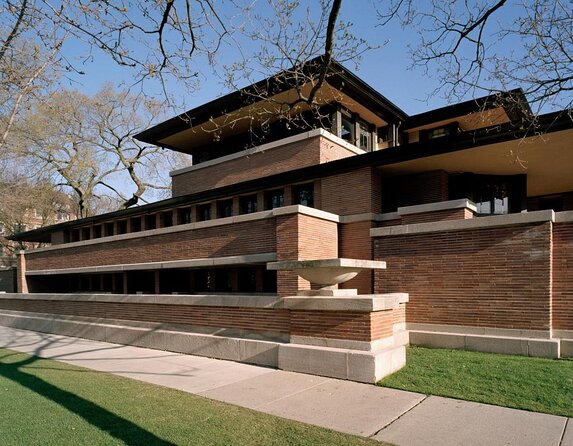
Next up, you pass Frederick C. Robie House. This is the kind of landmark that encourages you to stop for a moment, even when the route is designed for continuous walking. The audio gives you a reason to look closely instead of treating the place as a quick photo stop.
Because you control the pace, you can hold there longer if you want to compare what you hear with what you see. I like this approach for iconic buildings: you get a narrative, then you validate it with your own eyes.
Just note the format. Since this is not an interior visit, you’re working with exterior views and street-facing angles. Plan to listen, then take a careful look, then move on.
University of Chicago Campus Blocks: Faculties, Buildings, and the Nuclear Energy Sculpture
As the walk continues, you pass University of Chicago faculty areas and campus buildings, plus the Nuclear Energy Sculpture. This is where the tour can feel most like a guided “orientation” route—helpful if you want to understand how the University presents itself in Hyde Park.
This section also highlights a key trade-off of audio walking tours: pacing gaps. One piece of feedback points out longer walking stretches with limited information, plus downtime that can feel frustrating if you’re hoping for nonstop narration during the whole route.
How do you make it work anyway? Treat the audio like a series of short story chapters. When the narration is active, lean into it. When it goes quiet, use that time to reset—grab water, step aside for a better view, and decide whether you want to stay on the route or slow down.
Washington Park Portions: Beautiful Setting, Uneven Commentary
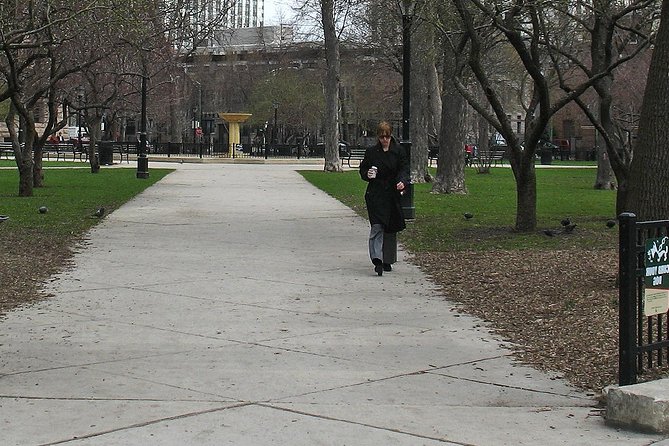
The route moves through parts of Washington Park. Even without a formal museum stop, the setting can change your feel of the neighborhood, and the audio helps translate that change into meaning. This is the part where atmosphere matters—because you’re walking through a different texture of the area than the University blocks.
Still, this is exactly where a couple of people said they wished there was more narration. If you’re sensitive to silence during walking, you may notice it here. The upside is you’re not trapped in a schedule—when the audio quiets down, you can simply use the time for your own observation.
One thoughtful note from feedback: someone suggested the boulevard system deserves more explanation, which hints that the route’s street-level storytelling may not satisfy everyone who wants deeper urban-structure context. If you want heavy planning for street grids and major thoroughfares, you may feel the audio doesn’t cover that as much as you’d like.
DuSable Museum Area and the Finish at 1101 E Hyde Park Boulevard
Later, the audio route brings you to the zone near the DuSable Museum of African American History, then ends outside 1101 E Hyde Park Boulevard Apartments. Finishing at a specific address helps you plot the end of your listening loop without having to guess where you are in relation to transit or a landmark.
Because the experience ends at an apartment building outside, it works best if you plan your next step in advance. Think about where you’ll go right after you finish—nearby transit access or a meal option in the surrounding area.
If you’re traveling at a slower pace, keep in mind that ending “outside an address” is still a normal walking-city situation. You’ll need to be ready to keep going after the last narration cue, not just coast to a final bus stop.
Timing and Distance: Don’t Trust Only the 40 Minutes to 1 Hour Label
The experience is listed at about 40 minutes to 1 hour. But one piece of feedback flagged that the walk felt like around three miles, which can be too much for some people, especially if you’re older or you just don’t want a longer trek.
So here’s the practical move: plan for this as a walk with real distance, even if the official timing sounds shorter. If you’re 82 (or anyone who needs more frequent breaks), you’ll likely want to build extra time into your day and possibly choose a shorter listening mindset—listen until you feel “caught up,” then keep walking.
Also remember: you supply the hardware. The tour includes audio and maps through the app, but you need your own headphones. And since it’s designed for offline use, you should download or sync before you start so you’re not fiddling mid-walk.
VoiceMap Setup and Offline Audio: A Better Way to Walk Chicago
You get lifetime access to the tour in English, plus the VoiceMap app for iOS and Android. The big quality-of-life perk is offline capability: audio, maps, and geodata are available even without constant mobile data.
That offline feature matters because Hyde Park is not the kind of place where you want your day derailed by signal drops. It also helps you stay focused: you can keep your attention on the route while the app handles the place-based audio.
My advice is simple: test your audio before you leave. Make sure the app is working, your volume is comfortable, and you can hear clearly on sidewalks. Then treat the phone like a tool, not a distraction.
Value Check: When This Audio Walk Feels Worth It (and When It Won’t)
This is a strong pick if you want an insider voice and a flexible way to connect University-of-Chicago and Hyde Park landmarks. The best feedback focuses on Ayers’s personal stories and the way the app starts talking at the right location. If you like narrative-led walking, you’ll probably appreciate how the story links multiple sites into one arc.
It’s less ideal if your ideal experience includes frequent narration the entire time, or if you’re hoping for more in-building access. One person felt the walk involved too much silent time and too little information overall, and they also felt the experience didn’t include entering original University buildings. Another wished for more commentary during longer stretches and wanted more clarity about the route’s walking distance.
So the value question comes down to your tolerance for quiet walking. If you’re happy with an occasional story chapter while you walk between points, this can be enjoyable and efficient. If you want a constant stream of guide talk, expect disappointment.
Who Should Book This Hyde Park Audio Tour?
Book it if you:
- like self-guided experiences and want control over pacing
- enjoy local voices and personal storytelling over standard plaques
- want offline maps and audio so you can keep moving smoothly
Skip it or think twice if you:
- need lots of spoken guidance every few minutes
- expect interior visits at University landmarks
- don’t want a route that can feel closer to a longer walk (about three miles, based on feedback)
Should You Book This Chicago Audio Tour?
If your plan includes a Hyde Park walk where story matters more than schedule, I think this is a solid choice. The combination of Bill Ayers’s narration, the app’s location-based audio, and offline access gives it practical legs for a self-guided day.
But if you’re chasing nonstop commentary or you’re hoping for a more guided, inside-the-sites experience, you might feel shortchanged. For me, the decision is simple: this works when you want chapters of listening paired with your own walking pace.
FAQ
What language is the audio tour offered in?
The tour is offered in English.
How long is the Hyde Park audio walk?
It’s listed at approximately 40 minutes to 1 hour.
Where does the tour start and end?
It starts outside the University of Chicago Laboratory Schools at 1362 E 59th St, Chicago, IL 60637, and ends outside 1101 East Hyde Park Boulevard Apartments at 1101 E Hyde Park Blvd, Chicago, IL 60615.
What landmarks will I pass during the route?
You’ll pass the Rockefeller Memorial Chapel, Frederick C. Robie House, University of Chicago faculty and buildings, the Nuclear Energy Sculpture, parts of Washington Park, and the DuSable Museum of African American History.
Do I need a smartphone and headphones?
Yes. A smartphone and headphones are not included.
Is the audio and map access available offline?
Yes. You get offline access to audio, maps, and geodata.
Is the tour self-guided or a live guided group walk?
It’s self-guided and delivered through the VoiceMap audio app.
Is it private?
Yes. It’s listed as a private tour/activity, with only your group participating.
What if I need to cancel?
Cancellation is free up to 24 hours in advance for a full refund, and changes within 24 hours aren’t accepted.
Chicago Without the Group
- Medieval Torture Museum Ticket with Audio Guide and Ghost Hunting★ 5.0 · 962 reviews
- Eastside Chicago The Heist Exploration Game and Tour★ 4.0 · 10 reviews
- Chicago Self-Guided Audio Tour★ 4.0 · 9 reviews
- Chicago’s Gold Coast Hidden History: A Self-Guided Audio Walk★ 4.5 · 7 reviews
- Chicago Riverwalk Self-Guided Walking Tour★ 4.0 · 6 reviews
The Wider Chicago Shortlist
- Chicago Architecture River Cruise★ 5.0 · 15,756 reviews
- Chicago River 90-Minute Architecture Tour★ 4.5 · 9,629 reviews
- Chicago River: 1.5-Hour Guided Architecture Cruise★ 4.8 · 8,046 reviews
- Chicago: Gangsters and Ghosts Walking Tour★ 5.0 · 7,155 reviews
- Chicago Architecture Center River Cruise aboard First Lady★ 5.0 · 5,536 reviews
Out Into the Neighborhoods
- The Escape Game Chicago: Epic 60-Minute Adventures in River North★ 5.0 · 332 reviews
- Bike Tour of Chicago’s Lakefront Neighborhoods★ 5.0 · 241 reviews
- Chicago: Lakefront Neighborhoods Bike Tour★ 4.9 · 123 reviews
- River North Food Walking Tour★ 4.5 · 88 reviews
- Small-Group Tour of Chicago Neighborhoods: North and South Side★ 4.5 · 50 reviews
The Ink Is Still Wet on These Chicago Reviews




Chicago Neighborhood Tours, compared.
 ★ 5.0The Escape Game Chicago: Epic 60-Minute Adventures in River NorthFrom $47332 reviews
 ★ 5.0Bike Tour of Chicago’s Lakefront NeighborhoodsFrom $59241 reviews
 ★ 4.9Lakefront Neighborhoods Bike TourFrom $59123 reviews
 ★ 4.5River North Food Walking TourFrom $8988 reviews
 ★ 4.5Small-Group Tour of Chicago Neighborhoods: North and South Side50 reviews
 ★ 5.0Workers Cottages of Oldtown Triangle Walking TourFrom $4545 reviews
 ★ 5.0Historic Homes and Cottages of Wicker Park Walking TourFrom $4544 reviews
 ★ 5.0Chicago Neighborhood Food Private Walking TourFrom $24521 reviews
Browse the lists this tour appears in