
REVIEW · SELF-GUIDED TOURS
Chicago Self-Guided Audio Tour
Chicago has a knack for turning ordinary walks into stories. This self-guided audio tour strings together big-name places and quieter details, so you can move at your pace without hiring a live guide. You’ll get a private SoundCloud playlist plus an interactive map so each stop has its own listening link.
Two things I really like: first, the audio is designed to be practical and easy to hear, with narration built for standing in real places (not staring at a screen). Second, the flexibility is huge—you can start where you want, skip what you don’t care about, and even spread it across days with links that stay valid for a while.
One consideration: this is short, stop-by-stop listening, not hours of full guided commentary. If you’re hoping for a long, lecture-style tour, you may feel the $6 value is more about convenience and highlights than deep coverage at every stop.
In This Review
- Key highlights to look for
- Price and logistics that actually matter for your day
- What you need on your side
- How the audio links work (so you don’t waste time)
- My practical tip
- Union Station: marble grandeur and the WWII shadow beneath
- Field Museum: more than the headline dinosaurs
- Buckingham Fountain: Chicago’s big water statement, explained
- The Art Institute of Chicago: stories behind the famous pieces
- Millennium Park and Cloud Gate: modern city symbols you can actually walk through
- Cloud Gate (“the Bean”): reflection as a design feature
- Chicago Cultural Center: the People’s Palace vibe, with Tiffany light overhead
- Chicago Riverwalk: engineering, ecosystems, and the walk you’ll keep choosing
- Navy Pier: the lakefront attraction with real history
- Richard H. Driehaus Museum: Gilded Age luxury in a real house
- 360 Chicago Observation Deck: skyline context you can actually use
- Lincoln Park Zoo: conservation stories without a long lecture
- Chicago History Museum: the city told through its own turning points
- Newberry Library: a quiet, scholarly Chicago pause
- Griffin Museum of Science and Industry: big exhibits with fairytale origins
- A simple way to build your ideal route (without overthinking it)
- Option A: Downtown highlights (easy walking logic)
- Option B: Culture and learning day
- What to expect from the narration: short stops, clear aims
- Should you book this Chicago Self-Guided Audio Tour?
- FAQ
- FAQ
- How do I access the audio during the tour?
- Is this a GPS-guided tour?
- What language is the tour available in?
- About how long should I plan?
- What’s included in the $6 price?
- Are museum or attraction entry fees included?
- What should I bring?
- Is it refundable if I cancel?
- Does the tour include transportation?
Key highlights to look for
- SoundCloud playlist + My Maps link: click-through guides for 15 stops, mapped and organized.
- No GPS needed: it’s self-guided, using your phone for audio and directions.
- Big variety of Chicago: architecture, art, science, history, fountains, and the lakefront.
- Mix of free and paid sites: some stops include free entry cues; others require your own tickets.
- Designed for flexible pacing: each stop is meant to be a bite-sized chunk you can pause and repeat.
Price and logistics that actually matter for your day
At $6 per person, this tour lands in the “worth it if you use it” category. The real value isn’t that it covers everything—it’s that it helps you notice more while you’re already going to major sights. You’re not paying for transportation, and you’re not buying museum admissions through the tour, so budget separately for ticketed locations.
Plan for roughly 3 to 9 hours depending on how many stops you do and how long you linger. The audio is offered in English, and you’ll receive a mobile ticket/access links through your booking platform messaging system before you start.
Chicago at your own pace, more options
What you need on your side
Bring the basics: headphones/earphones, a fully charged smartphone, and internet access. This is important because the tour runs through web links (SoundCloud for audio and Google My Maps for navigation). Also, it’s a private tour/activity, so it’s only for your group—no joining strangers.
How the audio links work (so you don’t waste time)

This is a self-guided audio tour, not a GPS-guided one. That means you’re in charge. The app won’t “drive” you from stop to stop like a live tour would.
You’ll get two links:
- Link 1: a SoundCloud playlist with audio for all attractions, in a suggested order.
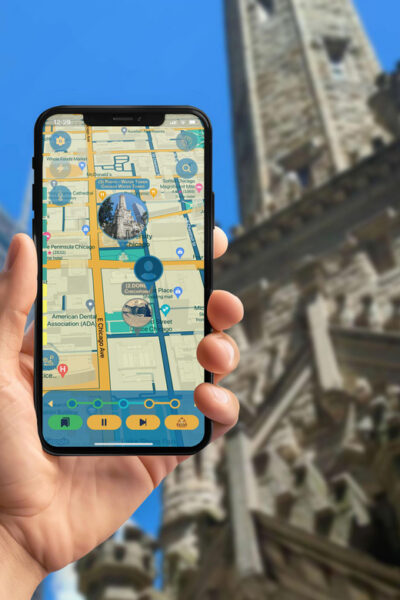
- Link 2: a Google My Maps itinerary where each location is marked with a headphone icon and connects to that stop’s audio.
You should open the links in your phone browser (not inside the Google Maps app). When you’re at a stop, tap the headphone icon or select the location on the map to jump into the correct audio.
Keep these Chicago backups on the shortlist too:
- Chicago’s Storied Neighborhood: An Audio Tour
★ 3.0 · 4 reviews
My practical tip
Before you go outside, sit for five minutes, open both links, and skim the stop names. You don’t need to memorize anything—you just want to know which audio matches which place so you’re not fumbling once you’re standing there.
Union Station: marble grandeur and the WWII shadow beneath
Union Station is the kind of place that makes you slow down even before the audio starts. The guide focuses on why it became so film-friendly, then flips the usual story into something more surprising: the station’s connection to World War II-era training and the hidden layers (like tunnels and behind-the-scenes movement).
What you’ll like here
- The Great Hall is built for drama—skylight, scale, and marble details that feel made for Hollywood.
- The narration helps you look at the station as a living monument, not just a transit stop.
Watch-outs
- It’s busy. If you’re listening at high volume, aim your audio so you don’t crank it to the max in crowded areas.
- The “at your own pace” style means you’ll get more from this stop if you plan a little time to actually stand, look up, and let the space sink in.
Field Museum: more than the headline dinosaurs
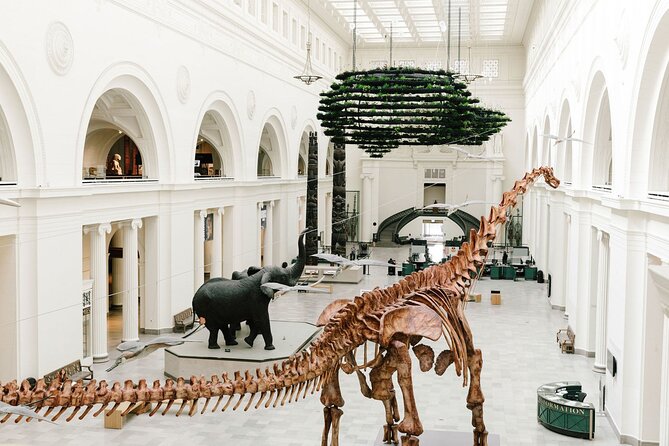
At the Field Museum, the audio steers you beyond the obvious T-Rex draw. You’ll get the origin story tied to the 1893 World’s Fair, plus guidance toward collections and research areas that many people skip when they’re speed-running.
Why this stop works on a self-guided tour
A museum is perfect for audio-by-choice. You can move straight to what catches your interest—Ancient Americas, Egyptian mummies, or the behind-the-scenes science vibe—then pause the audio when you want to just look.
Possible drawback
This is one of the places where you should be ready for ticket logistics: the tour notes that admission isn’t included for Field Museum. So factor in whatever entry cost applies when you’re planning your day.
Buckingham Fountain: Chicago’s big water statement, explained

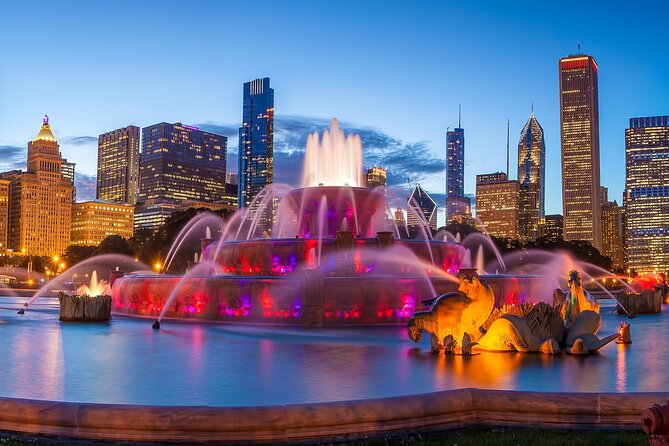
This fountain is more than a pretty landmark. The audio connects it to the family legacy behind its creation and focuses on design symbolism, plus the engineering that allows it to be one of the world’s largest fountains.
You’ll also hear about its role in Chicago’s cultural momentum and the restoration story that kept it from falling into decay. The guide even points you to seasonal and nighttime aspects, so you can time your visit with the fountain’s rhythm.
What to do
Stand back far enough to see the full design, then walk in closer. The audio themes—engineering, symbolism, resilience—make the fountain feel intentional, not decorative.
The Art Institute of Chicago: stories behind the famous pieces
If you love art but hate museum overload, this stop is your friend. The audio aims for story-first viewing: how famous works entered the collection, the roles of donors, and the tensions around acquisitions. It also connects Chicago’s industrial rise to the city’s art boom, so the museum feels like a Chicago story rather than a Europe-only detour.
What you’ll get
- Meaning behind how masterpieces became part of the collection
- A way to spot connections between local patrons and the wider art world
- A reminder that icons like Grant Wood’s American Gothic aren’t just images—they became cultural shorthand
Practical note
Admission isn’t included here either, so treat this as a ticketed museum stop when budgeting.
Millennium Park and Cloud Gate: modern city symbols you can actually walk through
Millennium Park is where Chicago flexes its public-space confidence. The audio story covers how the park rose from industrial wasteland into a destination, including the political and architectural challenges that shaped it.
You’ll hear about:
- Crown Fountain’s technology
- Lurie Garden’s ecological purpose
- Architectural details people miss because they’re busy taking photos
Cloud Gate (“the Bean”): reflection as a design feature
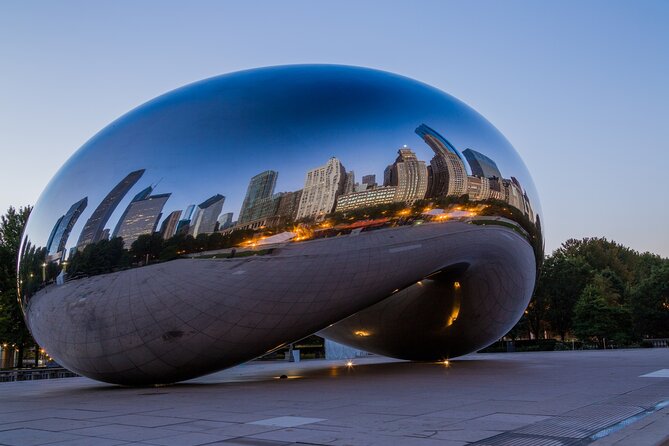
Then you’re right at Cloud Gate, and the audio makes the sculpture feel deeper than its selfie reputation. It focuses on the creation process, engineering challenges, and the artist’s intent behind that seamless surface. There’s also a stop-the-clipboard moment about why visitors love touching it—and why it stays clean and gleaming over time.
Best way to experience this
Go from one side to the other. Your reflection changes as you move, and the audio helps you see the sculpture as more than a mirror. It’s also a piece tied to Chicago’s identity and industrial heritage.
Chicago Cultural Center: the People’s Palace vibe, with Tiffany light overhead
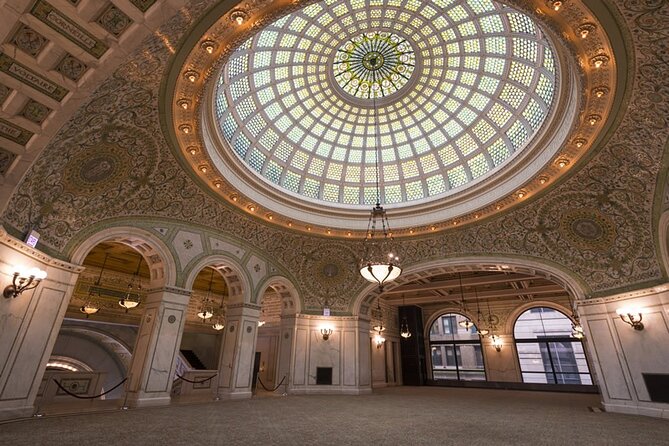
The Chicago Cultural Center is the kind of place that makes you wonder why everyone doesn’t start here. The audio describes it as Chicago’s “People’s Palace,” and explains its transformation—from an original purpose to a cultural hub.
The big draw in the story is the Tiffany glass dome(s), plus the craftsmen and the political battles that helped save the building from demolition. If you like buildings that feel alive—like they still host a mission—the narration matches that mood.
Why it’s a strong middle stop
It’s free, indoor, and story-driven, so it’s a great reset button if the day turns hot, cold, or windy.
Chicago Riverwalk: engineering, ecosystems, and the walk you’ll keep choosing
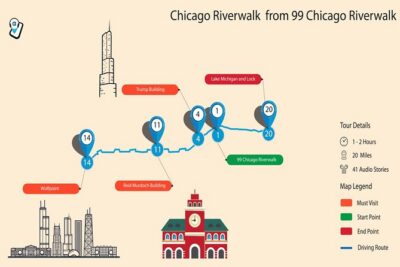
The Riverwalk is where Chicago turns infrastructure into pleasure. The audio focuses on the engineering changes that transformed a neglected corridor, including the dramatic decision to reverse the river’s flow. You also get an explanation of the walkway’s modern renaissance and how the waterfront supports ecosystems even in a dense city.
What you’ll notice
Look for small visual details from the water-level perspective. The guide encourages you to spot architectural elements that you’d otherwise miss from street level.
Reason it’s worth keeping in your route
It’s not just scenic—it’s a living example of how public spaces can support both culture and environmental stewardship.
Navy Pier: the lakefront attraction with real history
Navy Pier often gets treated like a tourist default. The audio pulls it back toward story: military training roots, near-demolition, and the shift into an entertainment complex.
You’ll hear about engineering features under the boardwalk, plus how the pier balances tourism with community needs. There’s also an angle on environmental initiatives tied to how it operates.
Practical tip
Don’t feel like you have to “do everything” at Navy Pier. Use it as a flexible hangout. If you’re listening, play the audio first, then decide how much time you want to spend on the pier’s attractions.
Richard H. Driehaus Museum: Gilded Age luxury in a real house
This stop changes the pace. The audio frames it as Chicago’s opulent Gilded Age mansion, created by one man’s passion for decorative arts. The narration highlights what restoration brought back to life, plus room-by-room stories about furnishings and craftsmanship.
You’ll hear about:
- Tiffany windows
- Hand-painted ceilings
- Social customs tied to Chicago’s elite
Why it’s a good self-guided fit
You can linger in specific rooms. The museum becomes a series of visual “chapters,” and the audio helps you read what you’re looking at.
Cost note
Admission isn’t included, so treat it as a paid attraction stop.
360 Chicago Observation Deck: skyline context you can actually use
From above, the skyline can blur into a collection of tall buildings. The audio helps you connect what you’re seeing to the city’s architectural evolution and urban planning. It also explains how skyscrapers defined Chicago’s identity, including the significance of the neighborhoods you can spot from the deck.
This is a smart stop if you want a “big picture” moment in the middle of the day. After you’ve walked around street-level landmarks, seeing the skyline with context gives the city a clearer shape.
Lincoln Park Zoo: conservation stories without a long lecture
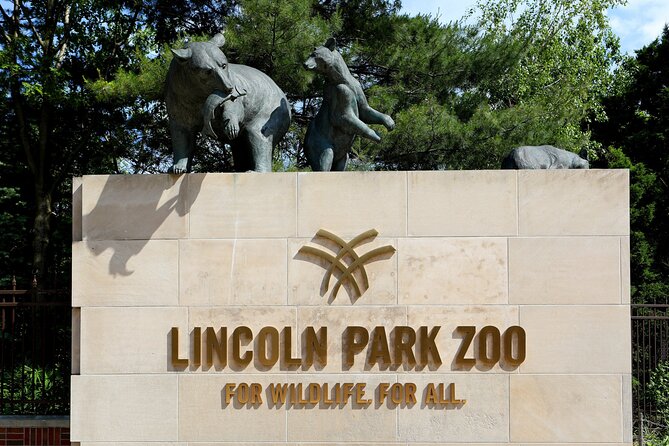
The audio describes Lincoln Park Zoo as a major free zoo, with emphasis on conservation and animal care. You’ll hear about captive breeding programs, research, and habitat design. It’s not about checking boxes—it’s about why this zoo matters in conservation work.
What I’d do
Walk at your own speed and use the audio like a guide for noticing. If a section interests you, keep listening. If you’re ready to just watch animals, pause.
Chicago History Museum: the city told through its own turning points
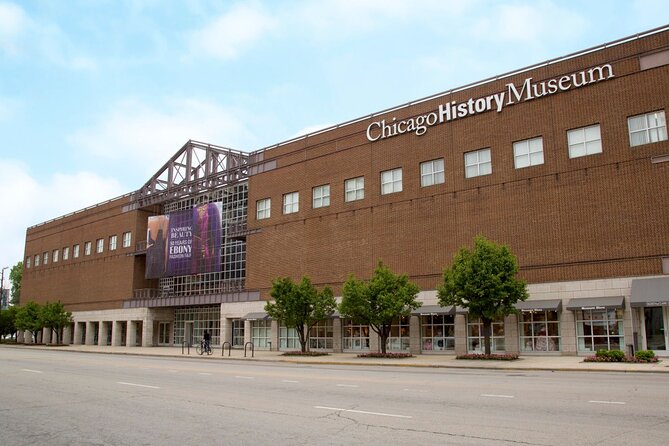
The Chicago History Museum stop is about understanding Chicago’s “how we became this” story. The audio points you toward rare local-history collections, including impacts tied to the Great Fire aftermath and the World’s Fair influence. It also covers cultural movements that originated here and the ongoing struggles and triumphs that shape the city.
Why this is valuable on a self-guided audio tour
It gives meaning to the sights you’re already seeing outdoors. After hearing local history, the architecture feels less random.
Cost note
Admission isn’t included.
Newberry Library: a quiet, scholarly Chicago pause
If you like places where ideas feel physical, Newberry Library hits that note. The audio focuses on its founding story, rare manuscripts, historic maps, and the building’s architecture and reading rooms.
It also frames the library as a key part of Chicago’s intellectual life—so it’s not only for researchers. It’s for anyone who likes to see how knowledge gets preserved and shared.
Cost note
This one is listed as free.
Griffin Museum of Science and Industry: big exhibits with fairytale origins
Science museums can feel scattered. The audio here is structured to keep you oriented: the museum’s link to the 1893 World’s Columbian Exposition, plus stories behind famous exhibits like the captured German U-boat and the Pioneer Zephyr train.
You’ll also get pointers toward technology, medicine, and innovation themes, plus hands-on education energy and partnerships that support research.
Cost note
Admission isn’t included.
A simple way to build your ideal route (without overthinking it)
Because this tour is self-guided, you can make it match your energy. Here are two easy ways to plan.
Option A: Downtown highlights (easy walking logic)
Pair Union Station + Millennium Park + Cloud Gate + the Cultural Center + Riverwalk. You’ll get architecture, public spaces, and city-story context in one tight stretch.
Option B: Culture and learning day
Union Station (quick start) + Field Museum + Art Institute + Chicago History Museum + Newberry Library. Finish with a sunset view from 360 Chicago if your feet still have points left.
If you only do a few stops, that’s fine. The value is in using the audio where you’ll actually pause, look up, and pay attention.
What to expect from the narration: short stops, clear aims
One pattern shows up in how this tour gets used: each stop is designed for focused listening while you’re standing there. A short, stop-by-stop format is either your sweet spot or it isn’t.
If you want entertaining, story-driven audio that’s easy to handle in public spaces, you’ll probably find it satisfying. But if you’re expecting long, exhaustive coverage at every location, you might get frustrated and end up reading on your own after the audio ends.
My advice: treat it like a smart primer. Use it to decide where you want more time, then spend that extra time with your own eyes (and your own curiosity).
Should you book this Chicago Self-Guided Audio Tour?
Book it if you want:
- a low-cost way to make major Chicago sights more meaningful
- flexibility to choose your route and timing
- audio stories that help you notice what matters at each stop
Skip it (or consider a more traditional guided tour) if you want:
- long-form commentary you can listen to for hours without stopping
- deep coverage at every museum stop regardless of time
If you’re the type who likes to walk, look, and learn in bursts, this tour is a good match—and at $6, it’s an easy add-on to any Chicago itinerary.
FAQ
FAQ
How do I access the audio during the tour?
You’ll receive private access links before your start time. One link opens a SoundCloud playlist of the audio, and the other link opens a Google My Maps itinerary where each attraction has a clickable headphone icon.
Is this a GPS-guided tour?
No. It’s self-guided audio. You decide the order, where you start, and where you end.
What language is the tour available in?
The audio is offered in English.
About how long should I plan?
Plan for roughly 3 to 9 hours, depending on how many stops you choose and how long you stay at each one.
What’s included in the $6 price?
The tour includes private access links to the audio guide playlist for 15 attractions and an itinerary map with individual guide links for each attraction. The links are valid for up to 6 days.
Are museum or attraction entry fees included?
No. Entry fees are not included where admission is required.
What should I bring?
Bring headphones/earphones, a fully charged smartphone, and internet access.
Is it refundable if I cancel?
No. The experience is non-refundable and cannot be changed once purchased.
Does the tour include transportation?
No. Transportation (pick-up and drop-off) is not included.
Chicago in Your Headphones
- Medieval Torture Museum Ticket with Audio Guide and Ghost Hunting★ 5.0 · 962 reviews
- Chicago’s Gold Coast Hidden History: A Self-Guided Audio Walk★ 4.5 · 7 reviews
- Chicago’s Storied Neighborhood: An Audio Tour★ 3.0 · 4 reviews
Chicago Without the Group
- Medieval Torture Museum Ticket with Audio Guide and Ghost Hunting★ 5.0 · 962 reviews
- Eastside Chicago The Heist Exploration Game and Tour★ 4.0 · 10 reviews
- Chicago’s Gold Coast Hidden History: A Self-Guided Audio Walk★ 4.5 · 7 reviews
- Chicago Riverwalk Self-Guided Walking Tour★ 4.0 · 6 reviews
- Haunted Chicago Exploration Game and Tour★ 4.0 · 6 reviews
The Wider Chicago Shortlist
- Chicago Architecture River Cruise★ 5.0 · 15,756 reviews
- Chicago River 90-Minute Architecture Tour★ 4.5 · 9,629 reviews
- Chicago River: 1.5-Hour Guided Architecture Cruise★ 4.8 · 8,046 reviews
- Chicago: Gangsters and Ghosts Walking Tour★ 5.0 · 7,155 reviews
- Chicago Architecture Center River Cruise aboard First Lady★ 5.0 · 5,536 reviews
The Ink Is Still Wet on These Chicago Reviews




Self-Guided Tours, compared.
 ★ 5.0Medieval Torture Museum Ticket with Audio Guide and Ghost HuntingFrom $35962 reviews
 ★ 4.0Eastside Chicago The Heist Exploration Game and TourFrom $710 reviews
 ★ 4.5Chicago’s Gold Coast Hidden History: A Self-Guided Audio WalkFrom $77 reviews
 ★ 4.0Haunted Chicago Exploration Game and TourFrom $76 reviews
 ★ 4.0Chicago Riverwalk Self-Guided Walking TourFrom $146 reviews
 ★ 4.5Chicago Millennium Park Self-Guided Walking TourFrom $145 reviews
 ★ 3.0Chicago’s Storied Neighborhood: An Audio Tour4 reviews
 ★ 3.2Michigan Avenue Rendezvous Walking Tour with Smartphone AppFrom $173 reviews
Browse the lists this tour appears in