
REVIEW · CHICAGO HISTORY TOURS
Chicago’s Midway, Movies, and the 1893 World’s Fair Walking Tour
Film history meets Hyde Park scenery. This walking tour threads you through Chicago’s Midway with an eye on how the 1893 World’s Fair helped shape moving pictures, from Lorado Taft’s studio to the Recording Angel moment. I especially like the way Kelli uses visuals and clips to connect art, tech, and local places, and the Recording Angel is a surprisingly cinematic highlight even if you’re not a movie nerd.
One possible drawback: the route depends on good weather, and you only have about 1 hour 30 minutes to cover three stops—so plan to be ready to walk with purpose.
In This Review
- Key Points You’ll Actually Care About
- How the Midway Route Links 1893 Fair Fun to Early Film
- Lorado Taft’s Midway Studios and the Recording Angel in Motion
- Midway Plaisance: The World’s Fair Amusements and the First Commercial Movie Theater
- Fountain of Time: Why a 126-Foot Sculpture Appeals to Filmmakers
- The 19th-Century Device Demo and the Role of the Guide’s Visuals
- Price and Timing: Does $49.99 Feel Worth It?
- Meeting Points, End Location, and How the Walk Fits Into Your Day
- Who Should Book This Tour (and Who Might Want Something Else)
- Should You Book Chicago’s Midway, Movies, and the 1893 World’s Fair Walk?
- FAQ
- How long is the Chicago’s Midway, Movies, and the 1893 World’s Fair walking tour?
- What does the tour cost?
- What language is the tour offered in?
- Where does the tour start and end?
- What’s included in the ticket price?
- Are there admission tickets needed for the stops?
- How large is the group?
- Do I need good weather for this experience?
- What happens if I cancel?
Key Points You’ll Actually Care About
- A tight 1.5-hour story arc: Taft → the Midway Plaisance’s fair fun → the Fountain of Time film landmark
- The Recording Angel is the star: early-moving-picture energy tied to Lorado Taft’s work
- Midway Plaisance connects to film tech: including the first commercial movie theater
- You’ll see real 19th-century moving-picture devices during the walk
- Small group size helps a lot (up to 4), and Kelli plans routes that work even in ugly weather
How the Midway Route Links 1893 Fair Fun to Early Film
This tour is built like a movie reel: short scenes, clear connections, and a strong through-line. You start in the world of sculptor Lorado Taft, then move across Midway Plaisance, then finish at a long sculpture that’s been used as inspiration by filmmakers over time. It’s not trying to overwhelm you with facts. It tries to show you how Chicago’s Midway became a stage for new entertainment—then for film.
The value is in the linking. You’re not just looking at buildings or landmarks; you’re learning why they mattered for motion pictures and public showmanship. If you’re the type who enjoys spotting details and understanding the “why,” this format fits.
More corners of Chicago you saw on screen
Lorado Taft’s Midway Studios and the Recording Angel in Motion
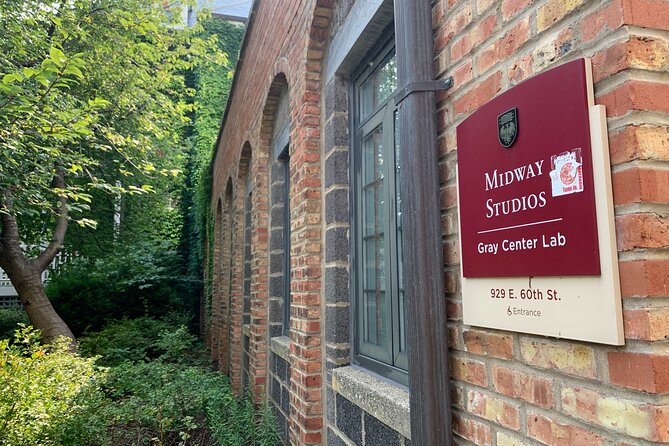
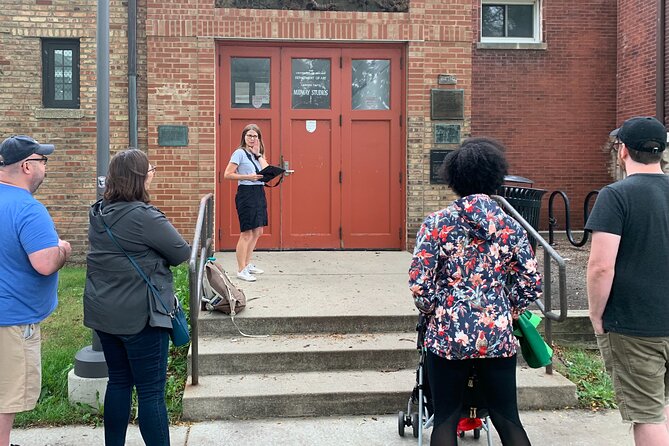
Stop 1 is Lorado Taft’s Midway Studios (and the Taft House area), where you get acquainted with Taft as a sculptor, teacher, and writer—and an early adopter of moving pictures. That mix matters, because it explains how art teachers and makers weren’t separate from early film tech. They were part of the same creative ecosystem.
The highlight here is the presence of Recording Angel, described as Hollywood’s first female action star in motion. Even if you’ve never heard of that specific framing, the point is clear: early “action” imagery and performance were already being imagined in the public eye. This is also where the tour leans hard on Kelli’s visuals and clips—so you’re not only standing still. You’re following a story.
Time-wise, you’ll spend about 30 minutes at this stop. In a short tour, that’s a healthy chunk, so you won’t feel rushed through the most “film-forward” location.
Practical note: this is the kind of start where you’ll want to arrive with your camera ready. The tour specifically aims for plenty of Instagram opportunities, and the setting gives you enough angles to make it worth it.
Midway Plaisance: The World’s Fair Amusements and the First Commercial Movie Theater
Next you head to Midway Plaisance, the green space that hosted the amusement side of the 1893 World Columbian Exposition. This stop is about context—how the fair didn’t just showcase technology and architecture, but entertainment that pulled big crowds.
What you’ll take away is that the Midway was not just fun. It was an engine for modern show business. The tour includes the claim of the first commercial movie theater, which gives you a specific “this happened here” anchor to connect to the wider story of early cinema. That’s the kind of detail that makes the rest of the walk click.
Expect around 15 minutes here. It’s enough time to get the meaning without dragging. The only caution is that you may want to pay attention to where you’re standing, because you’ll be using the space as part of the narrative—not treating it like an open picnic stop.
From the fire of 1871 forward, more history
- Chicago in a Day: Food, History & Architecture Walking Tour
★ 5.0 · 1,153 reviews - Chicago: Field Museum of Natural History Ticket or VIP Tour
★ 4.7 · 717 reviews - Field Museum of Natural History Admission Tickets
★ 4.5 · 489 reviews
Fountain of Time: Why a 126-Foot Sculpture Appeals to Filmmakers
Your final stop is the Fountain of Time at George Washington Park. This is the “big finale” moment: a sculpture that stretches 126 feet long and has inspired both classic and modern filmmakers. That alone sets the tone—this isn’t just a nice-to-see public art piece. It’s framed as a continuing visual reference point.
You’ll spend about 15 minutes here, and it’s a good end cap. The walk has built you into the film mindset: earlier you talked about how motion picture technology caught on. Now you see how a physical, designed form keeps showing up in the culture of filmmaking.
This stop is also where you’ll likely get the best “I can’t believe this is in Chicago” photos. The tour is intentionally friendly to cameras, and the sculpture’s scale gives you instant drama even in gray weather.
The 19th-Century Device Demo and the Role of the Guide’s Visuals
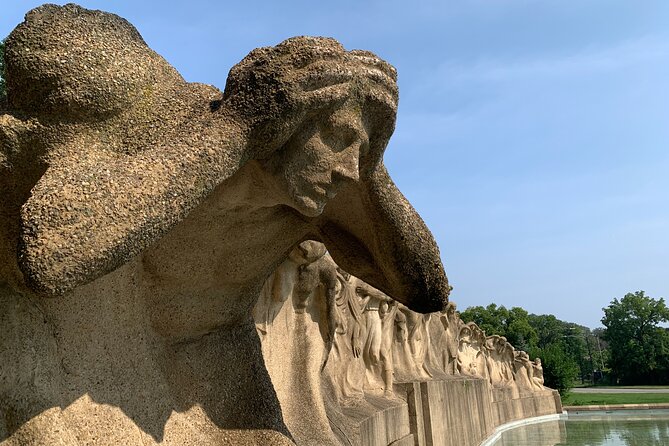
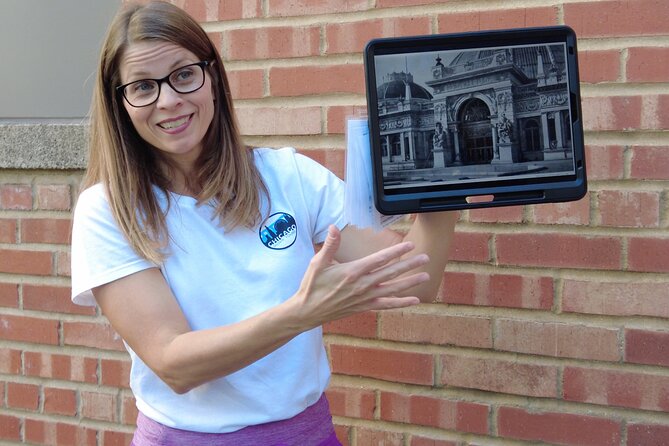
One of the tour’s smartest moves is adding a demonstration of 19th-century moving picture devices. You’re not left with vague references to old film tech. You get a hands-on sense of how people were thinking about motion and image long before today’s screens.
That matters because early film can feel abstract if you only hear dates and names. A short device demo helps you picture the mechanics, the novelty, and why audiences would’ve been drawn in. Even if you already know some film history, this part tends to make it feel more real.
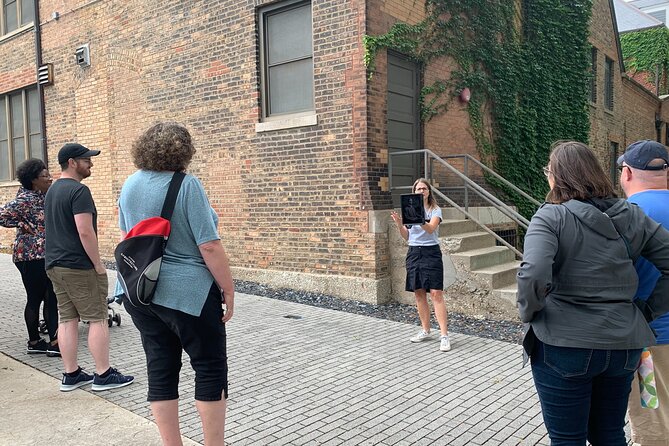
Kelli’s presentation style is also a huge part of the experience. Reviews highlight how she communicates clearly, and one specific detail stands out: she handled a small lateness issue well by coordinating so the group didn’t fall behind. Another review notes that she knew how to navigate underground walkways, keeping things comfortable during a Feb walk that got wet and cold. That kind of local problem-solving is exactly what separates a good history walk from a painful one.
Price and Timing: Does $49.99 Feel Worth It?
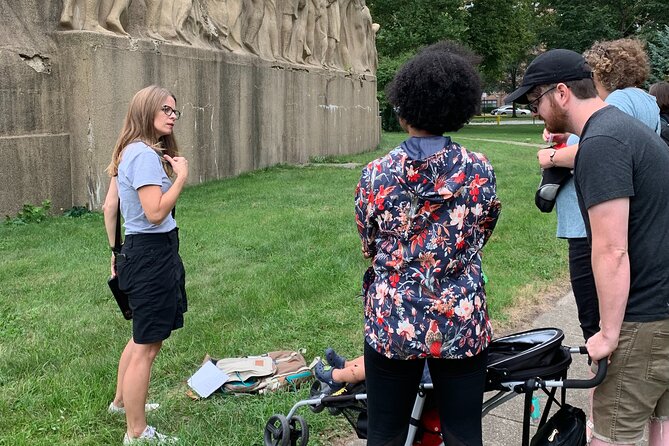
At $49.99 per person for about 1 hour 30 minutes, this isn’t the cheapest thing you can do in Chicago—but it’s also not trying to be a full-day museum replacement. The price makes sense if you value guided interpretation, short stop-by-stop pacing, and actual film-technology visuals.
Here’s what you get for the money:
- Expert tour guide commentary (not just signage)
- Clips and photos that explain the connections
- Plenty of photo moments
- A mini goodie bag
- A moving-picture device demonstration
If you’re someone who loves “how” stories—how things were invented, presented, and popularized—then the cost is easier to justify. If you’re expecting a long, slow, deep museum-style experience with dozens of stops, you might feel the time box quickly. The tour is designed to be efficient.
The timing also helps. The start time is 10:30 am, which often gives you decent light for photos and enough buffer to keep the rest of your day flexible.
Meeting Points, End Location, and How the Walk Fits Into Your Day
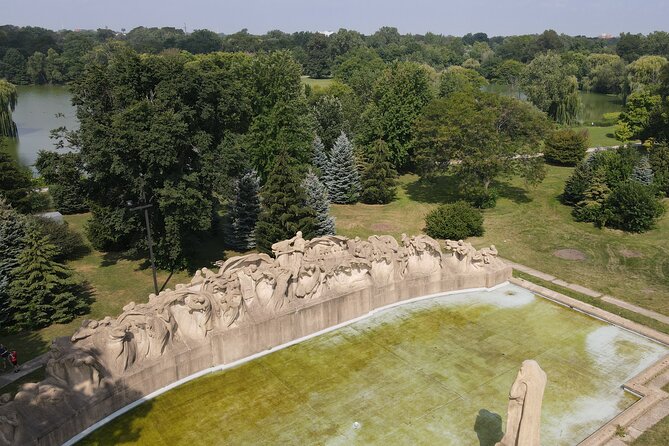
The tour starts at Midway Studio, 6016 S Ingleside Ave, Chicago, IL 60637. It ends at Fountain of Time – George Washington Park, 6000 S Cottage Grove Ave, Chicago, IL 60637.
That end point is helpful if you’re building a half-day around Hyde Park and want to keep moving afterward. It also means you should check your next plans—don’t schedule something that depends on being back at the exact same spot.
A few other logistics that matter:
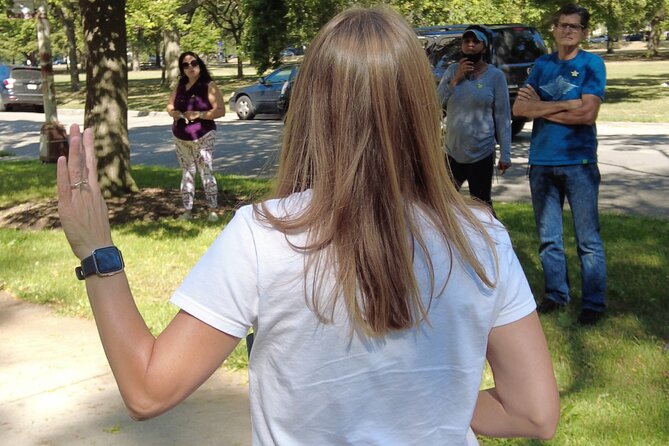
- It’s a small group, with a maximum of 4 travelers, so the pacing tends to stay controlled.
- You’ll have a mobile ticket, which makes day-of simpler.
- It’s near public transportation, which is great if you don’t want to worry about parking.
- Service animals are allowed.
Who Should Book This Tour (and Who Might Want Something Else)
This is a strong match for:
- People who like film history but don’t want to sit through a lecture
- Anyone curious about how public entertainment and technology grew around the 1893 World’s Fair
- Families who want a short, guided route with visible, photogenic stops
It’s also a nice choice if you already live in the city or know Hyde Park. One review notes that even someone who had lived nearby for a couple of years hadn’t seen most of the locations in person. That’s often a sign of a well-chosen route.
You might want to look for a longer film-focused option if you’re the type who wants deeper stops, more time per location, or a larger number of locations to connect the dots.
Should You Book Chicago’s Midway, Movies, and the 1893 World’s Fair Walk?
I’d book it if you want a focused walk that links Chicago’s Midway to how motion pictures became a public attraction. The mix of Lorado Taft, the fair’s amusement story, the Fountain of Time finale, and the device demonstration makes it feel more like an experience than a list of landmarks.
Skip it only if weather always throws you off, because it does require good weather for the walk. And if you’re the kind of visitor who needs lots of time to wander, this is built to move on a schedule with three main stops.
If you like clear storytelling, good guide energy, and you want film history that’s visible in the real world, this tour is a solid value at the price point—and a fun way to see the Midway without getting lost in it.
FAQ
How long is the Chicago’s Midway, Movies, and the 1893 World’s Fair walking tour?
The tour is about 1 hour 30 minutes.
What does the tour cost?
It costs $49.99 per person.
What language is the tour offered in?
The tour is offered in English.
Where does the tour start and end?
It starts at Midway Studio, 6016 S Ingleside Ave, Chicago, IL 60637, and ends at Fountain of Time – George Washington Park, 6000 S Cottage Grove Ave, Chicago, IL 60637.
What’s included in the ticket price?
Included are expert tour guide commentary, clips and photos, plenty of Instagram opportunities, a mini goodie bag, and a demonstration of 19th-century moving picture devices.
Are there admission tickets needed for the stops?
The stops listed include admission ticket free.
How large is the group?
The tour has a maximum of 4 travelers.
Do I need good weather for this experience?
Yes. It requires good weather, and if it’s canceled due to poor weather, you’ll be offered a different date or a full refund.
What happens if I cancel?
This experience is non-refundable and cannot be changed for any reason.
The Wider Chicago Shortlist
- Chicago Architecture River Cruise★ 5.0 · 15,756 reviews
- Chicago River 90-Minute Architecture Tour★ 4.5 · 9,629 reviews
- Chicago River: 1.5-Hour Guided Architecture Cruise★ 4.8 · 8,046 reviews
- Chicago: Gangsters and Ghosts Walking Tour★ 5.0 · 7,155 reviews
- Chicago Architecture Center River Cruise aboard First Lady★ 5.0 · 5,536 reviews
Since the Fire: Chicago History
- Chicago in a Day: Food, History & Architecture Walking Tour★ 5.0 · 1,153 reviews
- Chicago: Field Museum of Natural History Ticket or VIP Tour★ 4.7 · 717 reviews
- Field Museum of Natural History Admission Tickets★ 4.5 · 489 reviews
- Chicago Walking Tour: Historic Treasures of Chicago★ 5.0 · 362 reviews
- Historical and Architectural Chicago Fireboat River & Lake Cruise★ 5.0 · 246 reviews
Chicago, As Seen on Screen
- Chicago Fire TV Show Set Tour★ 5.0 · 68 reviews
- Chicago Fire TV Show Set Tour★ 4.9 · 43 reviews
- Chicago Gangsters and Movies Tour★ 5.0 · 38 reviews
- Ferris Bueller Movie Tour at the Art Institute of Chicago★ 5.0 · 26 reviews
- Downtown Chicago TV and Movie Sites Guided Walking Tour★ 4.5 · 23 reviews
The Ink Is Still Wet on These Chicago Reviews



Chicago History Tours, compared.
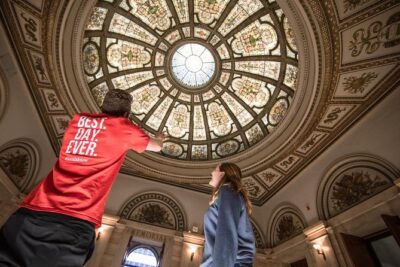 ★ 5.0Chicago in a Day: Food, History & Architecture Walking TourFrom $1001,153 reviews
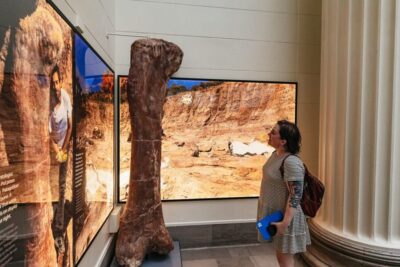 ★ 4.7Field Museum of Natural History Ticket or VIP TourFrom $29717 reviews
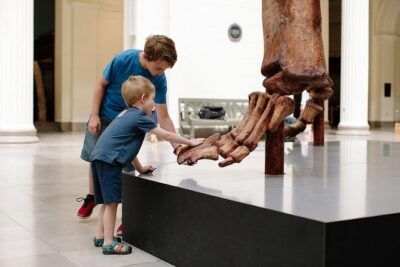 ★ 4.5Field Museum of Natural History Admission TicketsFrom $29489 reviews
 ★ 5.0Chicago Walking Tour: Historic Treasures of ChicagoFrom $35362 reviews
 ★ 5.0Historical and Architectural Chicago Fireboat River & Lake CruiseFrom $47246 reviews
 ★ 5.0Walkin’ with Colin: Chicago History-Mystery-Comedy-Tragedy TourFrom $44218 reviews
 ★ 5.0Chicago Walking Tour: A Walk Through TimeFrom $35181 reviews
 ★ 4.5Field Museum of Natural History All-Access PassFrom $41135 reviews
Browse the lists this tour appears in