
REVIEW · WALKING TOURS
Chicago Walking Tour: Must-See Chicago
Chicago teaches you fast when you walk it. I like that this 90-minute tour gives a tight overview of big-name buildings like the Wrigley Building and Tribune Tower, and I really like that Chicago Architecture Center galleries are included so you understand what you’re seeing. One catch: most stops are brief exterior views, so it’s more about orientation and photos than long interior exploring.
This is built for first-timers who want structure without feeling stuck to a script. The group max is 15, so you can ask questions and actually hear the answers, not just listen to a megaphone. You start and finish at 111 E Wacker Dr, which makes it easy to tack onto your day whether you’re using public transit or dealing with downtown parking.
The route moves through some of Chicago’s most recognizable design moments, from Spanish Colonial Revival details to skyline icons like John Hancock Center and Cloud Gate at Millennium Park. I also like that the plan works in winter and bad weather too, since you’re always close to shelter. Still, if Cloud Gate is closed for construction, your best bet is to be ready for exterior views and learning anyway.
In This Review
- Key things to know before you go
- A 90-minute architecture sampler for first-timers
- Starting at 111 E Wacker Dr: your shortcut to context
- Wrigley Building, the Riverwalk view, and Aqua Tower
- Tribune Tower and the Art Institute’s Modern Wing exterior
- John Hancock Center at 875 N Michigan Ave
- Millennium Park and Cloud Gate: where your photos land
- Price and value for $35: what you’re really paying for
- Who this walking tour suits best
- Should you book Must-See Chicago?
- FAQ
- How long is the Must-See Chicago walking tour?
- What’s included in the ticket price?
- Where does the tour start and end?
- Is food or drink included?
- Can I bring a pet or service animal?
- Can I get a refund if I need to cancel?
Key things to know before you go
- Small group size (max 15): easier questions and a calmer pace than big-bus style tours.
- Chicago Architecture Center galleries included: you start with context, then see the buildings in the real city.
- A fast orientation of the Loop: it’s designed to help you know where to return later.
- Iconic exteriors, not stop-by-stop interiors: plan for street-level views and quick photo stops.
- Weather-ready downtown walking: short segments keep it manageable, even when Chicago is doing Chicago things.
- No coat check or storage: bring layers, but don’t expect luggage help.
A 90-minute architecture sampler for first-timers
If Chicago is your first big city trip, you need two things: direction and a way to read the skyline. This tour gives both in a short time window, which is exactly why it sells out well when people plan ahead. At $35 for about 1 hour 30 minutes, the price makes sense because you’re not just walking past buildings—you also get admission to the Chicago Architecture Center galleries.
The format is straightforward. You’ll walk between major landmarks, and your guide gives narration throughout, helping you connect design choices to Chicago’s story. You won’t waste the first day asking what you’re even looking at.
What I like most is the balance. You get famous stops, but they’re chosen to teach you how Chicago architecture works—materials, styles, and how buildings relate to the river and the streets. That’s harder to do when you wander alone.
One practical note: the schedule is tight by design. Expect quick stops (think 5–10 minutes each) and move-on moments that keep the whole loop moving. If you’re the type who wants to linger at every corner, you may feel a little rushed—especially at the exterior photo points.
Chicago at sidewalk speed, more routes
Starting at 111 E Wacker Dr: your shortcut to context
The tour meets at the Chicago Architecture Center at 111 E Wacker Dr. Starting here is smart because it anchors your day in the right mindset. Instead of guessing at style and history, you get the gallery admission included, which helps you recognize themes before you hit the streets.
This also keeps logistics simple. You’re not hunting for a random spot on a far-away sidewalk. And because the activity ends back at the meeting point, you’re not stuck wondering how to get yourself out of the middle of downtown.
If you’re thinking about timing, it’s a good idea to show up a few minutes early. Downtown Chicago can be a challenge for driving and parking, so extra buffer time makes the day feel smoother. And since the tour is near public transportation, you can keep your plan flexible without needing your car.
Your guide is a professional, certified guide, and the narration is part of the package. That matters because architecture tours live or die on explanations—why a building looks the way it does, and how it reflects the city’s choices. Some guides may lean more on notes than storytelling, but the best approach for you is simple: ask a question. If your guide is a card reader, questions help pull them back into conversation.
Wrigley Building, the Riverwalk view, and Aqua Tower
This part of the walk is about getting your bearings and spotting styles fast. You start at the Wrigley Building, known for its Spanish Colonial Revival style and its white terra cotta facade. Even from the street, that kind of material choice makes a building feel intentional, not random.
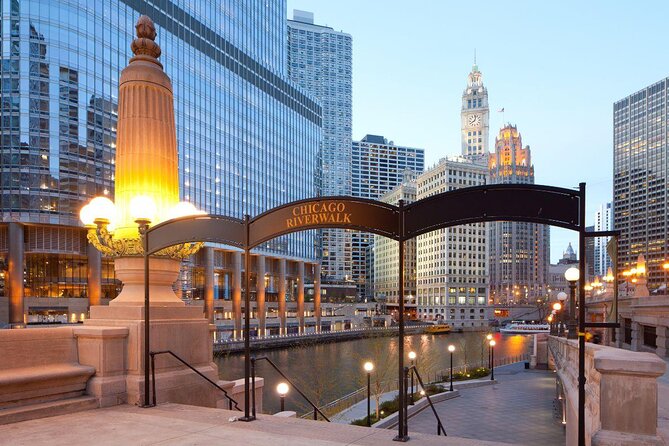
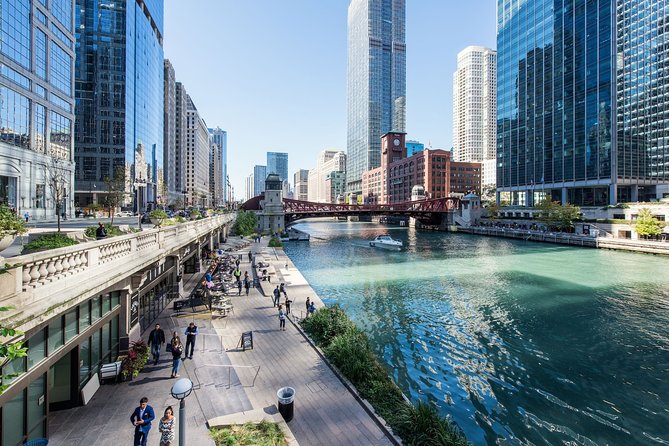
After that, you’ll get a view of the Chicago Riverwalk. This is one of the keys to understanding Chicago. The river isn’t just scenery—it’s part of how the city developed, and it helps explain why many downtown landmarks feel designed for both the city and the water.
Then comes Aqua Tower, which is where Chicago design starts getting truly fun to recognize. Completed in 2009, Aqua is tied to Lakeshore East and helped put that neighborhood on people’s radar. Architect Jeanne Gang’s name comes up because Aqua is the kind of building that makes people start looking at curves and balconies as more than decoration.
A practical tip here: bring your phone and get ready for quick composition changes. Stops are short, so you’ll want to be ready to move your feet a few steps to catch the best angle. Also, if the weather turns windy along the river, a quick layer adjustment will save you from ruining your photos.
- Chicago Architecture River Cruise
★ 5.0 · 15,756 reviews - Chicago River 90-Minute Architecture Tour
★ 4.5 · 9,629 reviews - Chicago River: 1.5-Hour Guided Architecture Cruise
★ 4.8 · 8,046 reviews
Tribune Tower and the Art Institute’s Modern Wing exterior
Next up is the Tribune Tower, designed by Howells & Hood and shaped by an international design competition. That competition detail is useful because it frames the building as a statement, not just an office tower. It’s the kind of story you’d miss if you only looked at the facade and kept walking.
Even if you’ve seen the Tribune Tower in photos, the real-life view helps you notice scale. It’s also a good moment to listen for how your guide connects competition-driven design to Chicago’s habit of showing off through architecture.
Then you’ll move toward the Art Institute of Chicago and view the exterior of the Modern Wing. This stop is brief, but it helps if you’re mixing art and architecture during your visit. Modern architecture can feel hard to interpret from a single street view, so having narration in the moment gives you a better sense of what to look for.
The Art Institute area is also where you can switch from architecture mode to city-exploration mode if you want. After this tour segment, you’ll know you’re near a museum district, not just a random museum you might wander into later.
The drawback to this portion is the same theme as the whole tour: short exterior time. If you want museum interior time, you’ll need to plan that separately. Still, this stop works as a preview.
John Hancock Center at 875 N Michigan Ave
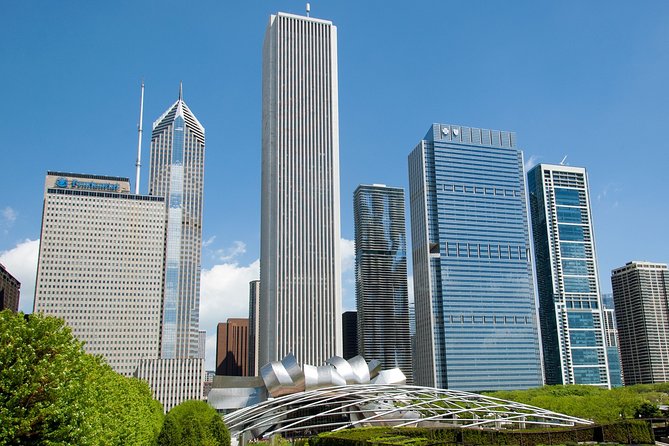
After the Art Institute exterior, you’ll see John Hancock Center, now listed at 875 N Michigan Avenue. This is a classic Chicago skyline moment, and the stop is designed to let you register the building’s shape quickly.
Even when the stop is only a few minutes, it’s a useful one. Seeing Hancock in person helps you connect what you’ve learned about design and massing to what you’ll keep noticing all over the city afterward. It’s the kind of building that makes you start thinking about how towers hold their presence against sky and street.
If you’re doing this tour early in your trip, Hancock is a good mid-route marker. It tells you the tour is covering the big skyline players, not only “pretty” architecture.
For your photos, watch for glare and sun direction. Downtown glass can reflect hard, and since the time is short, you want to catch a usable angle quickly rather than chasing it for 20 minutes.
Millennium Park and Cloud Gate: where your photos land
The final highlight is Millennium Park, with a stop at Cloud Gate, known as The Bean. Cloud Gate is listed as free at this stop, and it’s one of the main reasons people aim to end the tour here. It’s a nice payoff: after architecture talk, you get a famous sculpture that most people instantly recognize.
There’s one wrinkle to keep in mind. One guide experience I heard about included Cloud Gate being closed for construction, and the plan still felt worthwhile, but photos were different. That means you should treat this stop as an opportunity to learn and look—even if the exact view you hoped for isn’t available that day.
Weather also matters here because Millennium Park is open space. On a windy day, you’ll feel it more than along the narrower streets. On a sunny day, you’ll want to move quickly for the best reflections on the sculpture’s surface.
If you want to do a smart follow-up after the tour, Millennium Park is a great place to extend your walk on foot. You’ll already know where you are when the tour ends back at the starting point, and that makes it easier to build a second loop.
Price and value for $35: what you’re really paying for
At $35 per person for about 1.5 hours, this tour is priced like a quick, high-impact introduction. The biggest value lever is that admission to the Galleries of the Chicago Architecture Center is included. That takes away one more decision you’d otherwise face on your own.
You’re also paying for a guide who provides narration throughout and helps interpret what you’re seeing. Chicago has a lot going on, and if you’re new, it’s easy to walk past details that would have made your photos better and your memories stronger. A good guide gives you captions for your own eyes.
Small group size is another value factor. With a max of 15, you’re more likely to get your questions answered. That matters if you care about specific styles, eras, or what to prioritize later.
One thing to weigh: because stops are short, the tour won’t replace a museum day or an interior-heavy architecture experience. If you’re the type who loves sitting and reading labels, you’ll still want to schedule additional time after.
But if your goal is to get your bearings fast and understand why Chicago buildings look the way they do, this price-to-time ratio is strong.
Who this walking tour suits best
This tour fits you if:
- You’re in Chicago for a short stay and want an overview of major buildings quickly.
- You want your first architecture dose with enough context to explore independently afterward.
- You like guided stories while still having time to roam afterward.
It may feel less ideal if:
- You expect lots of indoor access at each stop. The plan is mostly exterior views.
- You need storage for luggage or strollers. There’s no storage listed, and there’s no coat check.
It’s also worth noting what you can bring. Service animals are allowed, and pets aren’t allowed. If you’re traveling with a group that needs extra help finding the route, the return-to-meeting-point setup is a helpful feature.
And if you’re worried about guide style, keep your expectations realistic. The tour depends on narration, and while guides can vary, your best tool is your own curiosity. Ask something specific, like what makes a facade style identifiable or how the river shaped the city.
Should you book Must-See Chicago?
I’d book this tour if you’re visiting Chicago for the first time and want a structured overview that doesn’t eat your whole day. It’s a smart way to learn what matters in Chicago architecture—before you start choosing neighborhoods, planning museum time, or deciding what to revisit.
Skip it only if your priority is deep interior access and long stops. For that, you’d want a different kind of experience built around ticketed entry and extended time in buildings. But for orientation plus a great taste of iconic landmarks, this one hits the sweet spot.
FAQ
How long is the Must-See Chicago walking tour?
The tour lasts about 1 hour 30 minutes.
What’s included in the ticket price?
Admission to the Galleries of the Chicago Architecture Center is included, along with narration by a professional, certified guide.
Where does the tour start and end?
It starts at Chicago Architecture Center, 111 E Wacker Dr, Chicago, IL 60601, and ends back at the same meeting point.
Is food or drink included?
No. Food and drink are not included.
Can I bring a pet or service animal?
Service animals are allowed. Pets are not allowed.
Can I get a refund if I need to cancel?
Yes. You can cancel for a full refund up to 24 hours before the experience’s start time, and cancellation is free. If you cancel less than 24 hours before, the amount paid is not refunded.
Chicago on Foot, Block After Block
- Chicago: Gangsters and Ghosts Walking Tour★ 5.0 · 7,155 reviews
- Chicago Favorites Ultimate Food and Walking Tour★ 5.0 · 1,962 reviews
- Chicago: Gangsters and Ghosts Guided Walking Tour★ 4.7 · 1,697 reviews
- Chicago in a Day: Food, History & Architecture Walking Tour★ 5.0 · 1,153 reviews
- Chicago’s Secret Interiors Architectural Walking Tour★ 5.0 · 635 reviews
The Wider Chicago Shortlist
- Chicago Architecture River Cruise★ 5.0 · 15,756 reviews
- Chicago River 90-Minute Architecture Tour★ 4.5 · 9,629 reviews
- Chicago River: 1.5-Hour Guided Architecture Cruise★ 4.8 · 8,046 reviews
- Chicago: Gangsters and Ghosts Walking Tour★ 5.0 · 7,155 reviews
- Chicago Architecture Center River Cruise aboard First Lady★ 5.0 · 5,536 reviews
The Ink Is Still Wet on These Chicago Reviews




Walking Tours, compared.
 ★ 5.0Gangsters and Ghosts Walking TourFrom $527,155 reviews
 ★ 5.0Chicago Favorites Ultimate Food and Walking TourFrom $841,962 reviews
 ★ 4.7Gangsters and Ghosts Guided Walking TourFrom $361,697 reviews
 ★ 5.0Chicago in a Day: Food, History & Architecture Walking TourFrom $1001,153 reviews
 ★ 5.0Chicago’s Secret Interiors Architectural Walking TourFrom $35635 reviews
 ★ 5.0Chicago’s Chinatown Food and Walking TourFrom $79600 reviews
 ★ 4.9Secret Interiors Architecture Walking TourFrom $35498 reviews
 ★ 5.0Chicago Gangster and Food Walking TourFrom $79471 reviews
Browse the lists this tour appears in