
REVIEW · CHICAGO LOOP & PEDWAY TOURS
Self-Guided Chicago Loop Tour Explore the City at Your Own Pace
Chicago’s Loop is easiest when you’re not tied to a group. This self-guided audio walk strings together major landmarks with GPS-triggered stories, so you can pause for photos or skip ahead when the wind off Lake Michigan gets punchy. I especially like that it’s paced for real sightseeing, not museum-in-a-hurry mode, and it feels like you’re getting a local script at every turn. The only real catch is you’ll need your own smartphone to download and listen.
What I like most is the setup: once you download, it works offline and the audio plays automatically based on where you stand. Another big win is the flexibility—one purchase can cover you on a day that fits your schedule, and you can take longer than the suggested time without anyone rushing you out the door. The main consideration is that, since it’s self-guided, you’ll want comfortable shoes and a little confidence finding your way on foot.
In This Review
- Key highlights worth planning for
- A $9.99 Loop tour that lets you skip the hurry
- How the offline GPS audio works (and why it matters)
- Route sense: from DuSable Bridge to Willis Tower
- Stop 0: The Art Institute vibe—American Gothic and a Beaux-Arts shell
- Buckingham Fountain: 150-foot drama and skyline backdrops
- Chicago Board of Trade Building: Art Deco trading legacy, lobby first
- Chicago Cultural Center: free art in a stained-glass dome world
- DuSable Bridge: connecting north and south with Chicago history
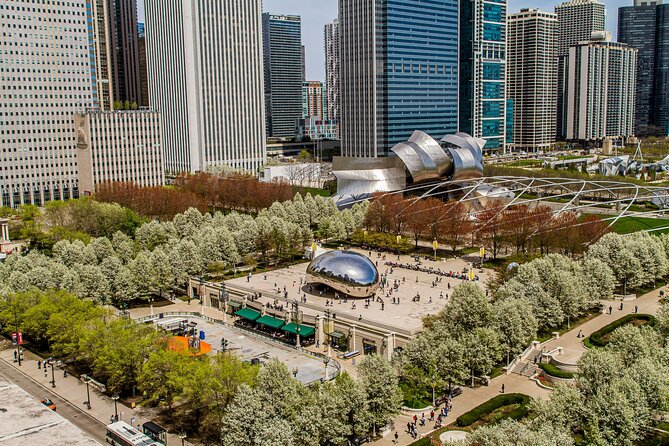
- Cloud Gate and Crown Fountain: the Bean and the playful cooldown
- Millennium Park anchors: Jay Pritzker Pavilion and the founders’ monument
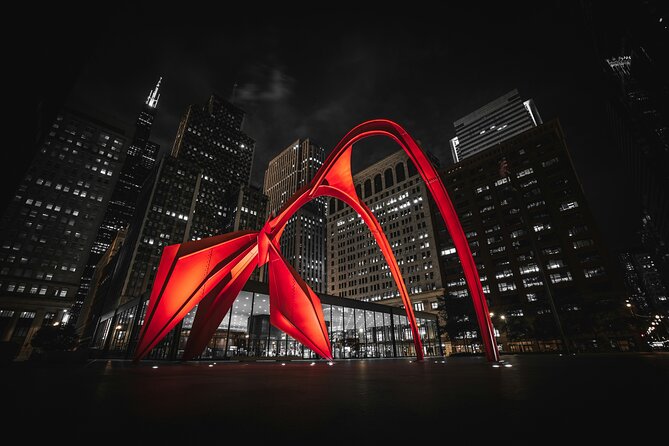
- Calder’s Flamingo: big color contrast in steel-and-glass territory
- Picasso, the Rookery, and that 1895 Chicago-school interior stop
- The skyline finish: Willis Tower and The Ledge
- Michigan Avenue Bridgehouse: inside the working bridge mechanism
- Vietnam Veterans Memorial and Chicago Theatre: reflection and spectacle
- Harold Washington Library Center, plus Miro’s Chicago for a colorful finale
- What this tour is best for (and who might not love it)
- Practical tips to get the most out of a self-guided Loop day
- Should you book this self-guided Chicago Loop tour?
- FAQ
- What is the price for the Self-Guided Chicago Loop Tour?
- How long does the tour take?
- Where does the tour start and end?
- Do I need to bring a smartphone?
- Is the audio guide available in English?
- Does the tour work without cell service?
- How do I listen to the tour content while walking?
- Is admission included for the stops?
- Can I use the ticket on another day?
- Is this a private experience?
Key highlights worth planning for
- Offline GPS audio: download ahead, then rely on GPS to trigger the guide without cell service
- Free admission at most stops: many top landmarks here are listed as free, so your money goes to time, not entry fees
- DuSable Bridge to Willis Tower: a natural north-to-south route that keeps you oriented in the Loop
- Architecture stops that pay off quickly: Art Institute style grand spaces, plus lobbies and public interiors with big “wow” value
- Icons packed into one walk: The Bean (Cloud Gate), Crown Fountain, Calder’s Flamingo, and more, all in sequence
- You control the pace: the tour length is flexible, and you can easily stretch it to 4–5 hours
A $9.99 Loop tour that lets you skip the hurry
At $9.99 per person, this is the rare city experience that feels like you’re paying for a smart walking guide rather than paying for attractions. Most of the stops are marked free, which matters because the Loop is full of “looks great from outside” sights unless you plan carefully. Here, you’re set up to see inside key places when they’re open and also keep moving between stops without paying again and again.
This isn’t a “one speed” tour. The recommended time is about 2 to 2.5 hours, but the format makes it easy to stretch longer if something grabs your attention—like a skyline photo at Cloud Gate or extra time in a landmark lobby. That flexibility is a real value booster, because you’re not stuck finishing on a timer.
The price also buys convenience. You get the Drives & Detours app, an audio guide, and unlimited use on your ticket, which is handy if you want to repeat parts later or fix a missed segment.
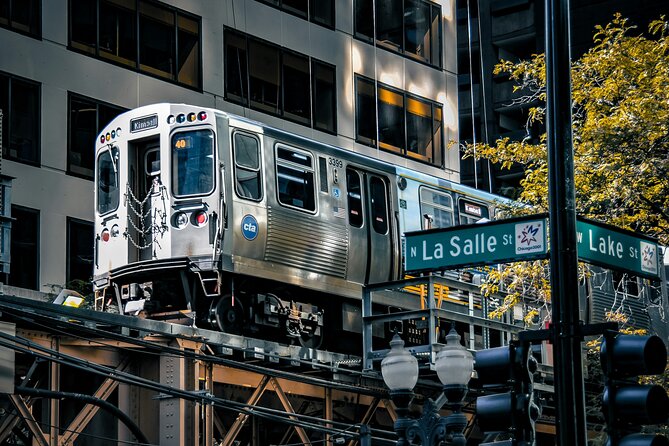
The Loop above ground and below it
How the offline GPS audio works (and why it matters)
This tour runs through the Drives & Detours app with an audio guide that plays based on your location. The important practical bit is that it works offline once downloaded, so you’re not gambling on spotty downtown reception while you’re standing in the exact spot you need.
Audio plays automatically when your phone detects your position, which helps you avoid the “pause the map every 30 seconds” problem. You also get GPS mapping, which keeps the sequence clear—useful in a dense grid where it’s easy to lose your place if you’re just winging it.
One more setup note: you’ll need your own smartphone, since it’s not included. Also, plan to download the app and the tour before you go, because the whole point is smooth offline listening.
Route sense: from DuSable Bridge to Willis Tower
You start at DuSable Bridge, 333 Michigan Ave, Chicago and you end at Willis Tower, 233 S Wacker Dr. That end point is convenient because you’re finishing near major transit options, plus you’re right where the skyline view payoff happens.
This north-to-south alignment also helps you feel “on track.” The Loop feels busy, but the riverfront landmarks and lake-facing views make it easier to remember where you are: bridge, fountain, cultural interiors, then icons in Millennium Park and beyond, and finally the big skyline finish.
Near public transportation is listed, which is helpful if you need to adjust timing. And because it’s a private activity, it’s just your group—no merging with strangers, no waiting for anyone else’s pace.
The whole city in one go, other formats
- Chicago City Tour with Architecture River Cruise Option
★ 5.0 · 705 reviews - City Cruises Chicago: Seadog Lakefront Speedboat Ride
★ 4.4 · 642 reviews - Chicago City Minibus Tour
★ 5.0 · 516 reviews
Stop 0: The Art Institute vibe—American Gothic and a Beaux-Arts shell
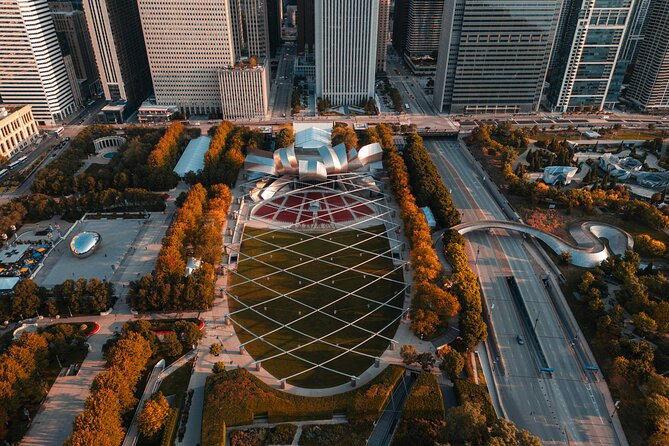
Early on, you’ll run into a museum space described as a home to one of the world’s finest art collections, including American Gothic, inside a striking Beaux-Arts building. Even if you don’t go deep into every gallery, this is one of those stops that sets your tone: big, important, and built to make you slow down for a few minutes.
The practical value here is timing. Starting with something iconic and visually powerful helps you get oriented before you hit the faster outdoor-photo sequence later. If you only have a short window, you can still get the “architecture + famous artwork” experience without committing to hours.
If you’re someone who hates decision fatigue, this stop is a good warm-up. You’ll know right away what you came for: Chicago art credentials and a grand interior.
Buckingham Fountain: 150-foot drama and skyline backdrops
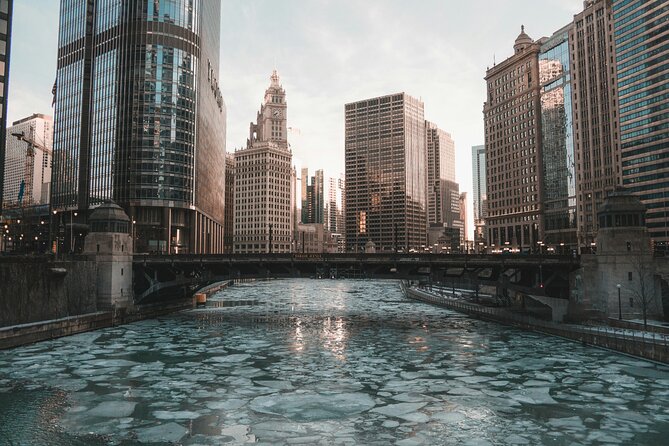
Next comes Clarence F. Buckingham Fountain, inspired by Versailles and one of the largest fountains in the world. The description calls out a central jet that shoots up to 150 feet, with choreographed water displays against the skyline.
This is a stop you’ll want to watch for a minute, not just photograph and move on. The fountain’s scale is what makes it special—small photos won’t do it justice, but stepping back for one or two wide shots can.
A small consideration: if you’re visiting in cooler months, you might find fountain conditions different than you expect. The tour description focuses on the spectacle, so treat this as a “spend a little time watching” stop rather than a quick glance.
Chicago Board of Trade Building: Art Deco trading legacy, lobby first
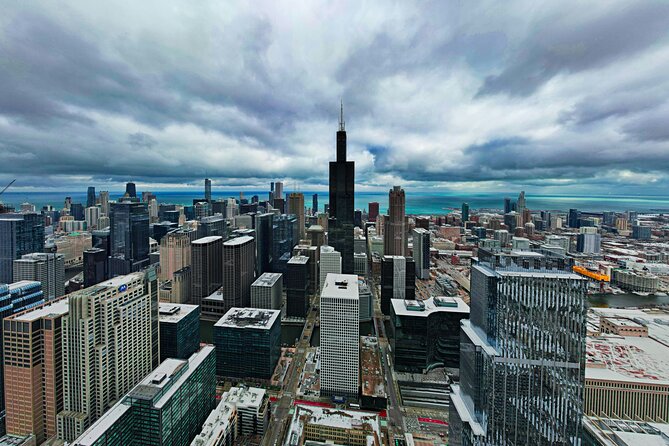
At the Chicago Board Of Trade Building, you’ll see an Art Deco tower crowned by a statue of Ceres, goddess of agriculture. The lobby is highlighted as a place where you can glimpse Chicago’s financial district past.
This is smart because it gives you history without demanding a long visit. In a short walk tour, lobbies are often your best “inside moment,” and this one is built for it.
If you’re into design details, look for the transition between the street’s energy and the formal indoor feel. Even without being a finance nerd, it’s an easy stop that turns the Loop into more than just a photo route.
Chicago Cultural Center: free art in a stained-glass dome world
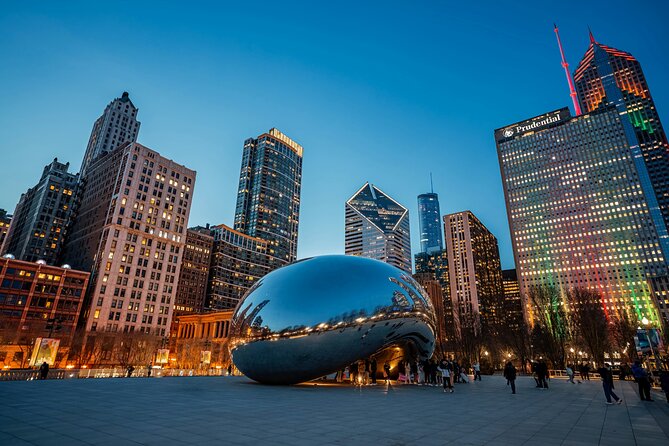
Then it’s the Chicago Cultural Center, formerly a library and now a free cultural hub. The big hook is the stunning stained-glass domes and the fact that it’s built for visitors who want a break from walking.
This stop is valuable because it breaks up the outdoor sequence without taking away your momentum. You get architecture, exhibits, and performances mentioned as possible offerings, so you can adapt your time inside depending on what’s on.
The downside is simple: if you’re trying to hit every single stop with no detours, this kind of free interior can eat a little more time than you planned. If you like quiet resets, though, it’s a great place to do exactly that.
DuSable Bridge: connecting north and south with Chicago history
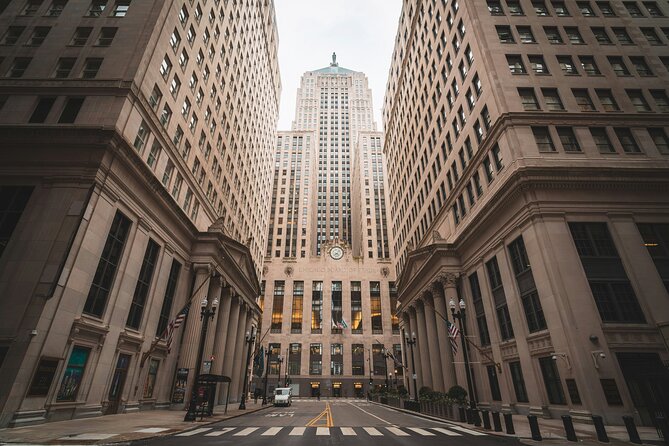
Crossing the DuSable Bridge brings in Chicago’s river story through the bridge’s own design. It’s described as a double-deck, double-leaf bascule bridge linking the city’s sides, with ornate towers honoring the city’s founder and moments from Chicago history.
This is one of those “you feel the city” moments. Standing on a bridge in Chicago means wind, views, and a sense that the river isn’t just a boundary—it’s a stage.
If you’re prone to slipping on cold metal steps or high-wind days, dress for the elements. The Loop is compact, but river crossings can feel sharper on the body than you expect.
Cloud Gate and Crown Fountain: the Bean and the playful cooldown
At Cloud Gate (the Bean), you’ll get the reflective sculpture that turns the skyline—and you—into art. Walk beneath the surface if you can; it’s built for that. This is one of the fastest photo stops in the city, but it’s also one of the most fun for repeat looks, because the reflections shift as you move.
Then you’ll hit Crown Fountain, with two glass block towers that project video portraits and spray water in summer. The key word here is interactive play—this is a place where the city feels light and human-sized.
I love that these two stops basically give you both moods: iconic reflection art, then a playful interactive moment. Just remember this is a short time window, so decide quickly if you’re taking one great shot or lingering for a few angles.
Millennium Park anchors: Jay Pritzker Pavilion and the founders’ monument
The route continues into Millennium Park energy, starting with the Jay Pritzker Pavilion designed by Frank Gehry. It’s described as a sweeping outdoor concert venue with dramatic steel ribbons and a state-of-the-art sound system.
Even if you’re not catching a performance, the pavilion works as a landmark you can’t miss once you see it. It’s the kind of structure that makes you understand why Chicago is serious about public architecture.
Close by is the Millennium Monument, described as a modern recreation of a 1917 colonnade honoring the city’s founders. It’s a graceful nod to Chicago’s classical past, but in a park setting that feels modern and walkable.
If you like mixing older-style civic symbolism with newer design, this is a strong pairing. It also helps you avoid the “all icons, no context” feeling.
Calder’s Flamingo: big color contrast in steel-and-glass territory
Calder’s Flamingo is a massive red sculpture that brings bold color into the heart of the Loop. The sweeping curves are described as a strong contrast against surrounding steel and glass, and honestly, that contrast is the whole point.
This is a stop I’d treat like a pause button. It’s not a “read a plaque” attraction; it’s a visual statement. Give it 3–5 minutes, take a couple photos at different angles, then keep moving.
The small drawback is that the best “wow” perspective might require finding your footing around pedestrians and crowds. If you’re visiting at peak times, build in a minute or two for positioning.
Picasso, the Rookery, and that 1895 Chicago-school interior stop
The route then includes The Picasso, an abstract steel sculpture gifted by Pablo Picasso. Its meaning is left to the imagination, which is a polite way of saying it invites you to interpret your own version rather than spoon-feeding one explanation.
Next is The Rookery Building, one of Chicago’s oldest standing high-rises. The description calls out a stunning light court redesigned by Frank Lloyd Wright, blending Romanesque and early skyscraper design.
Before The Picasso stop, there’s also an unnamed high-rise described as a 1895 Chicago School building with ornate terra cotta and a luminous interior rotunda, with mosaics telling the story of the city’s early explorers. If you see it along the way, that rotunda interior is exactly the kind of “short stop, big payoff” interior you want on a self-guided walk.
These interior moments are valuable because they make the Loop feel layered. You’re not just sightseeing outdoors; you’re stepping into spaces that explain how Chicago’s growth actually looked and felt.
The skyline finish: Willis Tower and The Ledge
The tour ends at Willis Tower, formerly described as once the tallest building in the world, with panoramic city views from the 103rd-floor Skydeck. Step onto The Ledge for the glass-floor thrill.
This is the moment where walking energy turns into a payoff. If you’re deciding whether to spend money or time, this is the place where you’ll feel the difference most between “seeing Chicago from street level” and “seeing Chicago from above.”
One consideration: weather can change everything up top. If it’s foggy or stormy, the view could disappoint even if the experience itself remains solid. Plan your expectations around seasonal skies.
Michigan Avenue Bridgehouse: inside the working bridge mechanism
Near the end, you’ll stop at a bridgehouse exhibit where you can climb inside a working space to see the gears that lift the Michigan Avenue Bridge. Exhibits explore the river’s role in Chicago’s growth.
This is a great choice for people who like practical engineering or who want a story that’s less about art and more about how Chicago functions. It also adds variety to a route full of visual icons.
If you’re short on time, this is the kind of stop where you can do a quick circuit and still learn something meaningful. Just follow the flow inside and check what’s open during your visit.
Vietnam Veterans Memorial and Chicago Theatre: reflection and spectacle
After the bridgehouse, you’ll come to the Vietnam Veterans Memorial Plaza, a peaceful riverside space with polished granite walls reflecting names and memories. It’s described as a quiet pause amid downtown bustle.
I like this stop because it resets you. After sculpture, fountains, and skyline drama, this is where you can shift gears into something more grounded.
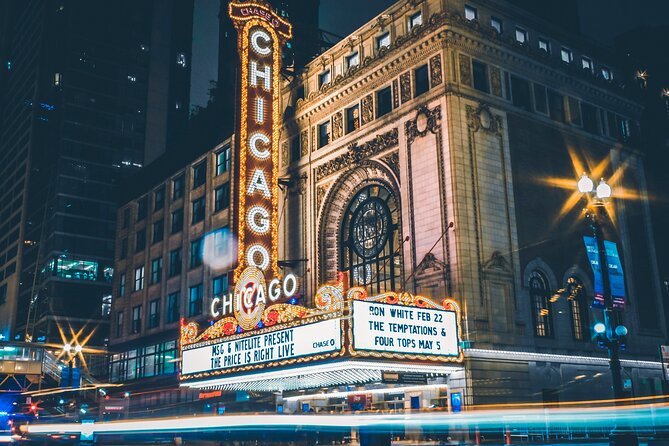
Then comes the Chicago Theatre, described as a 1921 venue with an iconic marquee and a lavish French Baroque interior. Even if you only glimpse the exterior, it signals that the Loop isn’t just about buildings—it’s about culture and performance.
If you’re someone who hates crowd crush inside theaters, you can keep it brief. But if you enjoy classic interiors, it’s worth giving it a few minutes.
Harold Washington Library Center, plus Miro’s Chicago for a colorful finale
Finally, you’ll reach the Harold Washington Library Center, topped with a sunlit glass atrium and featuring the Winter Garden as a serene escape. This is a calm, public-space stop that feels like a breather in the middle of big city movement.
Then you’ll end with Miro’s Chicago, a whimsical colorful sculpture by Joan Miró. It brings surreal play to the Loop with an abstract form that invites interpretation.
I love ending with art that’s playful. It keeps the last minutes from feeling like a checklist. You finish the walk with a memory that’s less about pressure and more about imagination.
What this tour is best for (and who might not love it)
This self-guided Loop walk is best for you if you like control. You set the pace, linger where you want, and you’re not waiting for anyone else’s timing. It works especially well for couples, friends, and solo travelers who are comfortable using a smartphone for navigation.
You’ll also like it if you want a “great hits” route where the stops are recognizable fast. It moves through the Bean, fountains, major public interiors, and a major skyline finish—so you get a strong return even in a limited time window.
It might not be ideal if you hate using apps or you don’t plan to bring a charged phone. Since it’s fully self-guided and relies on downloading the experience ahead of time, poor planning here can turn the day into frustration. Also, if you need step-by-step staff guidance, this isn’t that kind of tour.
Practical tips to get the most out of a self-guided Loop day
First, wear walking shoes and bring a layer. The Loop sounds compact, but the route includes bridges, river-adjacent areas, and lots of indoor/outdoor switching.
Second, download everything before you start. The tour is designed to work offline once downloaded, but that only helps if you prep.
Third, use short “photo windows.” The best strategy is to grab one wide shot, one close shot, and then move. You’ll feel like you saw more without feeling like you missed anything.
Finally, be honest about time. The suggested 2 to 2.5 hours is realistic if you keep stops tight, but it’s also easy to stretch to 4–5 hours if you add a little extra time in interiors.
Should you book this self-guided Chicago Loop tour?
Book it if you want a low-cost, high-impact Loop overview with offline GPS audio and plenty of free sights along the way. It’s a smart deal when you’re traveling with limited time but you still want to feel like you understood what you saw, not just photographed it.
Skip it if you don’t want to rely on your phone, or if you prefer a live guide to answer questions as you go. For most people, though, the mix of iconic landmarks, public interiors, and a flexible pace makes it a practical way to get serious Chicago sightseeing without a big ticket price.
FAQ
What is the price for the Self-Guided Chicago Loop Tour?
The tour costs $9.99 per person.
How long does the tour take?
It takes about 2 hours to 2 hours 30 minutes, approximately.
Where does the tour start and end?
It starts at DuSable Bridge, 333 Michigan Ave, Chicago, IL 60601, and ends at Willis Tower, 233 S Wacker Dr, Chicago, IL 60606.
Do I need to bring a smartphone?
Yes. A smartphone is not included, and you’ll need it to use the tour app and audio.
Is the audio guide available in English?
Yes, the tour is offered in English.
Does the tour work without cell service?
Yes. Once downloaded, it works entirely offline and you don’t need cell service.
How do I listen to the tour content while walking?
You download the Drives & Detours app, and the audio guide uses GPS-triggered playback automatically based on your location.
Is admission included for the stops?
The tour information lists admission as free for the listed sights.
Can I use the ticket on another day?
Yes. It’s described as flexible with unlimited access, and access never expires.
Is this a private experience?
Yes. It’s listed as private, so only your group participates.
The Full Chicago Sweep
- Delicious Donuts & City Sights: Chicago’s Original Donut Tour★ 5.0 · 1,389 reviews
- Chicago City Tour with Architecture River Cruise Option★ 5.0 · 705 reviews
- City Cruises Chicago: Seadog Lakefront Speedboat Ride★ 4.4 · 642 reviews
- Chicago City Minibus Tour★ 5.0 · 516 reviews
- City Cruises Chicago: Signature Lunch Cruise on Lake Michigan★ 4.0 · 348 reviews
The Wider Chicago Shortlist
- Chicago Architecture River Cruise★ 5.0 · 15,756 reviews
- Chicago River 90-Minute Architecture Tour★ 4.5 · 9,629 reviews
- Chicago River: 1.5-Hour Guided Architecture Cruise★ 4.8 · 8,046 reviews
- Chicago: Gangsters and Ghosts Walking Tour★ 5.0 · 7,155 reviews
- Chicago Architecture Center River Cruise aboard First Lady★ 5.0 · 5,536 reviews
Looping the Loop
- Chicago Loop District Food Tour with Deep Dish & Beef Sandwich★ 5.0 · 870 reviews
- Chicago Architecture Tour: Underground Pedway and the Loop★ 5.0 · 388 reviews
- Chicago: Underground Pedway & Downtown Secrets Walking Tour★ 4.7 · 268 reviews
- Chicago Walking Tour: Art Deco Skyscrapers Loop★ 5.0 · 138 reviews
- Chicago Loop Walking Tour★ 5.0 · 54 reviews
The Ink Is Still Wet on These Chicago Reviews




Chicago Loop & Pedway Tours, compared.
 ★ 5.0Chicago Loop District Food Tour with Deep Dish & Beef SandwichFrom $84870 reviews
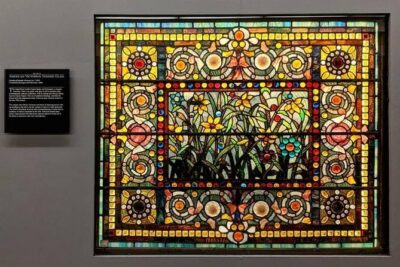 ★ 5.0Chicago Architecture Tour: Underground Pedway and the LoopFrom $35388 reviews
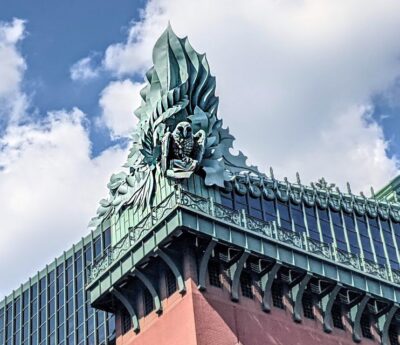 ★ 4.7Underground Pedway & Downtown Secrets Walking TourFrom $35268 reviews
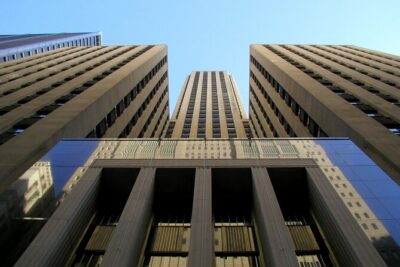 ★ 5.0Chicago Walking Tour: Art Deco Skyscrapers LoopFrom $35138 reviews
 ★ 5.0Chicago Loop Walking TourFrom $6054 reviews
 ★ 5.0Holiday Walking Tour: Underground Chicago via the PedwayFrom $6527 reviews
 ★ 5.0Walking Tour: Historic Chicago Pubs in River North and the LoopFrom $659 reviews
 ★ 5.0Chicago Loop: Art, Skyscrapers, Millennium Park & “The Bean”From $496 reviews
Browse the lists this tour appears in