
REVIEW · GANGSTER & MOB TOURS
The Devil in the White City: A Haunting History Tour
Chicago has ghosts with street addresses. This half-day tour stitches together 1893 World’s Fair landmarks and the legend of H.H. Holmes across some of Chicago’s most story-heavy neighborhoods. I like that it’s not just a scare-fest: you get real context for why this city’s Victorian era looked the way it did, and how those famous places became part of the mythology.
Second, I like the guide factor. When Tony is at the mic, the tone is funny, friendly, and sharp, and the stories land instead of turning into a long lecture. The only real drawback to keep in mind: the haunting theme is woven into a broader history route, so if you’re craving wall-to-wall Holmes drama, you may want to set expectations for a more balanced (sometimes quieter) blend of fair history and ghost lore.
In This Review
- Key takeaways
- A haunted Chicago route built around the 1893 World’s Fair
- Starting at Congress Plaza: why the meeting point matters
- Prairie Avenue Historic District and Fort Dearborn Massacre site
- U.S. Postal Service and the Murder Castle legend
- Jackson Park Japanese Garden: photos and quick ghost lore
- Jackson Park’s World’s Fairgrounds of 1893
- Union Stockyard Gate and the grit behind The Jungle
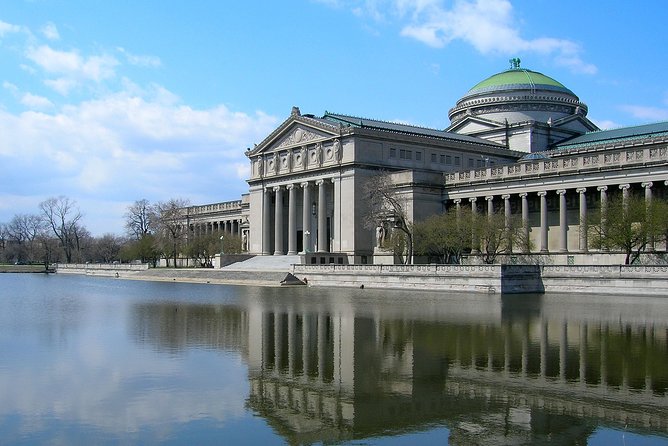
- Museum of Science and Industry: the fair building still here
- Timing, walking, and bus comfort: a realistic half-day plan
- Price and value: is $64 worth it?
- Who this tour suits best (and who should skip it)
- Should you book this Devil in the White City tour?
- FAQ
- How long is The Devil in the White City: A Haunting History Tour?
- What is the meeting point and start time?
- How much does the tour cost?
- Is there a mobile ticket?
- What places are included on the tour?
- Does the tour include walking?
- What is the group size limit?
- What happens if the weather is bad?
Key takeaways
- Bus + on-foot route lets you see more Chicago without doing a nonstop sidewalk marathon
- Guide Tony brings the stories with humor and clear pacing
- Murder Castle at the U.S. Postal Service is a standout stop where the legend lingers
- Jackson Park stops mix picture time with the fairgrounds story
- Prairie Avenue and Union Stockyards add Chicago grit and big-idea history beyond the ghost theme
A haunted Chicago route built around the 1893 World’s Fair
If you like Chicago for more than skyline photos, this tour is a strong fit. It frames the 1893 World’s Fair—also known as the World’s Columbian Exposition—as the backdrop for why certain neighborhoods were booming, why big money poured in, and why the city’s darker legends took root.
The format matters. You travel by bus while sightseeing, then switch to short guided walks at key spots. That mix helps you move efficiently through the South Side and museums area, and it keeps the tour from feeling like one endless bus ride or one long wandering hike.
And yes, there’s a ghost angle. The stops are chosen specifically to connect real locations with the popular The Devil in the White City style of storytelling, so the “haunting” is built into the geography. You’ll hear legends tied to particular buildings and sites—some spooky, some just plain strange—and you’ll also pick up how Chicago’s late-1800s growth shaped the city you see today.
Capone country, covered a few more ways
Starting at Congress Plaza: why the meeting point matters
You meet at the Congress Plaza Hotel & Convention Center at 520 S Michigan Ave, with a 2:00 pm start. It’s a convenient anchor point, and it sets the tone: this isn’t a tour that pretends Chicago history begins somewhere else. You’re starting in the middle of the city’s story, then heading outward to the fairgrounds and the neighborhoods tied to Chicago’s darker legends.
If you’re arriving from transit, you’ll likely find the location easy to reach. The tour also uses a mobile ticket, so you’re not stuck hunting for paper.
One practical tip: because this is a half-day, plan your day so you’re not racing to make the start time. A tight start helps the whole route flow, especially when you’re switching between bus and short walking segments.
Prairie Avenue Historic District and Fort Dearborn Massacre site
The first stop is the Prairie Avenue Historic District, a Victorian-era neighborhood that has layers. This is where you’ll hear the story not only of the late-1800s boom, but also earlier violence tied to the city’s founding era—specifically the Fort Dearborn Massacre site.
What I like about starting here is that it widens the lens fast. The tour isn’t just “1893 and ghosts.” You learn that Chicago’s history includes conflict and loss well before the World’s Fair made the city famous. That context makes the later stops feel less like separate attractions and more like a continuous timeline.
Time on site here is about 30 minutes, and admission is free as part of the experience setup. Expect a guided look at why this part of Chicago still looks the way it does, and why it matters for understanding the city’s later mythology.
The city after dark keeps talking, more tours
- Medieval Torture Museum Ticket with Audio Guide and Ghost Hunting
★ 5.0 · 962 reviews - Chicago Mobs and Haunts Walking Tour
★ 4.5 · 383 reviews - Haunted Chicago Booze and Boos Ghost Walking Tour
★ 5.0 · 266 reviews
U.S. Postal Service and the Murder Castle legend
The most talked-about stop—at least in terms of wow factor—is the site tied to H.H. Holmes: the former Murder Castle, now associated with the U.S. Postal Service location.
This is where the tour’s tone shifts into full-on legend. The building’s modern purpose doesn’t stop the story from sticking to the place. You’ll get ghost-lore framing that connects the legend to the workers and day-to-day normalcy of an unassuming post office.
Why this stop works even if you’re not a true horror fan: it’s the contrast. You’re standing at a place designed for routine, and the guide turns it into a narrative moment with a clear sense of place. The legend isn’t vague; it’s anchored to an address you can remember.
The time here is about 25 minutes, and again admission is handled as part of the tour with free entry.
Jackson Park Japanese Garden: photos and quick ghost lore
Next comes Jackson Park’s Japanese Garden, a practical gift for anyone who wants both story and scenery. It’s a great spot to pause, look around, and get photos before moving into the broader fairgrounds discussion.
The ghost stories at this stop are shorter, but that’s not necessarily a problem. It keeps the tour from getting too heavy too fast, and it gives you a visual reset before you return to the World’s Fair core.
This stop is around 15 minutes, and admission is free. If you’re bringing a camera, I’d treat this as your “take your time” moment—because later stops are more about landscape and historical framing than perfect photo spots.
Jackson Park’s World’s Fairgrounds of 1893
After the Japanese Garden, the tour moves into Jackson Park itself, the former World’s Fairgrounds of 1893. This is the heart of the World’s Fair portion, and it’s where the tour earns its theme.
Here’s what makes this stop valuable: it’s not just namedrop history. You’re learning why this location became such a big deal for the city’s image, and how that legacy continues to shape how people think about Chicago.
Also, Jackson Park isn’t just “a fair happened here.” It’s a place you can still walk through and look at, so the historical story has a physical footprint. Even if the tour keeps things guided and story-driven, the park setting helps you connect dots more quickly than reading alone.
Time is about 30 minutes, with free admission arranged.
Union Stockyard Gate and the grit behind The Jungle
Then you’ll head to the Union Stockyard Gate, another stop where the tour uses place to tell a larger story. This is where you learn about late 19th-century history and how Upton Sinclair’s work, The Jungle, was based on the real-world setting.
What I like here is that it adds weight beyond the fair and beyond the ghost legend. It reminds you that Chicago’s story isn’t just art and architecture; it’s also labor, industry, and the human cost of rapid growth.
This stop is shorter—about 10 minutes—but it’s a sharp change of pace. If you like history that has teeth (the kind that shaped public awareness), this is one of the tour’s better “learning moments” per minute.
Museum of Science and Industry: the fair building still here
The final major stop is the Museum of Science and Industry, where you’ll hear ghost stories tied to the last remaining building from the 1893 World’s Fair.
This is a smart closing point. Museums are built for interpretation, and the story fits. Even if you don’t spend a long time inside an exhibit, the guided framing helps you connect the fair era to something tangible that survived.
The time here is about 15 minutes, with free entry as part of the experience.
If you’re the type who likes to keep one foot in the present, this stop is a good reminder: Chicago doesn’t just remember its past. It repurposes parts of it, and the legends ride along for the ride.
Timing, walking, and bus comfort: a realistic half-day plan
This tour runs about 3 hours total, and it’s designed as a half-day experience. The pacing usually feels reasonable because you’re not doing constant long walks. You get bus time for moving between neighborhoods, plus guided foot time at the stops that need it.
That said, there is some walking. Wear comfortable shoes, especially if you’re doing this on a day when Chicago is hot, windy, or both. Also, check the weather: the experience requires good weather. If it gets canceled for weather, you’ll be offered a different date or a full refund.
A final logistics note that matters: the group max is 52 travelers. That’s not tiny, but it’s also not so big that you can’t hear the guide at key moments. Still, if you prefer a quiet, intimate tour, you might feel more “tour group” energy than “private detective walk.”
Price and value: is $64 worth it?
At $64 per person, this isn’t the cheapest way to spend an afternoon in Chicago—but it can be good value if you want structure.
Here’s why it’s worth considering:
- You’re paying for guided commentary, not just transit.
- You’re getting a bus tour that strings together multiple major sites efficiently.
- You’re also getting free admission ticketing built into the stops.
- You’re covering multiple anchors tied to both the World’s Fair and the H.H. Holmes legend, so you don’t have to plan a complicated route yourself.
If you already know Chicago history and you enjoy self-guided wandering, you could build your own route. But if you want the city connected for you—where the buildings fit into a story—this price starts to make sense fast.
One more value point: the tour is commonly booked about 24 days in advance on average. That suggests it’s not a random last-minute thing. If you want a spot on a specific afternoon, plan ahead rather than hoping.
Who this tour suits best (and who should skip it)
This tour is a strong match for:
- People who enjoy history with a narrative thread, not just dates
- Fans of the The Devil in the White City style of storytelling
- Anyone who wants a guided way to connect the World’s Fair sites to the Holmes legend
- Visitors who want to see multiple neighborhoods in one afternoon without overplanning
It may be less ideal for you if:
- You want nonstop ghost thrills with heavy horror focus from start to finish
- You dislike walking at multiple outdoor stops (even short ones)
- You’re looking for a pure museum visit—this is more street-and-building storytelling than exhibit time
The way it balances fair history, Chicago’s late-1800s development, and the Holmes-linked legends means it works best as a “learn and look” outing, not a “stay scared the whole time” experience.
Should you book this Devil in the White City tour?
I’d book it if you want an easy, organized way to connect Chicago’s World’s Fair legacy to one of the city’s most famous crime legends—while still getting real neighborhood context along the way. Starting at Congress Plaza, moving through Jackson Park, and ending at the Museum of Science and Industry gives you a clean geographic arc that’s hard to replicate well on your own in only a few hours.
I’d also book it if you care about the guide’s delivery. The strongest praise centers on Tony: stories that feel lively, friendly, and easy to follow. A good guide matters here because the tour’s payoff comes from how well the narrative links the places.
Before you decide, align expectations: this is a history-forward route with haunting themes threaded through. If you’re good with that mix, you’re likely to have a memorable afternoon—and come away with Chicago stories that stick long after the bus pulls away.
FAQ
How long is The Devil in the White City: A Haunting History Tour?
The tour lasts about 3 hours.
What is the meeting point and start time?
You meet at the Congress Plaza Hotel & Convention Center, 520 S Michigan Ave, Chicago, and the start time is 2:00 pm.
How much does the tour cost?
The price is $64.00 per person.
Is there a mobile ticket?
Yes, the tour uses a mobile ticket.
What places are included on the tour?
The tour includes the Prairie Avenue Historic District, the U.S. Postal Service area associated with the Murder Castle, Jackson Park’s Japanese Garden, Jackson Park itself, the Union Stockyard Gate, and the Museum of Science and Industry.
Does the tour include walking?
Yes. It includes a guided tour on foot and also travel by bus for sightseeing.
What is the group size limit?
The maximum group size is 52 travelers.
What happens if the weather is bad?
The experience requires good weather. If it’s canceled due to poor weather, you’ll be offered a different date or a full refund.
Since the Fire: Chicago History
- Chicago in a Day: Food, History & Architecture Walking Tour★ 5.0 · 1,153 reviews
- Chicago: Field Museum of Natural History Ticket or VIP Tour★ 4.7 · 717 reviews
- Field Museum of Natural History Admission Tickets★ 4.5 · 489 reviews
- Chicago Walking Tour: Historic Treasures of Chicago★ 5.0 · 362 reviews
- Historical and Architectural Chicago Fireboat River & Lake Cruise★ 5.0 · 246 reviews
What Haunts Chicago
- Chicago: Gangsters and Ghosts Walking Tour★ 5.0 · 7,155 reviews
- Chicago: Gangsters and Ghosts Guided Walking Tour★ 4.7 · 1,697 reviews
- Medieval Torture Museum Ticket with Audio Guide and Ghost Hunting★ 5.0 · 962 reviews
- Chicago Mobs and Haunts Walking Tour★ 4.5 · 383 reviews
- Haunted Chicago Booze and Boos Ghost Walking Tour★ 5.0 · 266 reviews
The Outfit Files
- Chicago: Gangsters and Ghosts Walking Tour★ 5.0 · 7,155 reviews
- Chicago Crime and Mob Bus Tour★ 4.5 · 3,186 reviews
- Chicago: Gangsters and Ghosts Guided Walking Tour★ 4.7 · 1,697 reviews
- Chicago: Mob and Crime Bus Tour★ 4.4 · 859 reviews
- Chicago Murder Mystery Tour★ 5.0 · 724 reviews
The Ink Is Still Wet on These Chicago Reviews




Gangster & Mob Tours, compared.
 ★ 5.0Gangsters and Ghosts Walking TourFrom $527,155 reviews
 ★ 4.5Chicago Crime and Mob Bus TourFrom $493,186 reviews
 ★ 4.7Gangsters and Ghosts Guided Walking TourFrom $361,697 reviews
 ★ 4.4Mob and Crime Bus TourFrom $49859 reviews
 ★ 5.0Chicago Murder Mystery TourFrom $35724 reviews
 ★ 5.0Chicago Night Crimes Tour by BusFrom $55478 reviews
 ★ 5.0Chicago Gangster and Food Walking TourFrom $79471 reviews
 ★ 4.5Chicago Mobs and Haunts Walking TourFrom $34383 reviews
Browse the lists this tour appears in