
REVIEW · HELICOPTER & FLYING EXPERIENCES
Chicago-Rosemont Indoor Skydiving with Two Flights
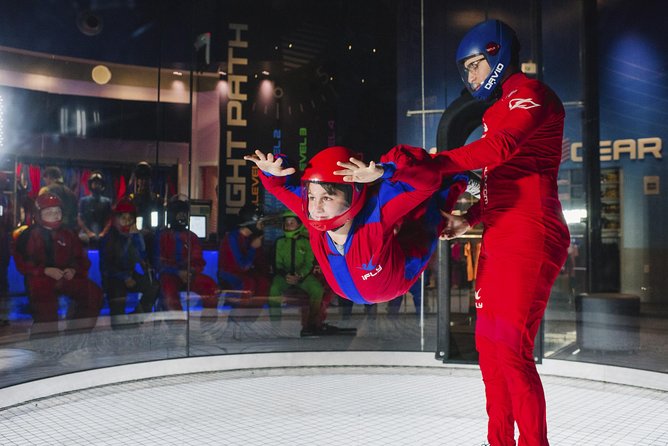
Flying without a plane feels unreal. At iFLY Chicago-Rosemont, indoor wind tunnel flying turns “sky dreams” into a safe, coached reality with no jumping involved.
I love that you get two 60-second solo sessions with one-on-one instructor support, not a vague group demo. I also like the built-in training: you’re guided through body position and airflow basics before you’re up in the tunnel.
One drawback: the actual flying is short. You’ll be amazed in 60 seconds, but if you’re chasing long airtime, this isn’t built for that.
In This Review
- Key Things I’d Remember Before You Go
- Chicago Rosemont Wind Tunnel Flying: What You’re Really Doing
- iFLY Check-In, Gear, and the Training That Makes It Work
- What to wear (so you don’t fight your own outfit)
- The Wind Tunnel Experience: What Flight Feels Like
- Breathing and motion: easier than you’d expect
- Instructor presence the whole time
- Two Flights in One Visit: Why the Second Run Matters
- Who This Is Best For (and Who Should Skip It)
- Health and weight restrictions (take these seriously)
- Price in Real Life: Is $131.25 a Good Deal?
- Real value tip
- Scheduling and Time on Site: How to Plan Your Day
- What You’ll Actually Get at the End
- Should You Book iFLY Chicago-Rosemont?
Key Things I’d Remember Before You Go
- Two solo flights let you improve on the second run instead of just trying once
- Certified instructor spotting means you’re not guessing your way through the basics
- Wall-to-wall airflow helps you stay stable while the wind ramps up
- A flight suit and goggles keep the experience standardized and safer
- Small-group sessions (up to six flyers in the chamber time) keep things personal and fast
Chicago Rosemont Wind Tunnel Flying: What You’re Really Doing
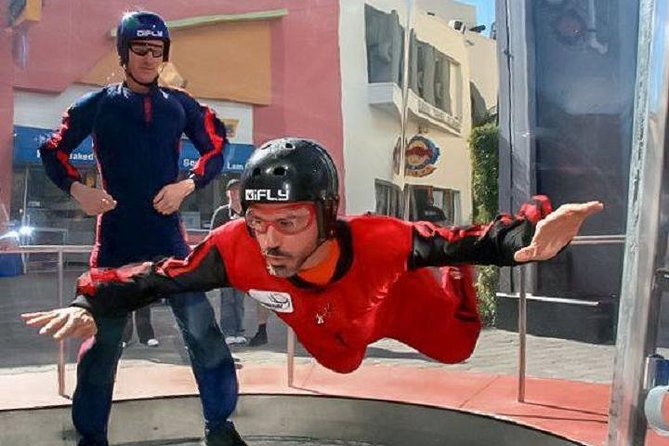
This is not skydiving from a plane. It’s indoor flight in a vertical wind tunnel that creates a stable cushion of air so you can “float” while the instructor helps you control your body position. You’ll start with training, then you’ll fly one-on-one in the wind chamber for two separate 60-second runs.
If you want the adrenaline of flight without weather delays or the stress of jumping, that’s the point. The whole experience is designed for first-timers who want to feel what it’s like to fly, quickly and safely.
The skyline from higher up, more flights
iFLY Check-In, Gear, and the Training That Makes It Work
Your visit begins at iFLY Chicago-Rosemont, where you check in, put on your gear, and take a specialized training session with an expert flight instructor. This matters more than you might think. Good tunnel flying is mostly body position, not “bravery.”
Before you step into the chamber, you’ll learn how to hold your body so you can float and stay stable as wind speed increases. You’ll also practice your basic flying position during the training, which helps your first flight feel less like chaos and more like a controlled challenge.
You’ll wear a flight suit over your clothes, and you’ll use goggles. The flight suit isn’t just for uniformity. Instructors are trained to grasp the suit handles for spotting if needed. Plan to remove loose jewelry and anything that could flap around, and empty your pockets.
What to wear (so you don’t fight your own outfit)
- Well-fitting, lace-up sneakers or running shoes
- Comfortable clothes, preferably pants and a shirt without a collar
- If you have long hair, braid it or wear it in a low bun
If you’re thinking about glasses: you can wear them, and larger goggles that fit over eyeglasses are available.
- Chicago Architecture River Cruise
★ 5.0 · 15,756 reviews - Chicago River 90-Minute Architecture Tour
★ 4.5 · 9,629 reviews - Chicago River: 1.5-Hour Guided Architecture Cruise
★ 4.8 · 8,046 reviews
The Wind Tunnel Experience: What Flight Feels Like
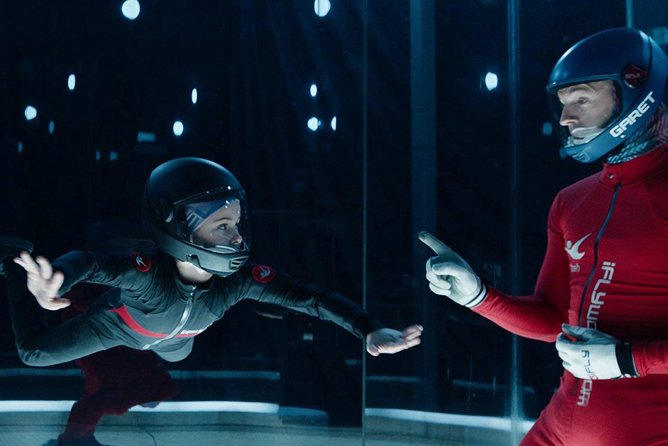
Once you’re in the enclosed flight chamber, a tunnel operator slowly increases wind speed until you and your instructor are airborne. The tunnel is built to produce a wall-to-wall column of air, and that stability is what prevents you from “falling” in the way people imagine skydiving feels.
During your first flight, you’ll feel wind pressure and a strong adrenaline hit. Wind speeds can reach 130 to 175 mph (209 to 282 kph), but the ramp-up is gradual. That gradual increase is key for first-timers—it helps your brain adjust to the sensation.
Breathing and motion: easier than you’d expect
You generally won’t need to hold your breath or adjust for some complicated airflow system. It’s described as similar to sticking your head out a car window while driving—wind in your face, then breathe normally through your nose or mouth.
Instructor presence the whole time
You’re not flying alone. You fly one-on-one with a certified flight instructor for your session, and they’re with you the entire time. That’s one of the biggest reasons this works for beginners who are nervous about “doing it wrong.”
In many sessions, instructors also do a short demo at the end, including tricks and moves that make everyone watching want another go. Names that have shown up in past experiences include Adam and Maddie/Maddison, so if you’re lucky enough to get an instructor with that kind of show-and-teach style, you’ll likely have a blast.
Two Flights in One Visit: Why the Second Run Matters
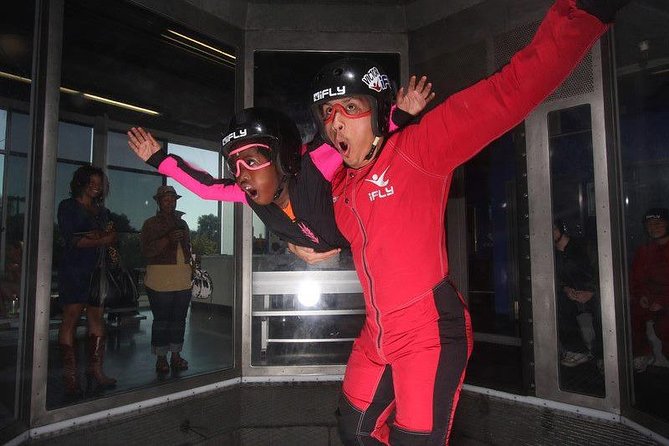
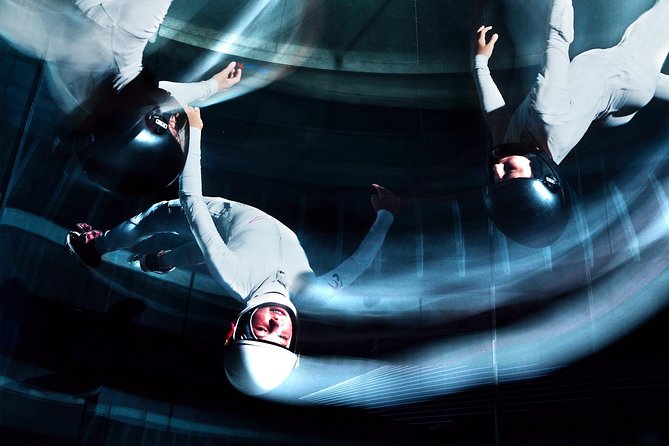
Each session includes up to six people in the overall session flow, but you fly one-on-one with the instructor in the chamber. Your experience includes two separate 60-second solo flights, so you don’t just take one shot and hope it clicks.
The second flight is where you usually feel the payoff. By then, you’ve already learned how the air pushes, how to control your body angle, and what to listen for from your instructor. Even if you’re a little shaky on the first run, the second is your chance to lock in the basics.
This is also the reason I think the experience works well for families and groups. It gives everyone something to talk about immediately—how it felt, what they fixed, and why the second flight seemed smoother.
Who This Is Best For (and Who Should Skip It)
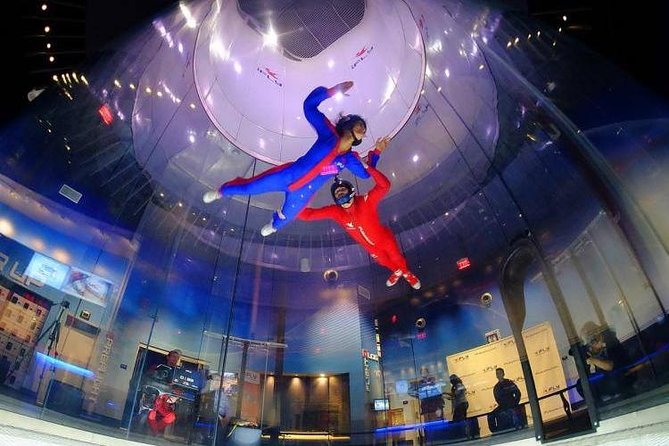
This is built for first-timers. No jump, no plane ride, and training is part of the package. That makes it a solid choice for:
- Kids (minimum age is 3, with guardian waiver rules for under-18)
- Teens and adults who want a safe, confidence-building thrill
- Birthdays and “try something new” trips
- People who want a physical challenge without major risk factors of outdoor sky sports
And you can bring others to watch. There’s an observation area, so friends and family can cheer without being strapped into gear.
Health and weight restrictions (take these seriously)
You won’t be able to fly if you have previous neck, back, heart, injuries, shoulder dislocations, are pregnant, or are wearing a hard cast. Also note the weight limits: iFLY will not accommodate flyers over 300 lbs, and those between 260 and 300 lbs may require extra local evaluation at check-in and may still face restrictions.
If you’re near the boundary or dealing with an injury concern, it’s worth confirming before you show up so you don’t gamble your day.
Price in Real Life: Is $131.25 a Good Deal?
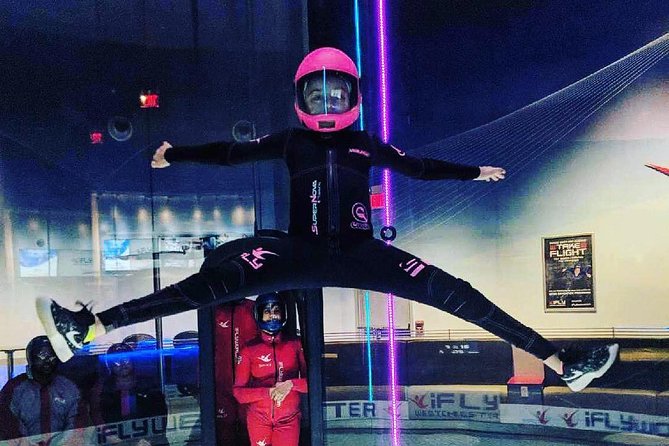
At $131.25 per person, you’re paying for a whole on-site experience: training, gear, instructor time, the wind tunnel slot, and even a flight achievement certificate. What makes it feel like better value than you might expect is the structure—you’re not paying just for 60 seconds. You’re paying for two coached solo sessions, plus the instruction that helps you enjoy both runs.
Is it a bargain? Not really. But compared to many thrill activities in cities like Chicago, this is one of the more straightforward “pay once, get the experience” options. You don’t need special outdoor conditions, and you don’t need to bring your own equipment or learn a long gear routine.
Real value tip
If you’re deciding for a group, consider booking for the person most eager to fly. Watching is fun, but the emotional payoff (the smiles, the shouting, the instant confidence) is for the person in the chamber. Many people come back for a second attempt because the second flight experience feels so different.
Scheduling and Time on Site: How to Plan Your Day
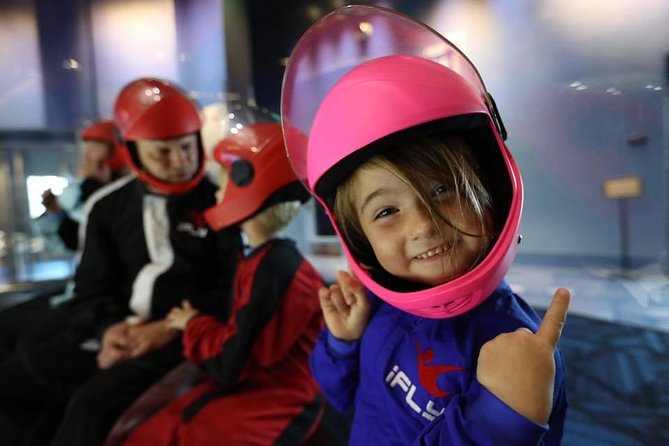
This experience takes about 75 minutes from start to finish, and you should plan around that. Some session timing can run longer depending on check-in flow and instruction, so give yourself a little cushion.
You can pick a start time that fits your schedule. Booking is typically done in advance (on average about 13 days out), so if your trip is fixed—weekends, holidays, or birthday plans—lock in your slot early.
Also, arrive on time. Your experience begins promptly, and check-in requires time for gear and training setup. A practical move: plan to show up 10–15 minutes early.
What You’ll Actually Get at the End
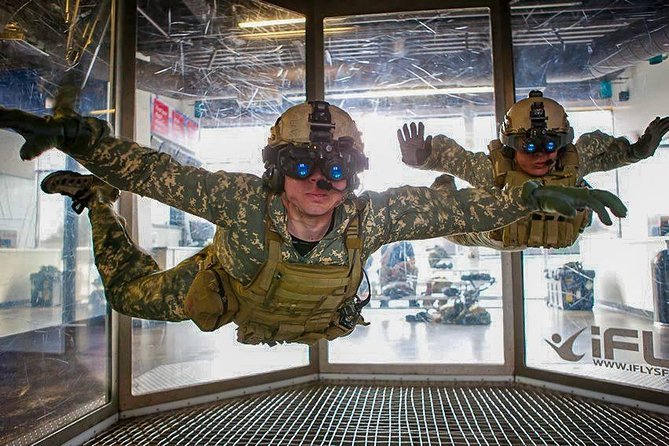
You don’t just leave with photos (though you’ll have plenty of them). You’ll get a certificate of flight achievement, which is a fun keepsake, especially for kids and first-time flyers.
That keepsake matters because indoor wind tunnel flying can feel almost too easy at the start—until you’re actually in the air. The certificate is a nice reminder that you really did the work: training, suit-up, instructor coaching, and two full solo flights.
Should You Book iFLY Chicago-Rosemont?
Book it if you want a safe way to try flight in Chicago without a complicated learning curve or outdoor variables. It’s especially good for families and first-timers because the training + two solo flights + instructor spotting combo helps nervous people feel in control fast.
Skip it (or at least confirm first) if you fall into the restrictions: pregnancy, certain injuries, shoulder dislocations, hard casts, or weight above the stated limits. Also, if you’re hoping for a long, hours-long sky-sensation, remember the flight time is 60 seconds per run.
If you match the “first-time thrill” profile, this is one of those experiences that turns into a story the whole group remembers—and likely talks you into coming back for another round.
The Wider Chicago Shortlist
- Chicago Architecture River Cruise★ 5.0 · 15,756 reviews
- Chicago River 90-Minute Architecture Tour★ 4.5 · 9,629 reviews
- Chicago River: 1.5-Hour Guided Architecture Cruise★ 4.8 · 8,046 reviews
- Chicago: Gangsters and Ghosts Walking Tour★ 5.0 · 7,155 reviews
- Chicago Architecture Center River Cruise aboard First Lady★ 5.0 · 5,536 reviews
Chicago from Altitude
- Flyover in Chicago★ 5.0 · 486 reviews
- Flyover in Chicago: An Immersive Flying Theatre Experience★ 4.8 · 362 reviews
- Private 45-Minute Chicago Skyline Helicopter Tour★ 5.0 · 126 reviews
- Chicago Lincoln Park Indoor Skydiving with Two Flights★ 4.5 · 67 reviews
- Chicago: Helicopter Tour of Chicago Skyline★ 4.6 · 38 reviews
The Ink Is Still Wet on These Chicago Reviews




Helicopter & Flying Experiences, compared.
 ★ 5.0Flyover in ChicagoFrom $38486 reviews
 ★ 4.8Flyover in Chicago: An Immersive Flying Theatre ExperienceFrom $38362 reviews
 ★ 5.0Private 45-Minute Chicago Skyline Helicopter Tour126 reviews
 ★ 4.5Chicago Lincoln Park Indoor Skydiving with Two FlightsFrom $13667 reviews
 ★ 4.6Helicopter Tour of Chicago SkylineFrom $18838 reviews
 ★ 4.5Chicago Helicopter 10-Minute Tour for up to Three Passengers32 reviews
 ★ 4.5Chicago Helicopter 25-Mile Tour for up to Three Passengers11 reviews
Browse the lists this tour appears in