
REVIEW · CHICAGO RIVER TOURS
Architecture & History Guided Tour along the Chicago Riverwalk
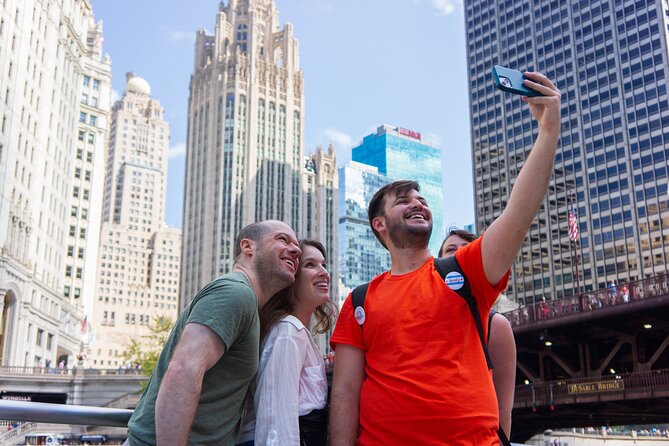
Chicago’s river has a way of teaching fast. This guided walk turns the Riverwalk into a simple route you can actually remember, with stops that mix architecture and history in about two hours. You’ll move from famous landmarks to quieter corners where the river still feels like a working corridor.
What I like most is how clearly the guide connects what you see to why it matters, so you’re not just collecting photos. I also liked the very practical pacing: short photo-and-learn stops (often around 5–20 minutes) that keep you from getting tired before the best views. Plus, our guide Kathryn brought the kind of city-story clarity that makes the details stick.
One consideration: this is a walking tour with a lot of points packed into a tight time window. If you prefer long, slow wandering and heavy museum time, you might want to pair it with extra Riverwalk time after the tour.
In This Review
- Key highlights you’ll feel on the walk
- Why This Chicago River Architecture Tour Works Fast
- How the 2-Hour Loop Works from 1 W Wacker Dr
- Chicago Riverwalk: Trade History, River Views, and Easy Photo Energy
- Fort Dearborn Grounds: Military Memory in a City That Grew Up Fast
- Marina City (The Corn Cobs) Twice: Cylinders, Views, and a Lucky Re-Visit
- Tribune Tower and Centennial Fountain: Turning Icons Into Landmarks
- St. Regis and 455 Cityfront Plaza Dr: Newer Architecture Along the Same Waterline
- Chicago River Walkthrough Moment, Jewelers Building, and AMA Plaza
- Price and Value: What You’re Really Buying on This Tour
- Should You Book This Chicago River Architecture Tour?
- FAQ
- How long is the architecture and history guided tour?
- Where does the tour start and what is the meeting point?
- Where does the tour end?
- What language is the tour offered in?
- Do I need admission tickets for the stops?
- Is the tour group size limited?
- What is included in the tour?
- Is free cancellation available?
- Are service animals allowed?
Key highlights you’ll feel on the walk
- A focused 2-hour route with quick, manageable stops along the Chicago River
- Free admission at every stop, so your value comes from the guide and the sequence
- Marina City views twice, including the closer look at the cylindrical towers people call corn cobs
- Real landmarks, not just street scenes, from Tribune Tower to AMA Plaza
- Local, professional guidance in English, with a small group size (max 18)
Why This Chicago River Architecture Tour Works Fast
This tour is built for people who want context without drowning in facts. You’re walking a classic corridor, but the guide keeps the story moving: what the river was doing, what the buildings were built to represent, and how modern Chicago reshaped itself along the water.
I like that the experience is straightforward: you get a professional local guide, a mobile ticket, and an easy-to-follow plan. It also feels lively without turning into a chaotic chase for selfies, because the timing is broken into short segments.
The small group size matters, too. With a maximum of 18 travelers, you’re more likely to hear the guide clearly and ask a quick question without feeling like you’re interrupting a crowded train.
Back on the green river, more ways to float it
How the 2-Hour Loop Works from 1 W Wacker Dr
The tour starts at 1 W Wacker Dr and runs about 2 hours total. The time keeps you in motion, but it’s not so long that you’re stuck rushing everything at once.
You’ll also end at Nicholas J. Melas Centennial Fountain (400 N McClurg Ct). That’s a good detail if you’re planning lunch or continuing sightseeing afterward, because you finish right in the same River-adjacent zone rather than getting deposited in an unrelated neighborhood.
Since the stops include admission ticket free viewing, you’re not spending your limited time waiting for ticket lines. In practice, that means your visit time stays focused on learning and photos, rather than logistics.
Also note: it’s offered in English, and the meeting location is near public transportation. If you’re hopping between museums and neighborhoods that day, this route fits neatly into a standard Chicago itinerary.
Chicago Riverwalk: Trade History, River Views, and Easy Photo Energy
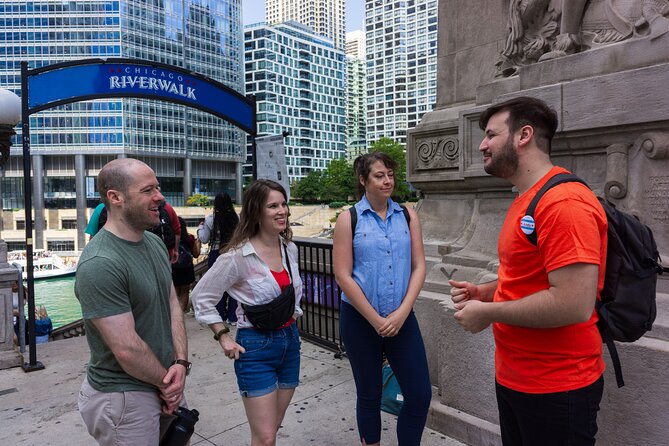
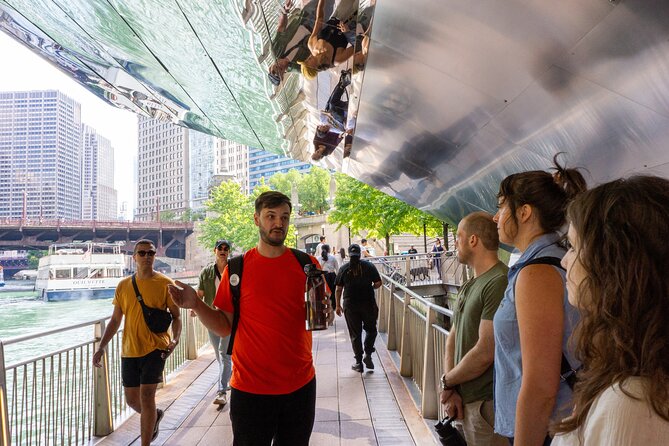
Your first stop is the Chicago Riverwalk, where the story begins at the water’s role in trade. The river is described as still a hub of commerce since the late 1700s, and the guide uses that to frame what you’re seeing now: celebration, movement, and buildings that face the water for a reason.
This is where you’ll get your bearings fast. Before you hit the more specific architectural icons, you’re learning how to read the river as part of the city’s life, not just a backdrop.
From a practical standpoint, the Riverwalk stop is about 20 minutes, which is long enough to take a few photos and still absorb the guide’s points. If you’re someone who usually loses attention at “orientation stops,” this one stays useful because it’s setting up the entire route.
If you’re visiting in busy times of day, the riverfront can feel crowded. I’d treat this as the part of the tour where you keep your eyes up for views and your feet steady, then settle into the tighter landmarks afterward.
From the fire of 1871 forward, more history
- Chicago in a Day: Food, History & Architecture Walking Tour
★ 5.0 · 1,153 reviews - Chicago: Field Museum of Natural History Ticket or VIP Tour
★ 4.7 · 717 reviews - Field Museum of Natural History Admission Tickets
★ 4.5 · 489 reviews
Fort Dearborn Grounds: Military Memory in a City That Grew Up Fast
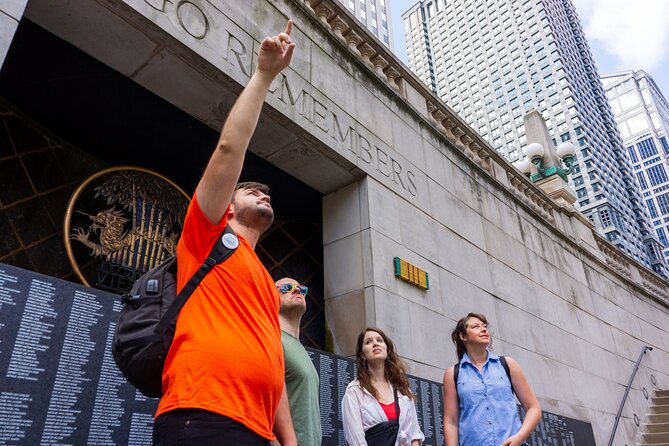
Next comes Battle Of Fort Dearborn, timed at about 20 minutes. This stop shifts the tone from commerce and strolling views to how Chicago remembers conflict and early military presence.
I like this contrast because it prevents the tour from becoming only “pretty buildings.” Even if you’re not a history fanatic, the point here is simple: Chicago’s architecture and growth didn’t appear out of nowhere. The river carried people and power, and the city’s story includes conflict as well as trade.
You’re not stuck in a formal exhibit-style pace. The tour keeps it walking-focused, with the guide turning the ground you’re standing on into a narrative anchor for later architectural landmarks.
The only downside is that history stops can feel more conceptual than visual. If you’re hoping for an experience that’s mostly structures and skyline shots, you may want to mentally treat this as the “context chapter” before the architecture icons show up.
Marina City (The Corn Cobs) Twice: Cylinders, Views, and a Lucky Re-Visit
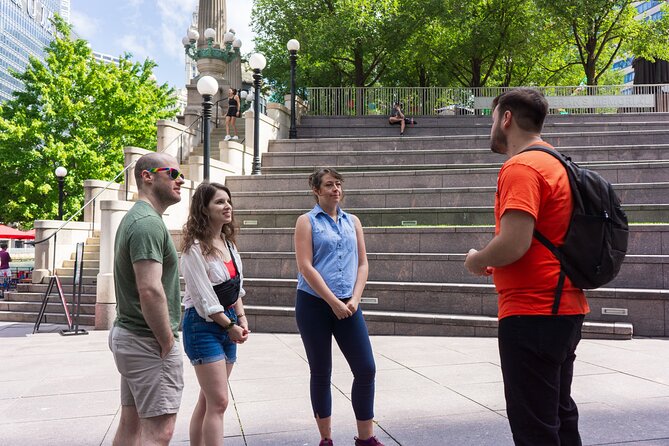
Then you hit Marina City, also around 20 minutes at one point, and you return again later for a closer look. That second Marina City stop is only about 5 minutes, but it’s a smart use of time: you see the full shapes first, and then you come back for detail.
What makes Marina City easy to recognize is the form. These are famous cylindrical residential skyscrapers, often called the corn cobs. Even without extra architectural jargon, the guide helps you look at these as a design choice that creates an instant skyline identity along the river.
I like the way the schedule uses repetition. You’ll get one full viewing window to take in proportions, then a shorter re-check later in the walk. By the time you return, your brain already knows what you’re supposed to notice.
In practical terms, this is also a good photo moment. Bring your phone up early, but also slow down for one or two angles where the cylinders look clean against the river line. If you’re with a group, don’t be afraid to step slightly to the side—this stop is famous enough that you’ll find good photo sightlines quickly.
Tribune Tower and Centennial Fountain: Turning Icons Into Landmarks
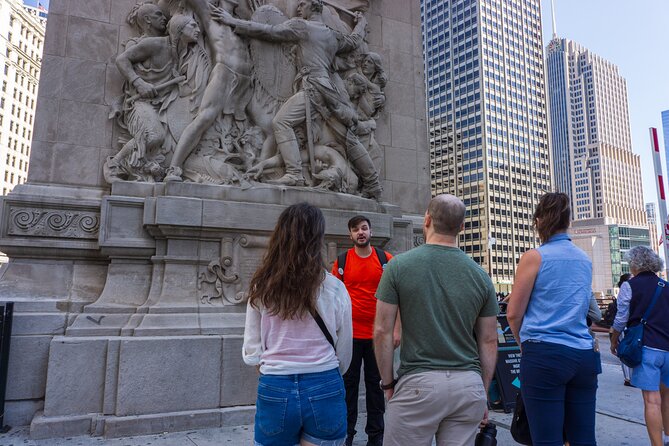
After Marina City, the tour moves to Tribune Tower for about 5 minutes. This is a neo-Gothic centerpiece, and it’s tied to the Chicago Tribune as a newspaper home. The guide’s job here is to point out how the building works as a media symbol, not just an old-looking structure.
Even in a short stop, a landmark like this is valuable because you can spot it later from a distance. Once you’ve been shown what to notice, you’ll likely recognize it on your own walk back through the area.
Next up: Centennial Fountain And Water Arc, also around 5 minutes. This stop is built around commemoration—waters designed to mark significant milestones in Chicago’s history. I like that the guide frames fountains as more than decoration. Even if you’re not tracking every year of local history, you’ll understand why water, scale, and public space were chosen.
Because you finish at Nicholas J. Melas Centennial Fountain, you’ll also get the advantage of revisiting the same zone at the end. That makes it easier to remember where you are and what you just learned, instead of feeling like the tour ends on a random side street.
St. Regis and 455 Cityfront Plaza Dr: Newer Architecture Along the Same Waterline
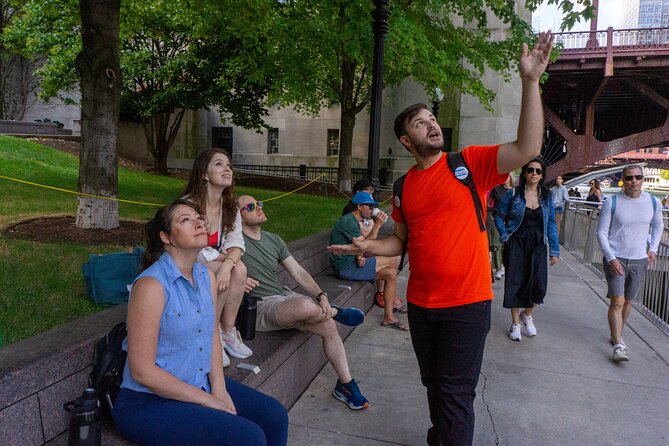
A few quick landmarks follow, each about 5 minutes. You’ll see The St. Regis Chicago, described as one of the city’s newest luxury additions to its architectural landscape, and then 455 Cityfront Plaza Dr, noted for its Art Deco-inspired design and as a modern media center.
This is a smart part of the route because it shows how Chicago keeps upgrading itself along the river. The story isn’t stuck in the past; it’s about layers, with new buildings responding to old energy and old routes.
The short duration at each stop is also helpful. If you’re tired, you still get to see variety without feeling stuck at one location too long. If you’re energized, you can use the short stops to take clean photos and move on quickly.
One practical note: in concentrated downtown areas, you may be fighting wind off the water. If you’re going at a cooler time of year, dress for it. Those five-minute stops can still feel longer if you’re cold.
Chicago River Walkthrough Moment, Jewelers Building, and AMA Plaza
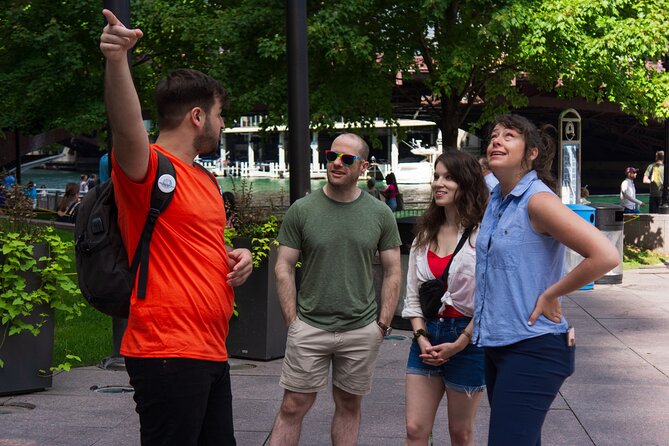
Midway through, you’ll spend about 10 minutes at Chicago River, with the guide explaining the river’s role in the city’s development. This is the part where the earlier trade framing comes back in a more direct “how the city grew” way.
Then you’ll hit Marina City again for about 5 minutes, and after that the tour goes to Jewelers Building (about 5 minutes). This one is tied to architecture connected to the diamond district—again, a reminder that different kinds of business lined the same river corridor.
Finally comes AMA Plaza at about 5 minutes. It’s described as minimalist and connected to one of the pioneering masters of modern architecture. I like this stop because it forces a different way of looking at the city. Instead of only celebrating big ornate landmarks, you also learn to notice how simplicity can still feel intentional and powerful.
If you tend to skip modern architecture because it doesn’t look “old,” this is a useful correction. Modern design can read as quiet until the guide points out what’s being emphasized.
Price and Value: What You’re Really Buying on This Tour
There’s no ticket feeling here for the stops themselves, since each viewing point is listed as admission ticket free. That means your money goes toward the guide, the route planning, and the way the story is organized from start to finish.
For value, I like that the tour includes:
- A professional local tour guide
- A structured 2-hour walk along the Riverwalk
- An intentionally photo-friendly riverfront experience
Also, the mobile ticket and confirmed details help you avoid fiddly day-of stress. You’re not hunting for multiple timed entry passes or competing to get into attractions during the limited time you have.
Since the tour limits group size to 18, you get a better shot at actually hearing the guide and not just standing in a moving crowd.
If you’re comparing this to piecemeal self-guided walks, the biggest difference is that you’re getting an ordered explanation. Without that, you can absolutely enjoy the same sights, but you’ll likely miss the connections that make them more memorable.
Should You Book This Chicago River Architecture Tour?
Book it if you want a high-signal walk: architecture, history, and river context in one continuous route. It’s especially appealing if you like learning that’s anchored to what you can point at—Riverwalk first, then icons like Tribune Tower, then newer design along the water, and finally a modern design stop at AMA Plaza.
Skip it (or pair it with extra time) if you hate fast-paced sight visits. The schedule moves quickly by design, and you’ll only get short windows at the landmarks that many people spend much longer photographing or exploring independently.
If you do book, here’s how I’d make it pay off: take a few minutes right at the start to get your orientation on the river, then focus on one thing per stop (design style, purpose, or the story link the guide is making). That keeps you engaged even when each stop is brief.
FAQ
How long is the architecture and history guided tour?
The tour lasts about 2 hours.
Where does the tour start and what is the meeting point?
It starts at 1 W Wacker Dr, Chicago, IL 60601, USA.
Where does the tour end?
The tour ends at Nicholas J. Melas Centennial Fountain, 400 N McClurg Ct, Chicago, IL 60611, USA.
What language is the tour offered in?
The tour is offered in English.
Do I need admission tickets for the stops?
The stops listed for this tour are admission ticket free.
Is the tour group size limited?
Yes. The maximum group size is 18 travelers.
What is included in the tour?
It includes a professional, local tour guide and a guided 2-hour walk along the Chicago Riverwalk.
Is free cancellation available?
Yes. You can cancel up to 24 hours in advance for a full refund.
Are service animals allowed?
Yes, service animals are allowed.
The Wider Chicago Shortlist
- Chicago Architecture River Cruise★ 5.0 · 15,756 reviews
- Chicago River 90-Minute Architecture Tour★ 4.5 · 9,629 reviews
- Chicago River: 1.5-Hour Guided Architecture Cruise★ 4.8 · 8,046 reviews
- Chicago: Gangsters and Ghosts Walking Tour★ 5.0 · 7,155 reviews
- Chicago Architecture Center River Cruise aboard First Lady★ 5.0 · 5,536 reviews
Since the Fire: Chicago History
- Chicago in a Day: Food, History & Architecture Walking Tour★ 5.0 · 1,153 reviews
- Chicago: Field Museum of Natural History Ticket or VIP Tour★ 4.7 · 717 reviews
- Field Museum of Natural History Admission Tickets★ 4.5 · 489 reviews
- Chicago Walking Tour: Historic Treasures of Chicago★ 5.0 · 362 reviews
- Historical and Architectural Chicago Fireboat River & Lake Cruise★ 5.0 · 246 reviews
Still on the Chicago River
- Chicago Architecture River Cruise★ 5.0 · 15,756 reviews
- Chicago River 90-Minute Architecture Tour★ 4.5 · 9,629 reviews
- Chicago River: 1.5-Hour Guided Architecture Cruise★ 4.8 · 8,046 reviews
- Chicago Architecture Center River Cruise aboard First Lady★ 5.0 · 5,536 reviews
- Chicago: Architecture River Cruise Skip-the-Ticket Line★ 4.8 · 4,325 reviews
The Ink Is Still Wet on These Chicago Reviews




Chicago River Tours, compared.
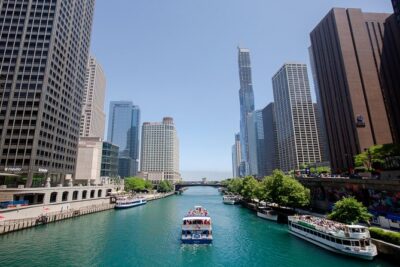 ★ 5.0Chicago Architecture River CruiseFrom $3915,756 reviews
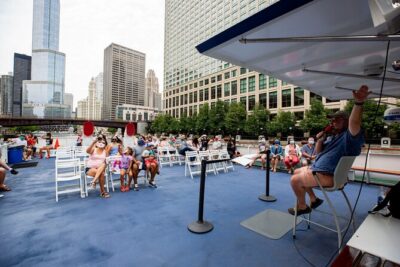 ★ 4.5Chicago River 90-Minute Architecture TourFrom $459,629 reviews
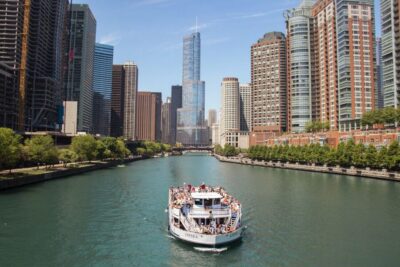 ★ 4.8Chicago River: 1.5-Hour Guided Architecture CruiseFrom $448,046 reviews
 ★ 5.0Chicago Architecture Center River Cruise aboard First LadyFrom $575,536 reviews
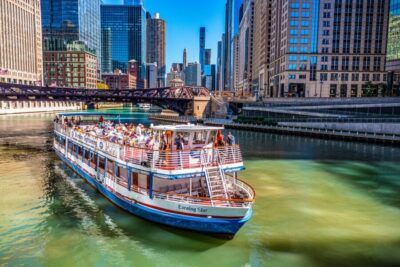 ★ 4.8Architecture River Cruise Skip-the-Ticket LineFrom $394,325 reviews
 ★ 4.5Chicago River 45-Minute Architecture Tour from Magnificent MileFrom $282,924 reviews
 ★ 4.745-Minute Family-Friendly Architecture River CruiseFrom $282,304 reviews
 ★ 5.0Chicago River 90-Minute Architecture Boat TourFrom $371,635 reviews
Browse the lists this tour appears in