
REVIEW · LAKE MICHIGAN CRUISES
Small Group Lake Michigan Tour
Lake Michigan from the water hits different.
You get a 45-minute ride with a Coast Guard–licensed captain calling out Chicago landmarks, plus photo angles you just can’t get from the sidewalk. The small size matters too: it’s 6 or fewer people, so the narration feels personal instead of generic.
I love the mix of skyline spectacle and practical sightseeing. You’ll be gripped by the throttle for an up-and-down lakefront run on a US NAVY built RHIB, then pointed toward architectural details and historical markers along the way.
The one thing to plan around is the weather. This experience runs when conditions are good, and even on a clear day, evening can get chilly—bring a layer.
In This Review
- Key highlights to look for
- A 45-minute RHIB tour that turns the skyline into a moving photo
- Meet at 2601 N Cannon Dr and keep your eyes on the water
- McCormick Place: the convention center that burned—and what that means
- Soldier Field from the lake: stadium design and the Bears legacy
- Adler Planetarium: astronomy on the shoreline
- Navy Pier: WWII training grounds at the water’s edge
- John Hancock Center: see the height from a distance that makes it real
- What you’ll feel on the ride (and how to dress for it)
- Why this small-group format is such good value
- Who should book this Lake Michigan boat tour
- Should you book Blackhawk Boat Tours for the Lake Michigan ride?
- FAQ
- FAQ
- How long is the Lake Michigan small group tour?
- What is the price per person?
- Is bottled water included?
- How many people are on the boat?
- Where do I meet for the tour?
- Is the tour ticket mobile?
- What happens if the weather is poor?
- Are service animals allowed?
Key highlights to look for
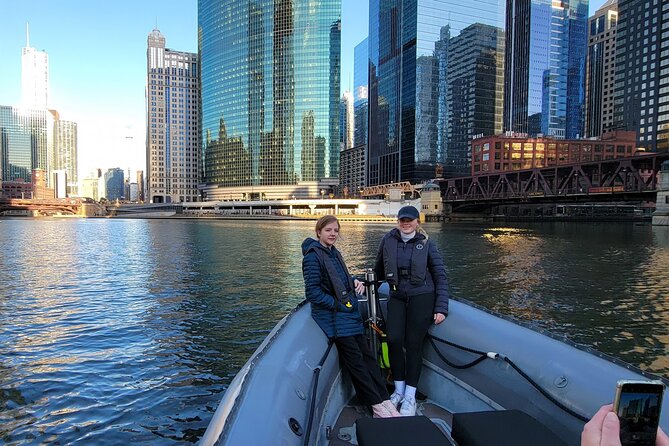
- US NAVY built RHIB rides with an energetic feel while staying “safe and seaworthy”
- Captain narration with historical and architecture-focused commentary
- Small group (max 6) for better sightlines and a more responsive experience
- Lakefront skyline views from the water that feel like a private photo session
- Multiple major landmarks looped in without having to transfer buses or walk long distances
A 45-minute RHIB tour that turns the skyline into a moving photo
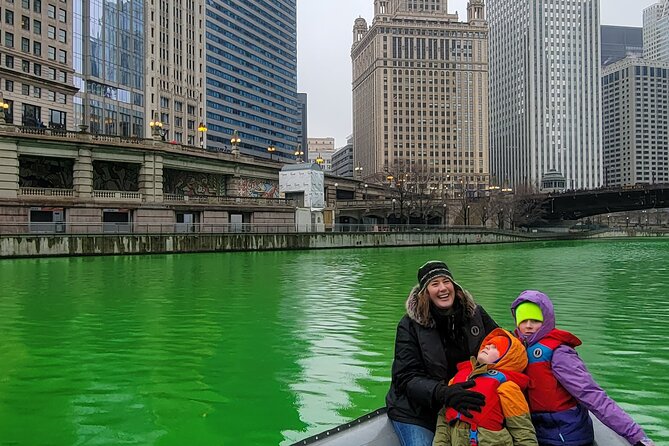
This is the kind of Chicago activity that changes your perspective fast. Instead of doing the city from the ground, you slide onto Lake Michigan and look back at Chicago like you’re seeing it through a big, clean lens.
The boat is a US NAVY built Ridged Haul Inflatable Boat (RHIB), a type designed for stability and seaworthiness. Translation: you get the fun of a fast, controlled ride without feeling like you’re on a wobbly toy. Life jackets are included, and the captain is a Coast Guard licensed operator who narrates the route as you go.
At $60 per person for roughly 45 minutes, this isn’t meant to be a “half-day of everything.” It’s more like a concentrated dose of skyline views plus smart orientation to the city—exactly why it’s so easy to slot into a busy schedule. You also get a mobile ticket, which keeps things simple once you’re on your way.
Out past the breakwater on Lake Michigan
Meet at 2601 N Cannon Dr and keep your eyes on the water
Your meeting point is 2601 N Cannon Dr Parking in Chicago. The tour ends back at the meeting point, so you’re not left figuring out transit after you’ve already had your lake fix.
Because this is a boat tour, think in terms of what you’ll want on the water: a jacket, a phone/camera ready, and shoes that feel secure. The experience doesn’t include bottled water, but it does allow water and non-alcoholic beverages, so you can bring what you like as long as you’re not expecting the operator to hand it out.
One more practical note: this tour uses a small vessel, so you’ll want to pay attention when boarding and when moving around onboard. It’s not about speed or chaos—just common sense on a ride that’s meant to move.
McCormick Place: the convention center that burned—and what that means
One of the first big landmarks you’ll see is McCormick Place, the lakeside convention center area tied to the Chicago Tribune publishing family and the McCormick name.
Here’s what makes the spot interesting on a boat: the captain can frame it as more than a building you pass on your way somewhere. You get context for why it exists, how it evolved, and why it became part of Chicago’s story.
- The idea of a purpose-built lakeside convention center is traced back to as early as 1927.
- Ground broke for a major facility in 1958, and it opened in November 1960.
- In January 1967, the 1960 exposition hall was destroyed by a fire, even though people believed it was fireproof because it was steel and concrete.
On land, this can feel like a “background” area. From the water, it becomes a readable part of the shoreline—one you can connect to the broader growth of the city and its event business.
A small consideration: this stop is timed as a sighting from the boat (so you’re not going inside). If you’re hoping for a museum or a full walk-around, you’ll be happier treating this as an exterior-and-views experience.
- Chicago Architecture River Cruise
★ 5.0 · 15,756 reviews - Chicago River 90-Minute Architecture Tour
★ 4.5 · 9,629 reviews - Chicago River: 1.5-Hour Guided Architecture Cruise
★ 4.8 · 8,046 reviews
Soldier Field from the lake: stadium design and the Bears legacy
Next up is Soldier Field, one of Chicago’s most recognizable stadiums.
The captain’s narration helps you connect the dots: Soldier Field isn’t just about sports. It’s about how Chicago rebuilds itself. It opened in 1924, and it was reconstructed in 2003. The stadium has been home of the Chicago Bears since 1971, and it also hosts Chicago Fire FC (Major League Soccer).
You also get a detail worth knowing. The stadium’s interior was rebuilt as part of a major renovation project in 2002, which modernized the facility but lowered seating capacity—and that played a role in it being delisted as a National Historic Landmark in 2006.
From the water, the stadium reads differently. You’re seeing the building as a block of architecture sitting against the lakefront skyline. It’s a fast way to understand why this area feels like the city’s sports-and-events zone.
Adler Planetarium: astronomy on the shoreline
Then you’ll see Adler Planetarium, a public astronomy and astrophysics museum founded in 1930 by local businessman Max Adler.
This is another stop where the value is mostly in the narration and sightlines, not in ticketed museum time (admission isn’t included). Still, the facts the captain highlights turn the building into more than a landmark.
You’ll learn that Adler has three theaters, plus astronomy exhibitions. One standout item noted is the Gemini 12 space capsule, and there’s also a collection of antique scientific instruments and print materials. The Doane Observatory is part of the experience too, and it’s described as research-active.
Why that matters on the boat: if you’re the type who likes to understand what you’re seeing, this gives you a reason to later come back for a museum visit. In other words, the tour acts like a quick “orientation preview” for one of the city’s more science-focused stops.
Navy Pier: WWII training grounds at the water’s edge
Navy Pier is where the trip adds a different kind of texture—Chicago’s wartime connections.
You’ll get the story that in 1941, during World War II, the pier became a training center for the United States Navy. The account is specific: around 10,000 people worked, trained, and lived there.
The narration also sketches what life there may have looked like, including a 2,500-seat theater, a gym, and practical services like a 12-chair barber shop, tailor, and cobbler shops. There’s mention of a soda fountain and a large kitchen and hospital.
This is a good reminder that the lakefront isn’t only about summer fun. It also carries layers of purpose and industry. From the water, Navy Pier sits in a way that makes its “front door to the lake” role feel obvious.
John Hancock Center: see the height from a distance that makes it real
As you head toward the next big skyline view, you’ll spot the John Hancock Center—a major Chicago skyscraper that also shows how names can change over time.
It’s a 100-story building, about 1,128 feet tall, located in the Magnificent Mile area. In 2018, the building name was changed to 875 North Michigan Avenue, but you’ll still hear it called the John Hancock Center.
The captain’s facts add real architecture context: the skyscraper was supervised by Skidmore, Owings and Merrill (SOM). Specific people are mentioned, including chief designer Bruce Graham and structural engineer Fazlur Rahman Khan.
You also get a timeline moment: when it topped out on May 6, 1968, it was the second-tallest building in the world after the Empire State Building, and the tallest in Chicago at the time. Today it’s described as the fifth-tallest in Chicago and 13th-tallest in the United States (behind the Aon Center).
This is where the boat tour really earns its money. Seeing a skyscraper from street level can be impressive. Seeing it from water, with distance and motion, makes the height feel physical.
If you’re photographing: keep your camera steady and shoot in bursts. The boat moves up and down the lakefront, so you’ll get more keepers if you treat it like a short sprint rather than a single perfect shot.
What you’ll feel on the ride (and how to dress for it)
The pitch includes an adventurous ride up and down the lakefront, and the captain holds the narration as you go. The company describes the boat as safe and seaworthy, and the small group size helps you get a smooth experience rather than a chaotic crowd shuffle.
What I’d plan for is comfort:
- Evening tours can get chilly, and even if the city is warm, the water air has a way of cooling you off fast.
- The feedback from past rides strongly points to bringing a light jacket for night departures.
Also, the tour does not include bottled water, so if you’re the kind of person who drinks often while out, bring what you prefer. The good news is you’re allowed water and non-alcoholic beverages.
Why this small-group format is such good value
This tour is priced at $60, and it’s only 45 minutes. That can sound short—until you realize what you’re buying.
You’re paying for:
- skyline views from the water (fast, dramatic, and hard to replicate)
- a captain who narrates historical significance and architecture
- a small maximum group size that keeps your experience from feeling like a moving lecture hall
Instead of doing multiple stops on foot or waiting for a bigger boat to fill up, you get a tight route with meaningful context.
If you like guided experiences but hate the feeling of being herded, this format fits well. If you want a “show me the city” orientation before you explore on your own, it also works.
Who should book this Lake Michigan boat tour
This is a strong match if:
- you want a skyline viewpoint without walking for hours
- you care about historical and architectural context, not just sightseeing
- you prefer small group experiences (max 6 on board)
- you’re traveling with a mix of interests and want something that lands for everyone
It’s also a good choice if you’re a photographer or just a person who enjoys better angles. The lakefront changes everything.
Should you book Blackhawk Boat Tours for the Lake Michigan ride?
If your main goal is Chicago views from the water, I’d book this. The short duration means less risk of a wasted day, and the small-group cap helps the narration feel more like a real explanation than a broadcast.
Do it especially if you’re flexible with time. The experience requires good weather, and if conditions are off, you’ll be offered a different date or a full refund. And if you’re going at night, plan for a cooler ride—bring that jacket.
If you’re hoping for long museum-style stops or indoor admissions, this isn’t that. Treat it as a guided lakefront sprint with big-picture Chicago context.
FAQ
FAQ
How long is the Lake Michigan small group tour?
It lasts about 45 minutes.
What is the price per person?
The price is $60.00 per person.
Is bottled water included?
No. Bottled water is not included. Water and non-alcoholic beverages are acceptable.
How many people are on the boat?
The tour has a maximum of 6 travelers.
Where do I meet for the tour?
You meet at 2601 N Cannon Dr Parking, Chicago, IL 60614. The tour ends back at the meeting point.
Is the tour ticket mobile?
Yes. The tour uses a mobile ticket.
What happens if the weather is poor?
This experience requires good weather. If it’s canceled due to poor weather, you’ll be offered a different date or a full refund.
Are service animals allowed?
Yes. Service animals are allowed.
The Wider Chicago Shortlist
- Chicago Architecture River Cruise★ 5.0 · 15,756 reviews
- Chicago River 90-Minute Architecture Tour★ 4.5 · 9,629 reviews
- Chicago River: 1.5-Hour Guided Architecture Cruise★ 4.8 · 8,046 reviews
- Chicago: Gangsters and Ghosts Walking Tour★ 5.0 · 7,155 reviews
- Chicago Architecture Center River Cruise aboard First Lady★ 5.0 · 5,536 reviews
Lake Michigan, Open Water
- Chicago Lake and River Architecture Tour★ 4.5 · 2,308 reviews
- Chicago: 1.5-Hour Lake and River Architecture Cruise★ 4.7 · 2,050 reviews
- Lake Michigan Sunset Cruise in Chicago★ 4.5 · 1,520 reviews
- Lake Michigan Skyline Cruise in Chicago★ 4.5 · 897 reviews
- Chicago by Night River and Lake Cruise★ 4.6 · 791 reviews
The Ink Is Still Wet on These Chicago Reviews



Lake Michigan Cruises, compared.
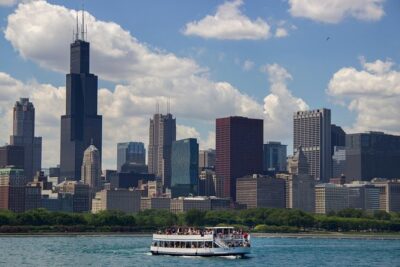 ★ 4.5Chicago Lake and River Architecture TourFrom $452,308 reviews
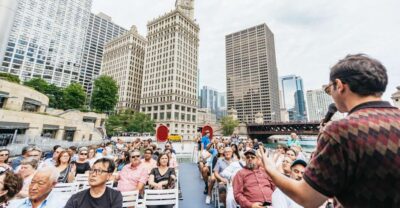 ★ 4.71.5-Hour Lake and River Architecture CruiseFrom $442,050 reviews
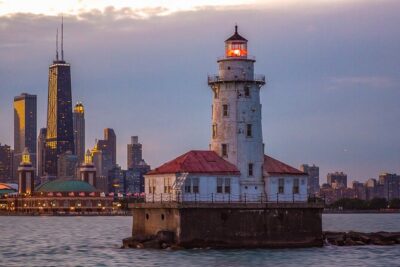 ★ 4.5Lake Michigan Sunset Cruise in ChicagoFrom $451,520 reviews
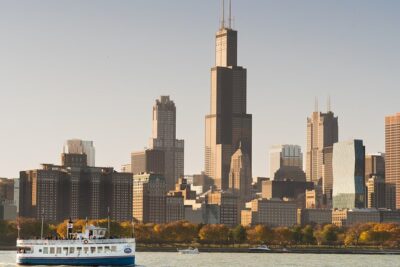 ★ 4.5Lake Michigan Skyline Cruise in ChicagoFrom $32897 reviews
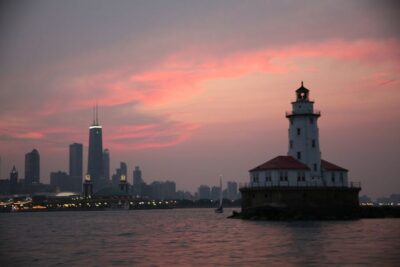 ★ 4.6Chicago by Night River and Lake CruiseFrom $45791 reviews
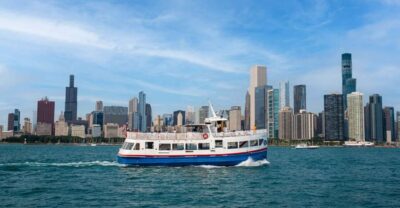 ★ 4.6Shoreline Lake Michigan Skyline CruiseFrom $32758 reviews
 ★ 4.71.5-Hour Scenic Sunset Lake CruiseFrom $45739 reviews
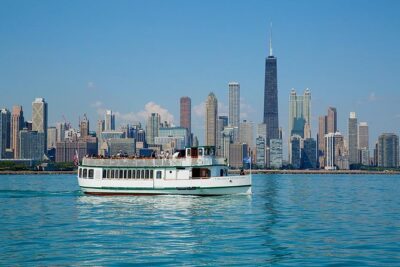 ★ 4.5Chicago Sightseeing River and Lake CruiseFrom $45509 reviews
Browse the lists this tour appears in