

REVIEW · CHICAGO MUSEUMS & TICKETS
Chicago: Architecture Center Exhibit Admission
Skyscrapers, built small enough to fit your eyes. The Chicago Architecture Center is a smart, hands-on way to understand why Chicago invented the modern skyline, all inside a dramatic glass-and-steel setting. I love the instant payoff of the 40-foot wall of glass, where iconic buildings frame you while you’re still getting oriented.
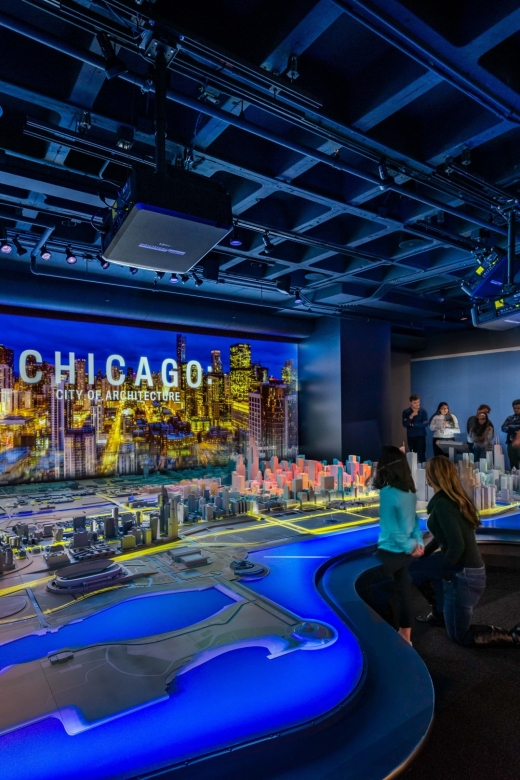
I also really like the scale of the exhibits. The standout Chicago City Model Experience shows the city’s growth with a light-and-film show and an expanded model of more than 4,000 buildings—so you see architecture as something that evolves, not just something you pass by.
One catch: the galleries are compact and largely self-guided, so if you’re expecting a long, guided, start-to-finish tour, plan for a shorter visit.
In This Review
- Key highlights you will feel right away
- Entering the Chicago Architecture Center at 111 E Upper Wacker
- The 40-foot glass wall: why this view matters
- Building Tall Gallery: supersized stories of height and design
- Supersized scale models: from Chicago’s first skyscraper to Jeddah Tower
- The Chicago City Model Experience: 4,200+ buildings in one room
- How to get the most out of the model room
- Touch screens and 3D printing: turning facts into navigation
- Views, location, and an easy day plan near Michigan Avenue
- Timing tip
- Price and value: what $15 buys you (and what it doesn’t)
- Practicalities before you go: rules that affect your day
- Who should book this architecture center admission?
- Should you book the Chicago Architecture Center exhibits?
- FAQ
- What is included with my admission?
- How long is the experience valid?
- Is a guided tour included?
- Where is the Chicago Architecture Center located?
- Is the Chicago Architecture Center wheelchair accessible?
- Are pets allowed?
- Can I bring food and drinks?
- Can I store luggage, coats, or strollers at the center?
- Are flash photos allowed?
Key highlights you will feel right away
- 40-foot glass wall views of Tribune Tower, the Wrigley Building, and the Apple Store area
- 4,200+ building Chicago Model with film and light show
- Supersized skyscraper models that connect design and engineering (including Jeddah Tower)
- Interactive touch screens for searching by architect/style and pulling walking routes
- Building Tall gallery that explains the rules behind going higher
- Nonprofit ticket support for local architecture education and community programs
Entering the Chicago Architecture Center at 111 E Upper Wacker
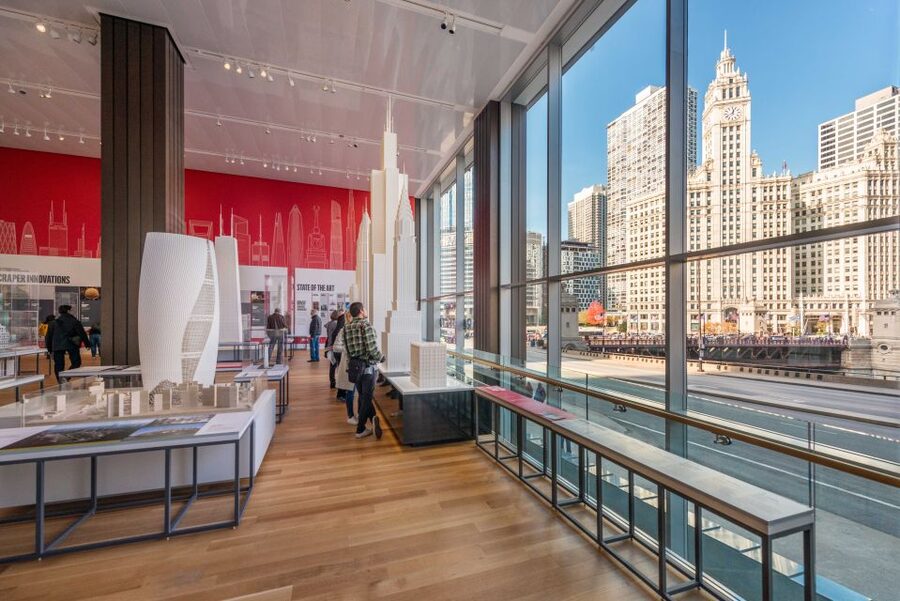
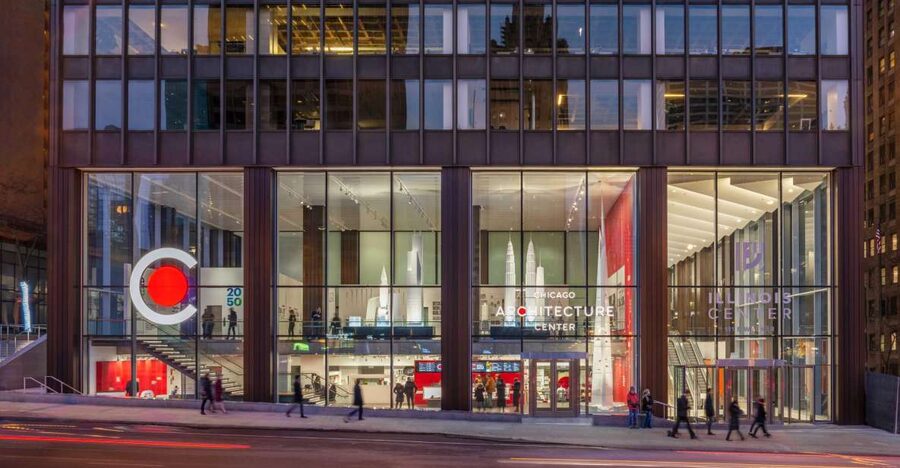
The Chicago Architecture Center sits at 111 E Upper Wacker Drive, just steps from Michigan Avenue. It’s the kind of location that makes the city feel close from the first minute, not tucked away behind office parks or quiet side streets. When you walk in, you’re greeted by a striking interior built around visibility: that 40-foot wall of glass puts famous landmarks in your line of sight before you even start reading labels.
The building itself is part of the story. This center occupies a space designed by a world-renowned architecture firm (Adrian Smith + Gordon Gill Architecture) in a structure by Mies van der Rohe, a key figure in mid-century modernism. Even if you’re not chasing architecture theory, the design makes the whole visit feel intentional: you’re learning about Chicago through Chicago’s own design language.
A practical note: you’re looking at a self-paced museum experience, not a guided bus-tour vibe. So come ready to pause, walk slowly, and take your time at the biggest visual moments.
The 40-foot glass wall: why this view matters
It’s tempting to treat the windows as just a bonus. But here, the view acts like a living map. You can use it as a reference point while you explore: you’ll recognize names like the Tribune Tower and the Wrigley Building as the museum explains how skyscrapers became Chicago’s brand.
That matters because the exhibits don’t stay abstract. They connect buildings to what came before—technology, materials, changing city needs, and the idea that height isn’t a novelty anymore, it’s a strategy. Seeing real landmarks while you learn those patterns makes the information stick faster.
Also, this is one of those indoor/outdoor-friendly experiences. Even if it’s windy or rainy, you can still get that skyline feeling. And since you’re in the heart of the Loop, you can easily pair it with other Michigan Avenue stops afterward.
Building Tall Gallery: supersized stories of height and design
One of the first “big idea” sections you’ll want to catch is the Drake Family Skyscraper Gallery, focused on Building Tall. This gallery frames tall buildings as a series of design breakthroughs, not just a competition for height.
The way the exhibit is organized pushes you to notice cause-and-effect. You see how architects break boundaries and how engineering choices support those leaps upward. The exhibit also connects early Chicago skyscraper ambition to later global megaprojects—so you’ll start noticing the thread between Chicago’s first wave and what comes next.
The gallery also sets up the rest of the visit well. It gives you a lens for reading the supersized models later: you’re not just looking at shapes; you’re looking at why those shapes exist and what problem they solve.
Supersized scale models: from Chicago’s first skyscraper to Jeddah Tower
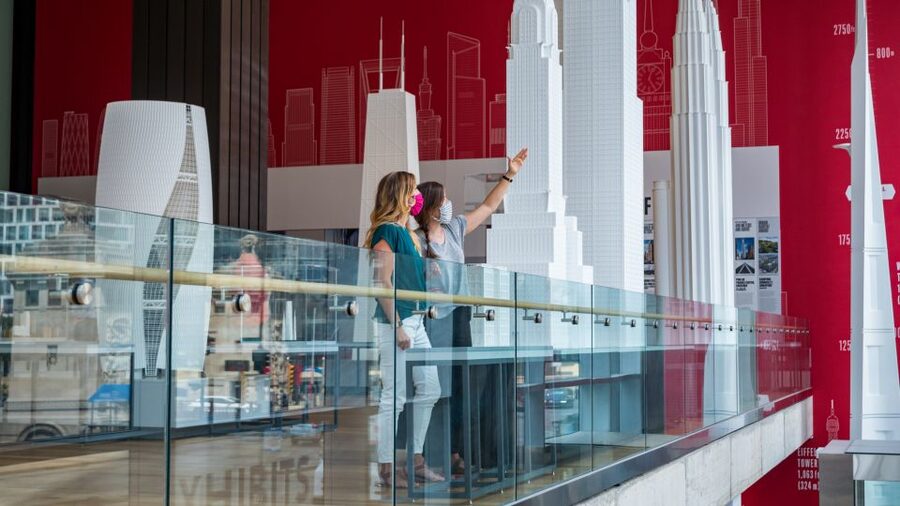
The center’s model displays are a major reason to go. You’ll encounter supersized scale models of famous skyscrapers from Chicago and around the world. This is where the museum turns scale into understanding.
You can trace the timeline of the “race to the top” through real examples:
- the world’s first skyscraper, the Home Insurance Building in Chicago
- the Willis (Sears) Tower, which was the world’s tallest for nearly 25 years
- Jeddah Tower in Saudi Arabia, designed by Chicago and set to become the tallest building in the world
That lineup is smart for first-time visitors. It gives you a clear sequence, so even if you don’t know architecture terminology, you still follow the logic: innovation → skyline change → bigger ambition.
And because these models are physical and large, you can study details longer than you would on a screen. That’s a key difference. A screen can show a building; a scale model helps you understand mass, proportions, and how a tower’s shape communicates function.
The Chicago City Model Experience: 4,200+ buildings in one room
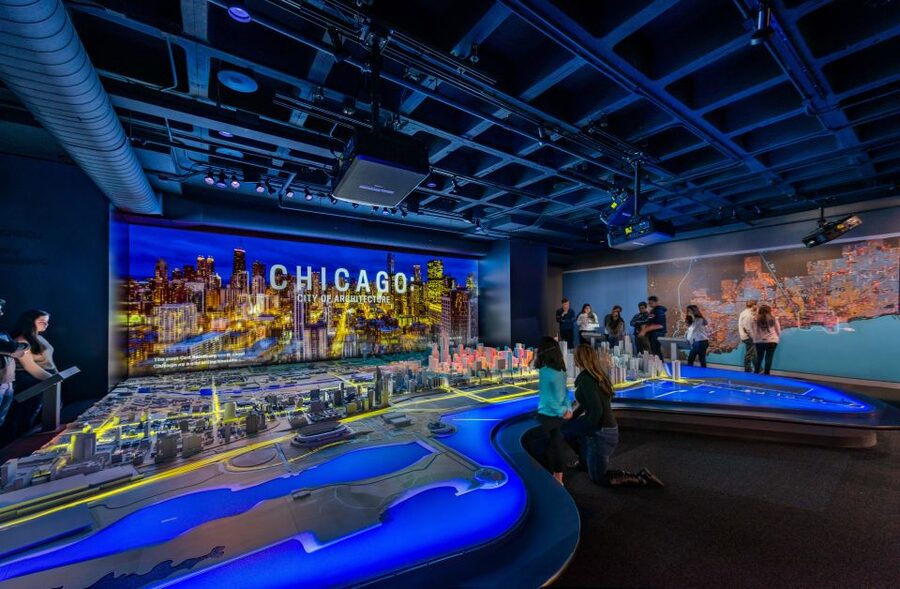
This is the big-ticket exhibit inside the center: the Chicago City Model Experience. The highlight here is the dramatic room that houses a model expanded from about 1,300 buildings to over 4,000 (more than 4,200).
What makes it special is the storytelling format. A film and light show bring the model to life, walking you through Chicago’s early growth, the rebirth after the Great Chicago Fire, and the shift to first-ever skyscrapers and later modernist steel-and-glass masterpieces. The museum uses the model like a time machine.
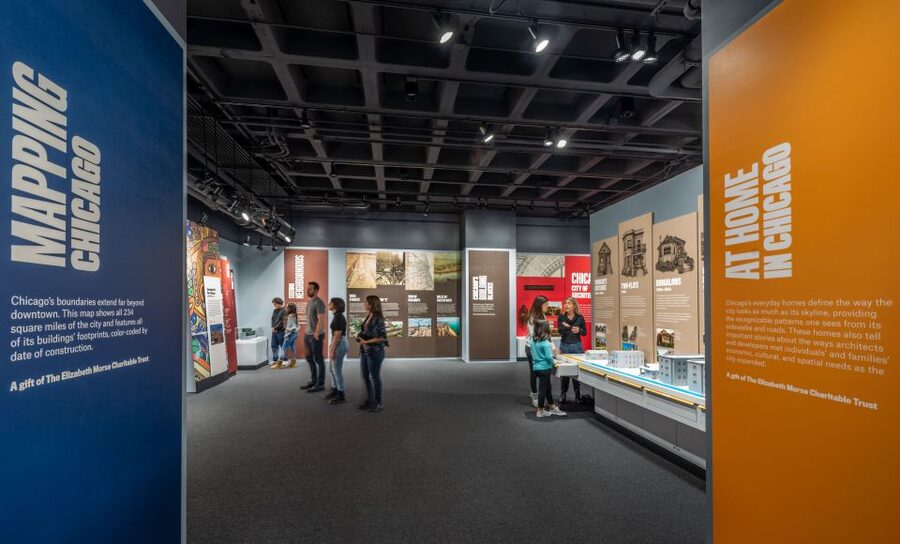
If you’ve ever wondered why Chicago neighborhoods look the way they do, this is where you get answers. The exhibit is tied to neighborhoods, housing styles, and famous architects—so it explains architecture as a result of people, economics, and changing boundaries, not just as isolated masterpieces.
How to get the most out of the model room
Since the experience is self-guided, your strategy matters. When you enter the model room, take a minute to look at the overall city layout first. Then use the story show as your anchor point. After that, go back to the model and start “reading” it with your own questions—where did things cluster, when do the skyline moments show up, and how do styles change across time?
If you do that, you’ll leave with a mental map, not just a stack of building names.
Touch screens and 3D printing: turning facts into navigation
The center doesn’t stop at static exhibits. You’ll find interactive touch screens built to help you orient yourself and explore more personally. They let you search for buildings by architect or building style, and they can point you toward walking tour routes.
That’s valuable because it connects a museum visit to real-world follow-through. You can learn the language of the city indoors, then use that knowledge outside with intention—spotting patterns you would otherwise miss.
You’ll also see how state-of-the-art 3D printing creates accurately scaled buildings for this city model. That’s more than a behind-the-scenes detail. It answers an unspoken question: how do you make something this precise and still manageable for visitors? The museum gives you a glimpse of the process behind the visual spectacle.
Views, location, and an easy day plan near Michigan Avenue
Because the center sits above the dock for the Chicago Architecture Foundation River Cruise aboard Chicago’s First Lady Cruises, it’s easy to build a “Chicago architecture loop” on the same day. Even if you’re not taking a cruise, the location helps you stitch the city together: Michigan Avenue access, Loop transit, and skyline-friendly surroundings.
I also like that the views are part of your museum experience, not an afterthought. You’re constantly reminded you’re learning in the same city where these buildings still stand, still cast light and shadow, still shape how people move.
Timing tip
You can do this in a single day, but don’t rush it. The best results come when you give yourself enough time to move between:
- the glass-wall orientation moment
- the tall-building gallery logic
- the model room storytelling
- the interactive screens for your own interests
If you’re moving fast, you might feel like the galleries are short. If you slow down and use the model + screens properly, the time feels just right.
Price and value: what $15 buys you (and what it doesn’t)
Admission is listed at $15 (for a group up to 1) for access to all Chicago Architecture Center exhibits. Since this is an exhibit admission, not a guided tour, the value comes from what you can explore on your own.
Here’s what you’re paying for:
- entry to the full range of galleries and the Chicago Model experience
- interactive touch-screen tools to connect names, styles, and walking routes
- the larger educational mission funded through ticket purchases
What you’re not paying for:
- a guided tour of the exhibits
- food and drink (none provided)
- storage for coats, strollers, or luggage (not available)
If you’re comfortable self-guiding and you like learning through visuals, the price-to-content ratio is solid. If you want a docent-led narrative for every room, you might feel shortchanged—because that guided layer is not included here.
Practicalities before you go: rules that affect your day
A few policies can change how smoothly your visit goes.
What to bring
- A face mask or protective covering
Not allowed
- pets (service animals are welcome)
- food and drinks
- flash photography
- luggage or large bags
- coats, strollers, or anything you need secure storage for (the center can’t provide storage)
That last point matters. If you’re traveling with extra items, you’ll want a plan—either travel light or arrive already settled at your lodging. Otherwise, you might end up carrying everything around longer than you’d like.
Who should book this architecture center admission?
This is a great fit if you want:
- a quick, high-impact introduction to why Chicago is famous for architecture
- hands-on learning through a huge model room and interactive screens
- a skyline-centered visit that doesn’t require heavy technical knowledge
It’s less ideal if you:
- want a full guided tour included in the ticket
- expect a long, multi-hour program with lots of staff storytelling
- need luggage storage on site
The best match is someone who enjoys visual learning and wants to leave with a clearer sense of Chicago’s architectural timeline and neighborhood logic.
Should you book the Chicago Architecture Center exhibits?
Yes, if you want a concentrated architecture education in a single stop, with serious payoff from the model room and the skyline views. I’d especially recommend it for first-timers who want to understand what to look for when they later walk Chicago streets.
Skip it or reconsider if you need guided narration for every exhibit, or if your day depends on bringing larger bags, coats, or stroller storage. Also be aware that the museum is built for self-guiding; if that style doesn’t work for you, you may want to pair your visit with a separate guided option.
If you do go, give yourself time in the model room and use the touch screens. That’s where the visit turns from “seeing skyscrapers” into learning how Chicago’s architecture evolved.
FAQ
What is included with my admission?
Your ticket includes admission to all Chicago Architecture Center exhibits, including the Chicago Model Experience and the galleries.
How long is the experience valid?
Your ticket is valid for 1 day. Check availability to see the starting times.
Is a guided tour included?
No. Guided tour of the exhibits is not included with this admission.
Where is the Chicago Architecture Center located?
It’s at 111 E Upper Wacker Drive, Chicago.
Is the Chicago Architecture Center wheelchair accessible?
Yes, the venue is listed as wheelchair accessible.
Are pets allowed?
No pets are allowed. Service animals are welcome.
Can I bring food and drinks?
Food and drink are not allowed.
Can I store luggage, coats, or strollers at the center?
No. The CAC is unable to provide secure storage for coats, luggage, or strollers.
Are flash photos allowed?
Flash photography is not allowed.
Chicago Museums & Tickets, compared.
 ★ 5.0Medieval Torture Museum Ticket with Audio Guide and Ghost HuntingFrom $35962 reviews
 ★ 4.7Field Museum of Natural History Ticket or VIP TourFrom $29717 reviews
 ★ 4.5Field Museum of Natural History Admission TicketsFrom $29489 reviews
 ★ 5.0Skip-the-line: Art Institute of Chicago Guided TourFrom $71417 reviews
 ★ 3.5Museum of Ice Cream Chicago Admission TicketFrom $43396 reviews
 ★ 4.41-5 Day Attraction Pass with Shedd AquariumFrom $139372 reviews
 ★ 4.8Flyover in Chicago: An Immersive Flying Theatre ExperienceFrom $38362 reviews
 ★ 5.02-Hour Chicago Lakefront & Museum Campus Segway TourFrom $64345 reviews
Browse the lists this tour appears in